
ONE TIGRESS, GENERATIONS OF HOPE
Accurate at time of publication: 12 November 2026
A POWERFUL SYMBOL OF HOPE
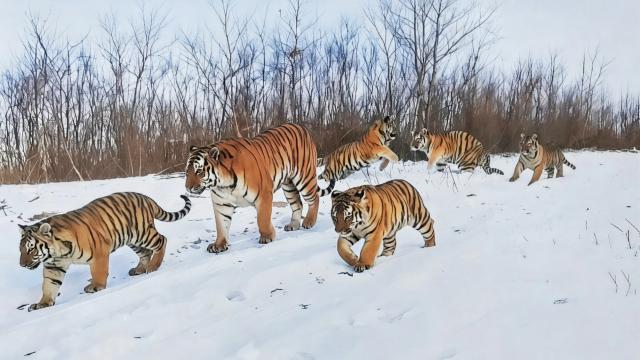
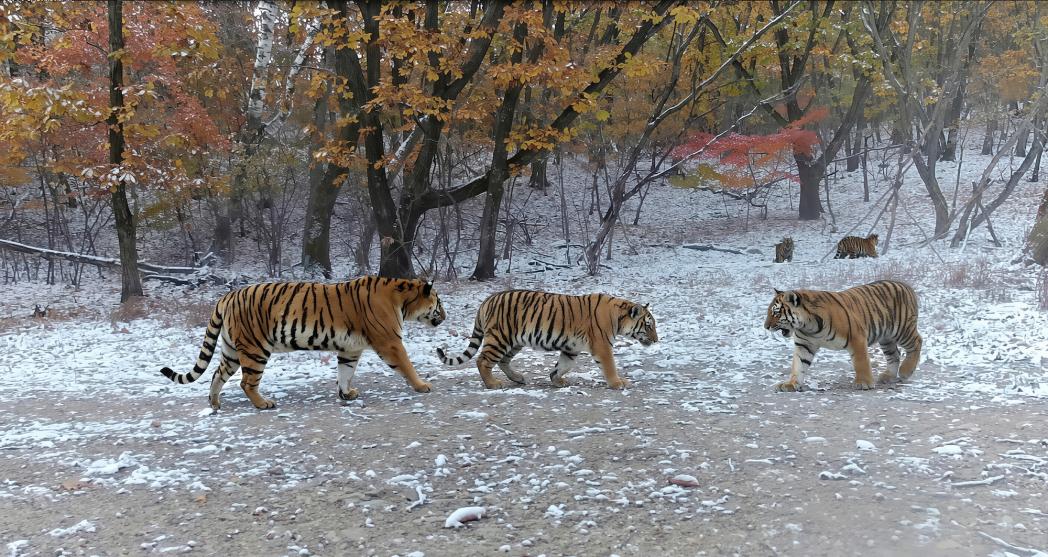
Early one November morning in northeast China, an extraordinary scene was captured. Through the mist of a mountain forest, a mother tigress emerged onto a woodland road, followed by five healthy cubs. It was the first time six wild Amur tigers had ever been photographed together in a single frame. The remarkable moment was captured not by chance, but by an infrared camera trap in the Hunchun landscape of the Northeast China Tiger and Leopard National Park, used to help monitor the park’s wildlife. This tigress became a powerful symbol of hope for tiger recovery in China, and she was named the ‘Hero Tigress’.
A HERO TIGRESS’ STORY
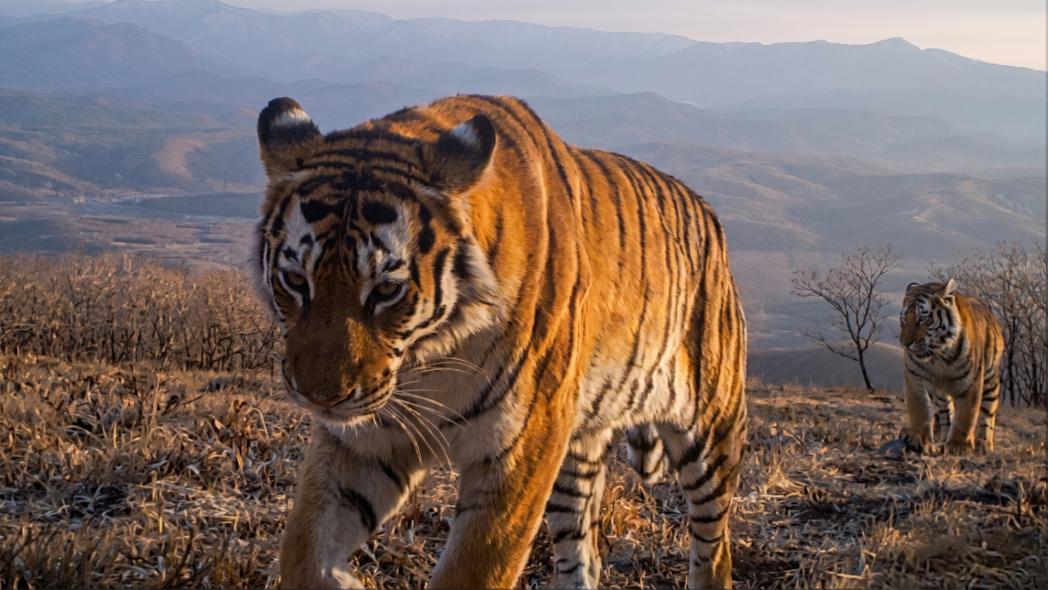
Her story began in 2019, when, at just two years old, she crossed from Russia’s Land of the Leopard National Park into the mountain forests of Hunchun, China. Here, for over a decade, teams from the Northeast China Tiger and Leopard National Park, WWF and other partner organisations have worked to restore fragmented habitats, open up migration corridors, strengthen conservation management and patrol teams, and reduce conflict between people and tigers.
These healthy forests, full of sika deer and wild boar, is where the tigress established her territory and began the remarkable journey that would see her become one of China’s most extraordinary wild tigers. In spring 2020, Hero gave birth to her first two cubs. She guarded them day and night, and both survived to adulthood.
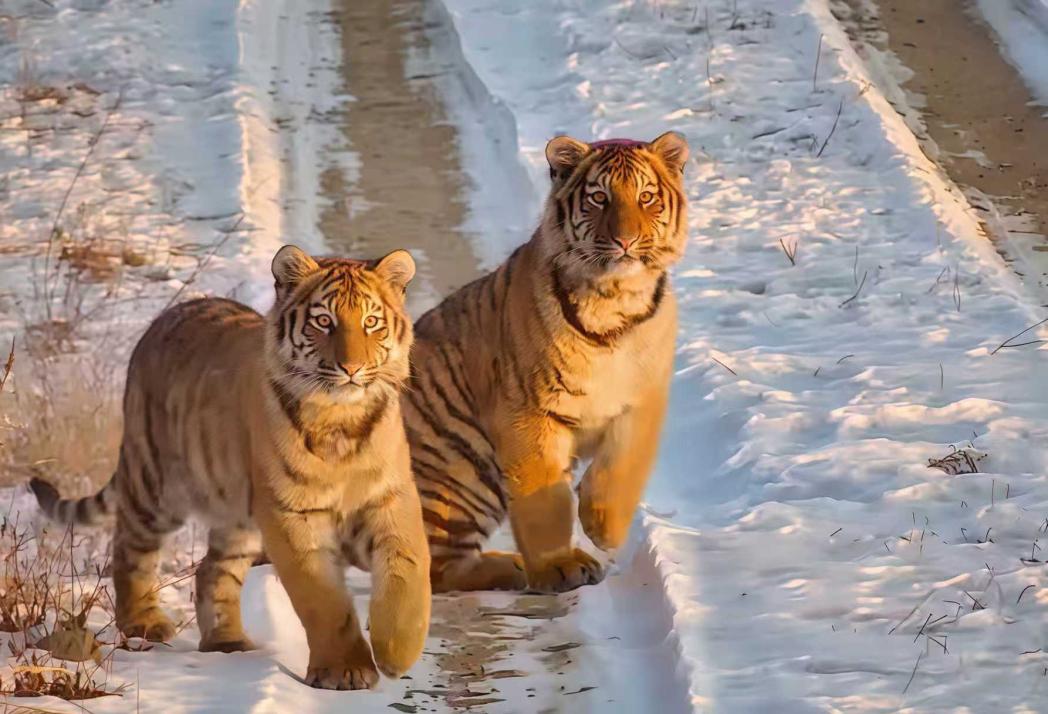
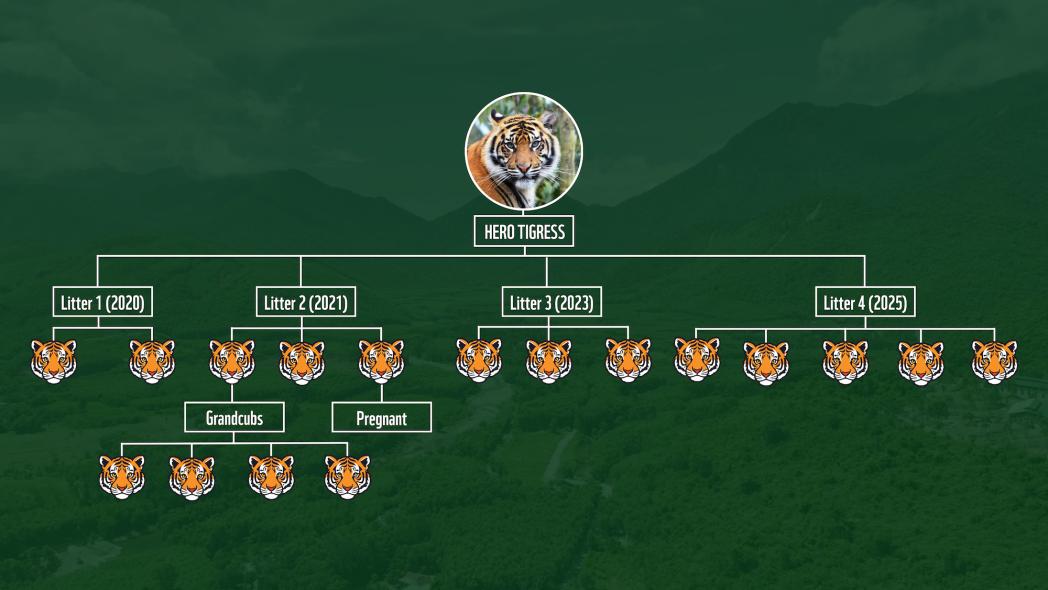
At the end of 2021, she gave birth to three more cubs, named Nannan, Bingbing and Niba by patrol teams. Despite the harsh winter, Hero travelled dozens of kilometres through deep snow to hunt and provide for her family. Once again, all three cubs survived – remarkable given that only around 30% of wild Amur tiger cubs are thought to survive to adulthood.
In the summer of 2023, the tigress gave birth to another three cubs; Jinbao, Jinchai and Yinchai. By now, she was an experienced mother, confidently hunting and passing on the skills her cubs would need to survive in the wild.
But her greatest challenge was still to come.
On a rainy night in June 2025, Hero gave birth to her fourth litter: five cubs in a forest cave. Wild Amur tigers usually give birth to two to four cubs, making five cubs surviving to this age an extraordinary sight. Known officially as GH005F, the tigress became known as the ‘Hero Tigress’.
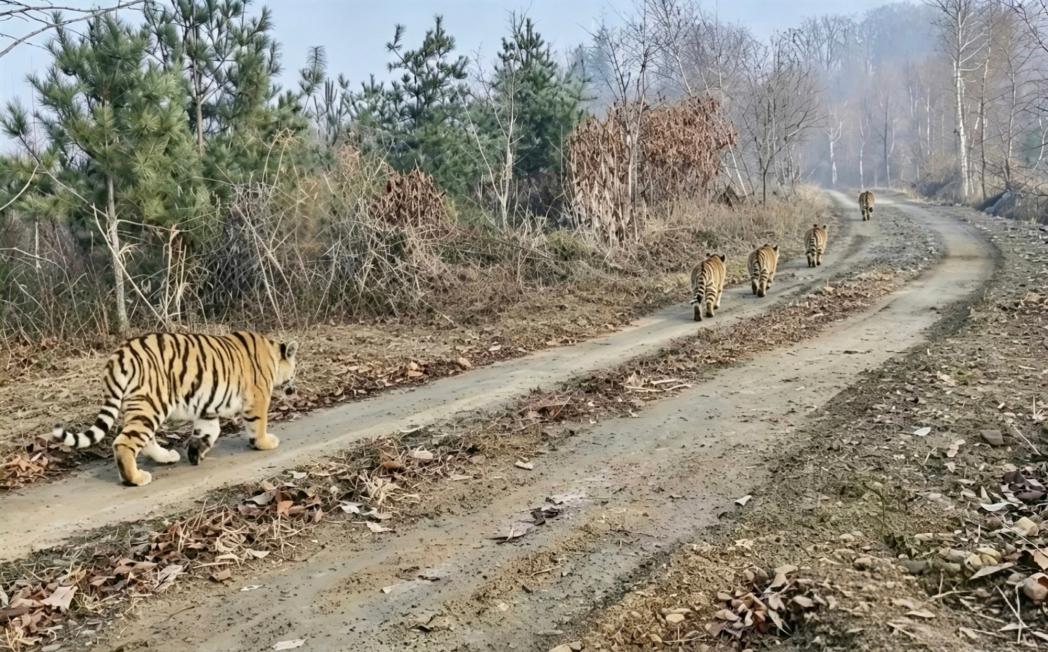
Her five cubs were named the "Five Little Blessings": Daya, the calm big cub; active Danzhu; Banli, honest and simple; Xiaomianao, the ‘little cotton jacket’, an affectionate term for children used in China; and curious Shanshan.
Raising five cubs through winter was no small task. Hero needed to find enough food for her growing family while protecting them from unfamiliar male tigers, black bears and Amur leopards. Yet she benefited from living in a landscape where years of conservation work had helped prey species recover and strengthened protection across the forest.
On 16 February 2026, cameras traps captured another milestone. All six tigers were once again roaming the forest together. The Five Little Blessings were nearly the same size as their mother, and they were healthy and full of life. Hero’s strength and experience had carried her family through the winter.
And the good news didn’t stop there.
GENERATIONS OF HOPE
In April, Hero’s daughters Jinchai, born in 2023, was photographed showing clear signs of pregnancy. The previous summer, her daughter Nannan, born in 2021, had been photographed with four cubs. Thanks to the wildlife monitoring work, Hero’s legacy was unfolding before our eyes.
Now nine years old, Hero has given birth to 13 cubs in four litters, making her one of the most prolific wild Amur tigresses ever documented. All eight of her older cubs have grown up and established their own territories across the forests of Hunchun, and at least two of her daughters are breeding.
Hero is helping shape a third generation of wild tigers.
This extraordinary footage literally took my breath away. It's the first time that a mother with five cubs has ever been filmed in China. China’s commitment to tiger conservation is delivering incredible results and creating a bright future for these magnificent cats.
Stuart Chapman, Leader of WWF’s global tiger program, Tigers Alive.
THE BIGGER PICTURE
Her success is part of a much bigger conservation story. China’s wild Amur tiger population, which had fallen to as few as 20 animals in 2010, has grown to around 70 in 2025. This landscape has been increasingly restored for wildlife, resulting in healthier forests, richer prey populations and safer migration routes. Areas where tiger tracks were rarely seen are once again filled with herds of deer and the roar of tigers.
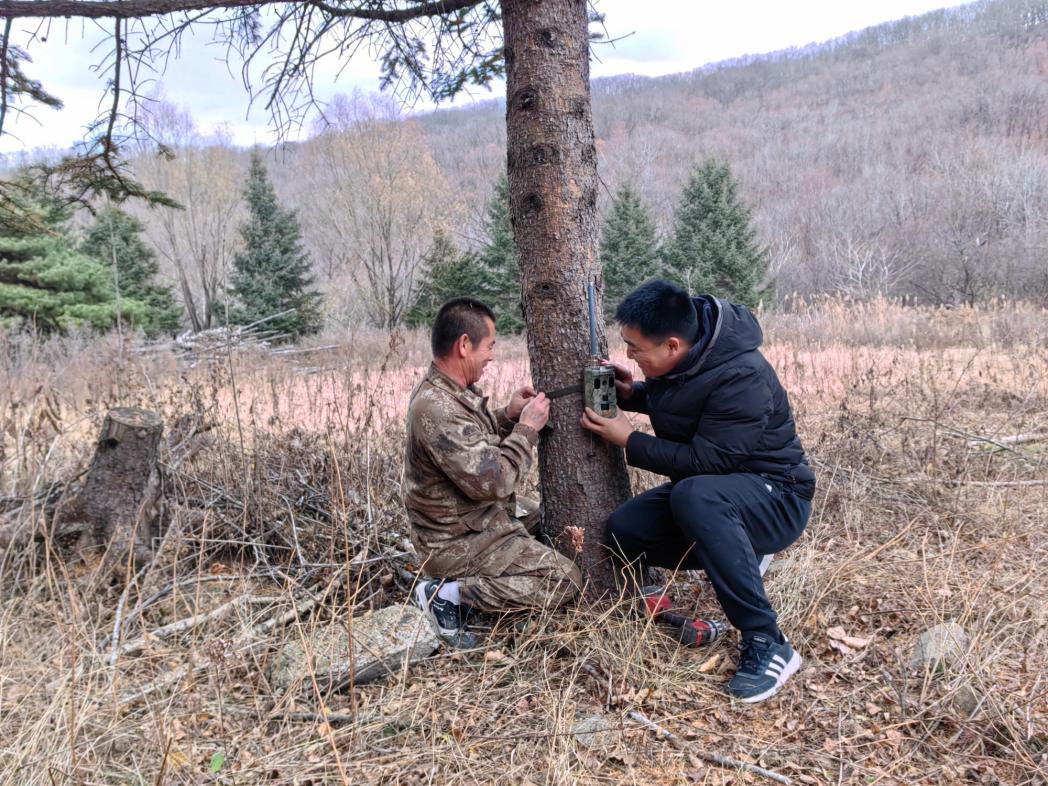
The same monitoring technology that revealed Hero's story is also helping people and tigers coexist. The footage of Hero and her family is therefore much more than a beautiful wildlife moment. Every photograph tells two stories: that of an extraordinary tigress, and of the conservation efforts that gave her the chance to succeed.
-
 © Greg Armfield WWF
Author
Lorna Lawson, Stories & Content Researcher, WWF-UK
/
Have a question about this article?
Get in touch: contentunit@wwf.org.uk