Beyond the Chicken Dinner: Building a fairer food system
Accurate at time of publication: 4 August 2026
Chicken has become the UK's favourite meat. It's affordable, familiar and widely seen as a healthier alternative to red meat. But behind the chicken dinner lies a much bigger story, one that connects UK shopping baskets to tropical forests, polluted rivers, a changing climate and poor animal welfare. The challenge is not simply to eat less. It is to make that transition fair – protecting people on low incomes, supporting farmers and ensuring healthier, more sustainable alternatives are accessible to everyone.
The hidden environmental and animal welfare costs
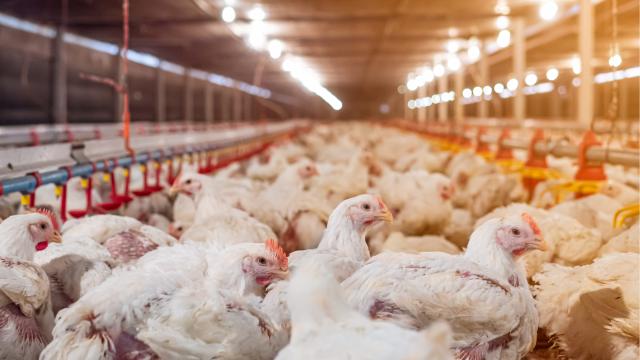
Global chicken production has grown rapidly since the Second World War, driven by advances in breeding, feed and adoption of intensive farming systems. While this growing appetite has made chicken more affordable, it has increased pressure on land, rivers, the climate and animal welfare.
Producing feed for chickens globally requires an estimated 113 million hectares of land – roughly the size of Colombia. Soy used in animal feed is linked to deforestation and habitat conversion in ecosystems such as the Amazon and the Cerrado. The Amazon is one of the world’s most important ecosystems. It acts as the planet's largest terrestrial carbon sink, helps regulate rainfall patterns, is home to 10% of the world's known wildlife species, and sustains the livelihoods of 45 million people, including hundreds of Indigenous communities.
This matters to the UK. Government analysis has identified environmental degradation overseas as a national security risk because the loss of ecosystems like the Amazon threatens global food production, increases food prices and undermines long-term food security.
Closer to home, the impacts are also visible. The UK houses over one billion chickens annually. Chicken feed requires around 1.6 million hectares of overseas land, larger than the size of Northern Ireland, making soy one of the UK's largest sources of imported deforestation risk. At the same time, intensive production contributes to greenhouse gas emissions associated with land use change, estimated at around 10.1 million tonnes CO2-e per year. This is equivalent to the emissions of around 830,000 people, the same as the population of Leeds City District.
On top of generating emissions that contribute to climate change, the sector is itself exposed to a changing climate, creating a clear ‘chicken and egg’ situation. Draught and flooding, particularly in the wheat basket of the East of England, can lead to reduced wheat availability and higher feed prices. This in turn may increase the UK exposure to imported feed markets.
Rivers are under pressure too and the Wye illustrates the scale of the problem. There are around 20 million chickens in the catchment at any one point in time. Each year, around 3,000 tonnes of excess phosphorus from chicken manure is applied to land around the Wye, contributing to deteriorating water quality, toxic algal blooms and declining wildlife. Climate change is making these pressures worse by increasing temperatures and reducing river flows.
Animal welfare must also be part of this conversation. Intensive production systems expose millions of birds to conditions that can compromise welfare. Rising temperatures and more frequent heat events caused by climate change will lead to heat stress, higher bird mortality and higher incidence of disease. During the 2022 heatwave, for example, July chicken meat production was 9% lower than in July 2021, while more than 18,500 chickens died during transport.
Are we becoming too dependent on chicken?
The UK consumes around 35 kilograms of chicken meat per person each year, among the highest levels in the world. Overall, the UK supplies around twice as much protein from animal and plant sources as is required to meet the population's nutritional needs.
This level of consumption is not essential for a healthy diet – many plant-based foods such as beans or pulses are a good source of protein, as well as other valuable nutrients such as fibre. Many comparable countries, including France, Germany, Italy and Japan, eat considerably less chicken meat while maintaining good health outcomes.
The food we eat is shaped by the wider food system, from pricing and marketing to government policy and public procurement. Chicken has become so dominant because it is affordable, heavily promoted and widely perceived as a healthy choice. That means reducing consumption cannot rely on asking consumers to pay more. Doing so would unfairly affect households already struggling with food costs.
A fair transition for consumers, farmers and the planet
The solution is to make healthy, sustainable choices easier, cheaper and more attractive.
This means investing in, targeting subsidies or reforming VAT for healthy plant-based proteins, supporting UK-grown pulses and helping food manufacturers develop products that are nutritious, convenient and competitively priced. Government can also use public procurement, school meals and schemes such as Healthy Start to improve access to healthy, sustainable food for everyone.
Farmers must be supported in the transition. Producers operate on tight margins and raising environmental standards without wider policy changes risks simply shifting production overseas to countries with weaker regulations. Farmers need incentives to diversify production, alongside measures to ensure imports meet equivalent environmental and animal welfare standards.
Additional investment in buildings and equipment is necessary, but it should lead to improvements in animal welfare, environmental standards and resilience to climate change, not an increase in capacity and volume of production.
More attention is needed to reduce nutrient pollution in rivers. Investment in proper compliance, enforcement and robust regulatory design alongside a nitrogen standard for rivers are urgently needed to save our rivers from the brink of ecological collapse.
To avoid soy and other Forest Risk Commodities driving deforestation, the UK Government has recently announced future regulation. The public consultation should be brought forward without further delays, and regulation needs to be ambitious. Government should also make a financial investment in the Tropical Forests Forever Fund to keep forests standing and support Indigenous Peoples and local communities. After all, the chicken on our plate is connected to forests thousands of miles away, the health of our rivers and the future of farming. Building a fair transition is more than changing diets. It is about creating a food system that works better for nature, people and climate.
For simplicity in this blog, ‘chicken’ refers to both chicken meat and eggs unless otherwise specified.
-
 © David Bebber / WWF-UK
Author
Sofia Parente, Head of Supply Chains Policy, WWF-UK
/
Have a question about this article?
Get in touch: policyinsights@wwf.org.uk