
The Good Anthropocene: Changing how we think about the future
There are good futures out there for us. It’s up to us to grasp them.
Accurate at time of publication: 22 October 2026
What is a Good Anthropocene?
Imagine a team of geologists, a million years from now, looking back at the rock strata from our time on Earth. What would they see? Evidence of a dramatic change in atmospheric chemistry, rapid climate change, the presence of plastics, nuclear radiation and an increase in species extinctions.
The effects of human activities are so great that they will be permanently visible in the Earth’s geological record. For many, this indicates that we are experiencing a new geological event: the Anthropocene.
The idea of the Anthropocene is not just a curiosity. It brings with it important implications. It has never been possible to go backwards, but the Anthropocene makes that even clearer: no matter what we do, the future will be different from anything we have seen in the past.
We are all-too familiar with the negative side of what that could mean: the climate and biodiversity crises that threaten not just the nature we love, but our food, our homes, our prosperity and our health. The pace of change to our environment and society is understandably a source of huge anxiety and concern.
Naturally, our response is often to attempt to halt or reverse that change – and rightly so. Protecting or restoring threatened species and ecosystems, and preventing catastrophic climate change, is existentially important.
But we also have to recognise that we can’t return to the past. So if we can’t recreate what existed in the past, what could a ‘good’ version of the future look like? How should we live well – sustainably and justly – in a world transformed by environmental, technological and social change?
In short, what kind of Anthropocene do we want for ourselves and our children, and how do we get there? These are the questions our Good Anthropocene project set out to explore.
Positive Futures
In the Good Anthropocene project, we worked with the Leverhulme Centre for Anthropocene Biodiversity at the University of York. We held workshops with people in WWF’s three ‘Wholescape’ areas – Pembrokeshire in Wales, Norfolk in England and the Firth of Forth in Edinburgh.
We asked people to imagine positive futures for the places where they live and work. Collectively, they contributed to stories describing those futures, and we also commissioned original artwork to bring them to life.
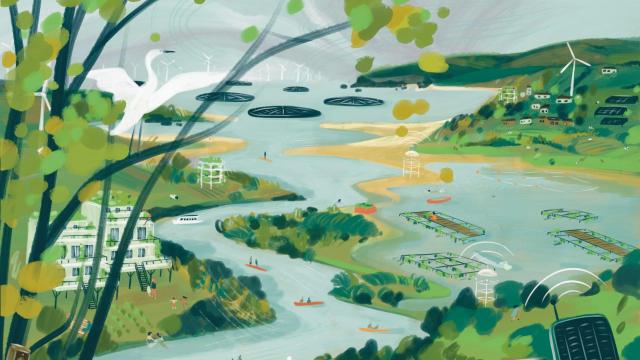
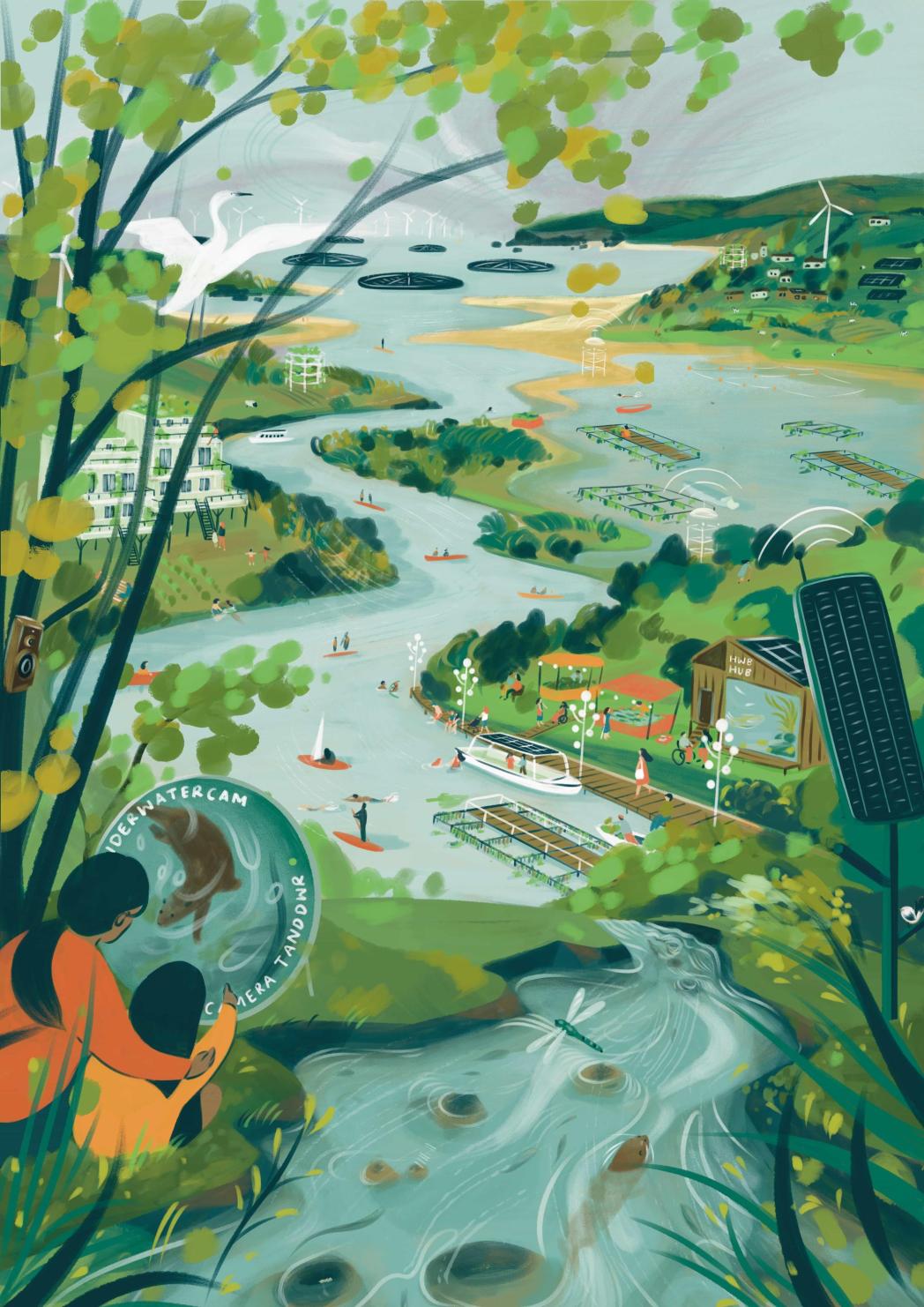
What people imagined was a rich mixture of the futuristic and the traditional. In Pembrokeshire, people envisaged floating arrays of renewable energy generation and people connected to the landscape using monitoring technology. They also imagined sea allotments, adapted farming on sea and land, strong cultural heritage including the Welsh language, and a reconnection to the environment with seasonal community celebrations.
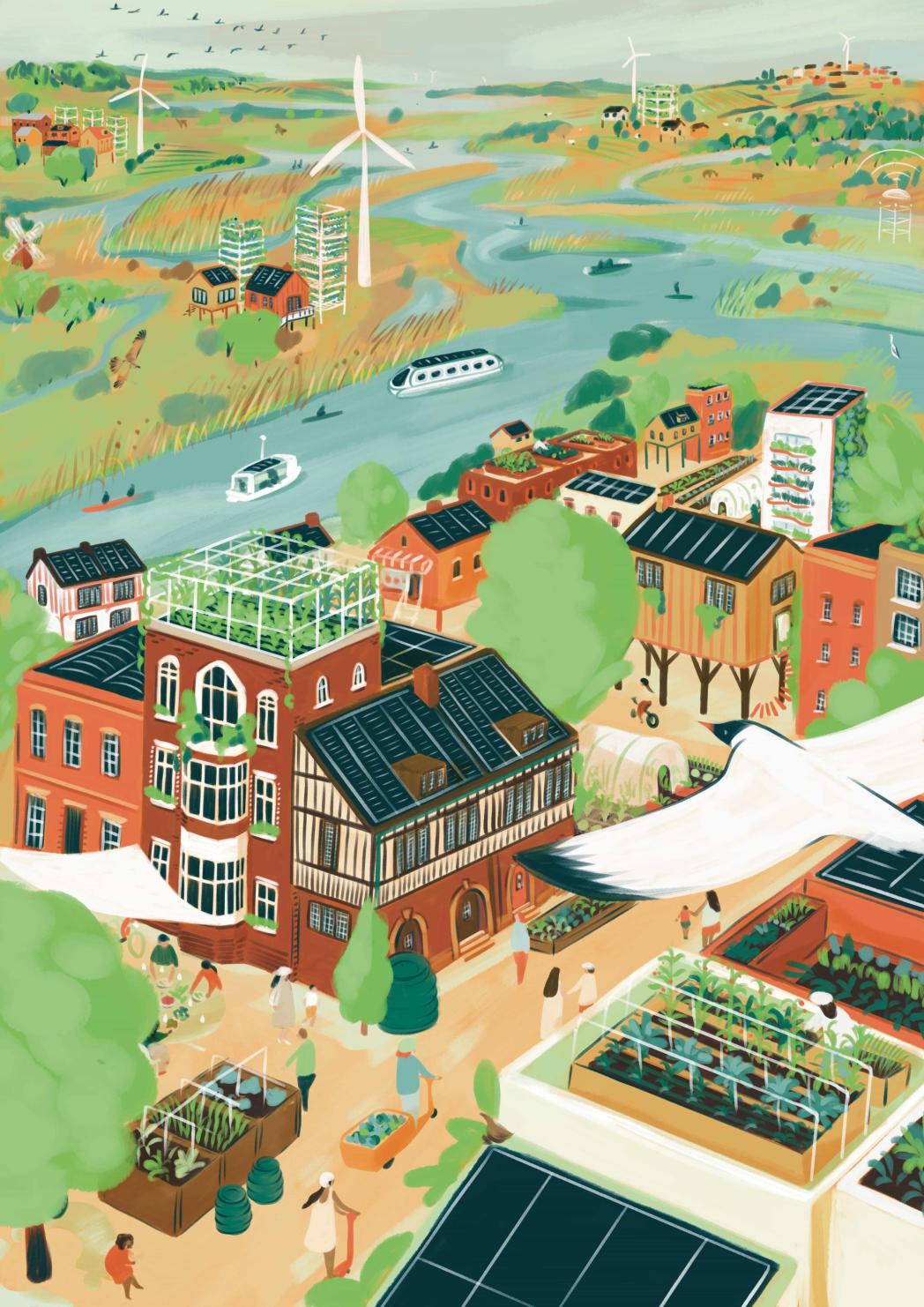
In Norfolk, people imagined a wetter landscape due to rising sea levels, with people living on higher ground and islands in climate-adapted buildings. They envisaged more use of vertical space, including vertical farming, and sustainable seafood from a restored marine environment.
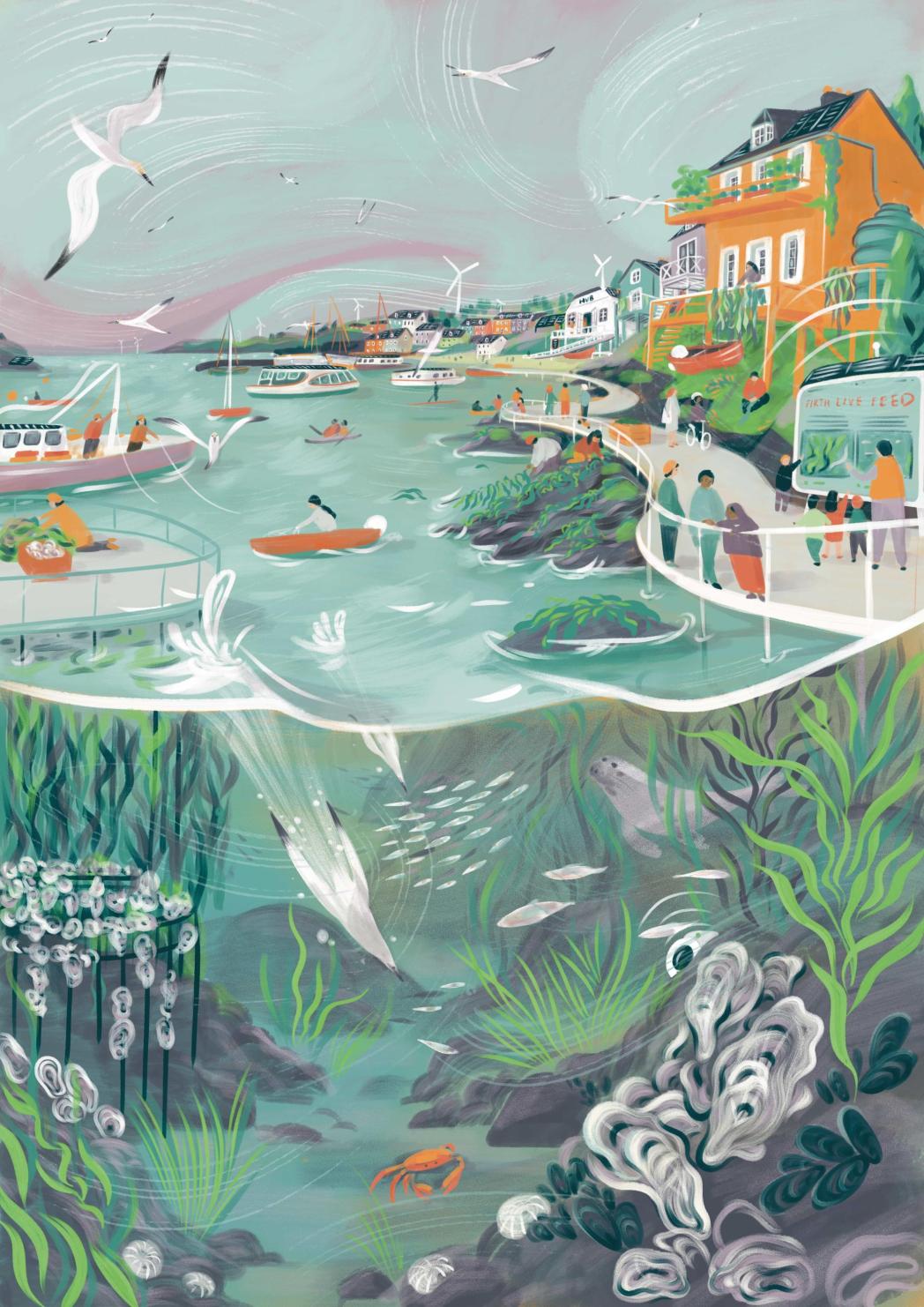
In the Firth of Forth, people imagined re-established oyster reefs in the Firth helping to support a restored marine ecosystem, including lobster and herring fisheries. They envisaged coastal parks and a restored coastline with boardwalks, helping people improve their health with better access to nature, and protecting buildings behind from rising sea levels and storm surges.
Overall, the futures people imagined felt more secure and less precarious, and the pace of change less breakneck. Innovation blends with tradition to create visions that are simultaneously different and familiar.
How do we get there? The Science of Hope
The Good Anthropocene project follows on from the 2026 Living Planet Report, which focuses on the ‘Science of Hope’. The Living Planet Report outlines how it is possible to deliver positive change for nature, if you have a clear goal, a clear pathway to achieve it, the agency to act, and the resilience to keep going. It highlights successes including increasing numbers of tigers, green sea turtles and bluefin tuna.
The Living Planet Report also highlights the importance of ‘positive tipping points’ – the idea that small changes can add up until a system ‘tips’ and a positive trajectory becomes self-reinforcing. For example, it suggests the global energy system has already reached a tipping point, with solar power now the cheapest source of new electricity in most countries, and global solar capacity doubling every three years.
With this in mind, we explored how we might get to these futures in relation to our Wholescape areas. We identified three ‘core shifts’ in thinking that need to take place:
- Core Shift 1: From Siloes to Systems – a shift from short-term, siloed, linear thinking to a worldview based on interconnected social-ecological systems and long-term thinking.
- Core Shift 2: From Fatalism to Agency – a shift from a disempowered, fatalistic mindset to one of optimism, agency and co-operation.
- Core Shift 3: From Extraction to Stewardship – a shift from approaches based on destructive extraction to those based on stewardships and shared governance of nature and environment.
Seeds of Hope
Lastly, our Good Anthropocene project identified things that are already happening which offer hope for good change. In particular, we present evidence that WWF’s Wholescape approach is starting to change how people are operating – beginning the shifts away from siloes, fatalism and extraction towards systems, agency and stewardship.
For example, in Pembrokeshire WWF is helping to regenerate the River Cleddau by supporting farmers in the dairy sector to transition to regenerative agriculture – including by de-risking farmers’ financial transition.
In Norfolk, WWF is working with Norfolk County Council to deliver community workshops, events and resources that support local people to have meaningful impact on the monitoring and delivery of nature recovery projects, as part of Norfolk’s Local Nature Recovery Strategy.
In the Firth of Forth, oyster restoration has become a focus for reconnecting people to their marine heritage, including the Newhaven community choir singing songs from when the oyster fishery was central to the local community and economy.
These individual projects, while not individually transformative, contribute to the broader Wholescape initiatives. By linking action across land, rivers, coast and sea, and delivering for nature, climate and people, we hope these projects will combine to deliver positive tipping points, and show how delivering positive futures at a local level is possible.
Perhaps the most important theme from the Good Anthropocene project is the concept: good change is possible. The futures imagined in this project show us possibilities. By focusing on core, systemic shifts alongside tangible, real-world projects, we believe it is not only possible to imagine good futures. It is possible to achieve them.
-
 © WWF-UK
Authors
Benedict Dempsey, Chief Advisor Social Science, WWF-UK
/
Have a question about this article?
Get in touch: contentunit@wwf.org.uk