
Counting in the canopy
With support from WWF-UK, WWF-Malaysia are piloting the use of computer vision and artificial intelligence to enhance the conservation of critically endangered orangutans.
Project overview
Artificial intelligence (AI) is pushing boundaries and exploring new frontiers in conservation. In Sabah, a pioneering project led WWF-Malaysia may help to better protect critically endangered orangutans by assisting in population counts.
With support from WWF-UK and partners, the team in Sabah is piloting the use of computer vision and deep learning models to help with automatic nest detection from aerial images. Put simply: a computer is being trained to identify and count orangutan nests from pictures taken by a drone, which will be used to derive population estimates. The aim is to overcome ‘people power’ limitations which involves counting the nests manually.
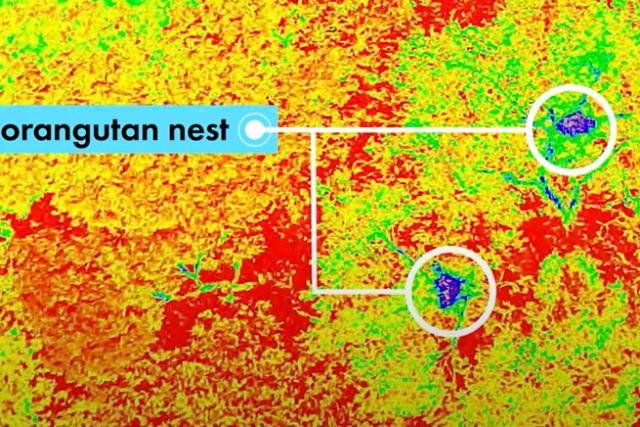
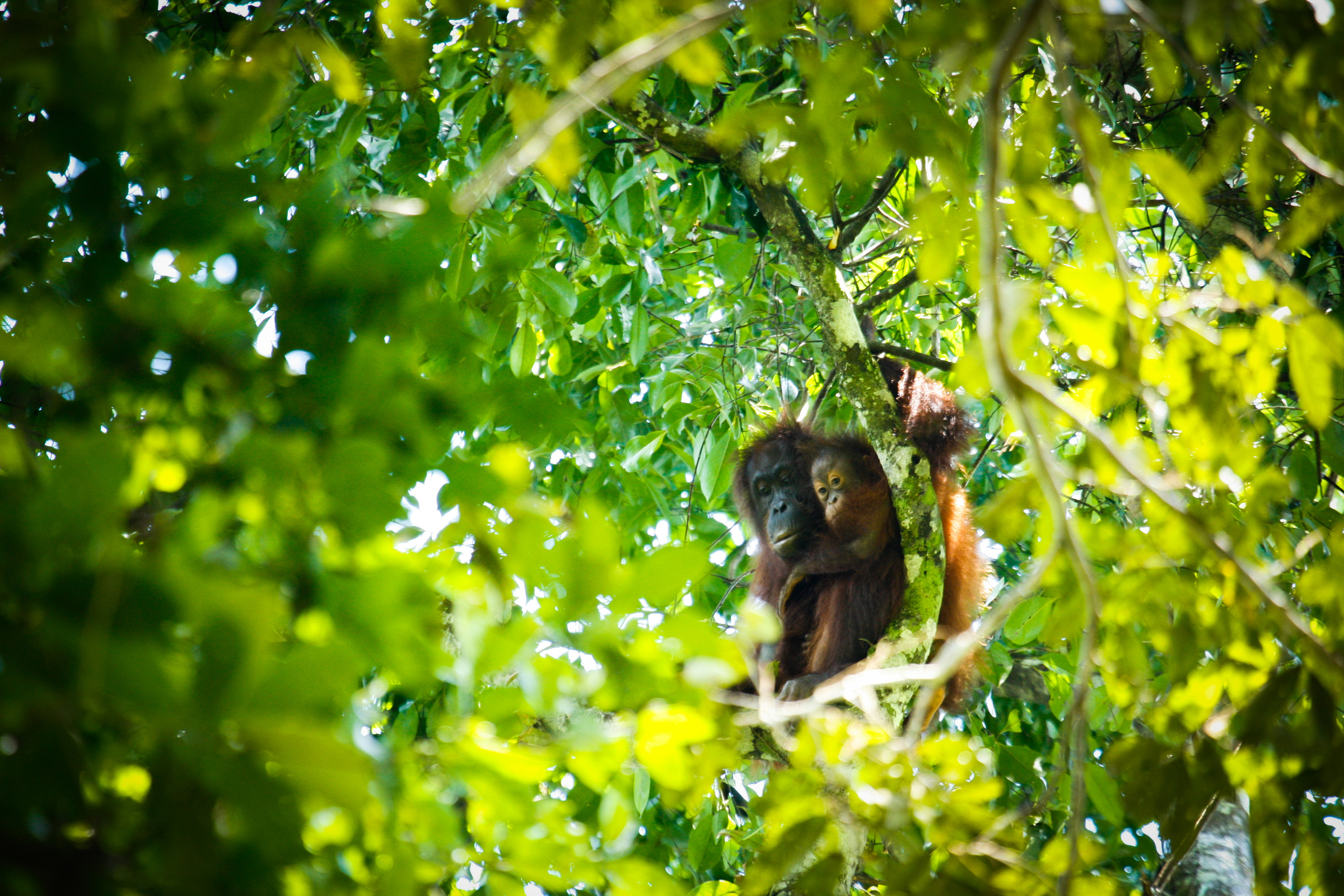
Conducting orangutan population surveys are often costly and time intensive. On top of the obvious challenges of working in dense, forested habitat, orangutans are tree-dwellers. Only rarely do they descend to the forest floor, which makes the chances of spotting one very slim.
Instead, scientists count the nests that orangutans build in trees on a daily basis, to estimate the number of orangutans in an area. This the most accurate way of counting them in the wild.
Orangutan surveys are typically conducted using two primary methods: ground surveys and aerial surveys, which may involve helicopters or drones. Each comes with their own advantages and limitations. With ground surveys, you have limited manpower as well as the difficulty of accessing remote areas. Helicopters can cover large areas. However, they depend on observers manually counting nests from the air and can be very expensive. Drones provide a more cost-effective alternative but are limited in range and you have the tedious process of downloading images and looking through all the footage.
Why we are doing it
Borneo and Sumatra are home to three species of orangutan: Tapanuli, Bornean, and Sumatran.
Once widely dispersed across south-east Asia, orangutans are now restricted to fragmented tropical forest in only two islands: Borneo and Sumatra. A devastating history of habitat loss, fragmentation and degradation due to logging and agricultural expansion (particularly for palm oil) means today, all three species are critically endangered.
Conserving and restoring orangutan populations is vital to maintain healthy, balanced ecosystems. These ‘gardeners of the forest’ help to spread seeds around by eating fruit from trees and depositing the seeds in their waste. This is particularly important for large seeds that won’t get spread by smaller animals, like birds.
Population surveys are an integral part of species conservation. By monitoring population trends, we can assess the effectiveness of current conservation measures and adjust approaches accordingly.

Project impact
The overall aim is to explore tech-driven solutions for monitoring orangutans. Excitingly, latest testing shows one of the models can classify aerial images of orangutan nests with an accuracy and precision of 99%.
Donna Simon, project lead and Orangutan Conservation Manager for WWF-Malaysia says initial results are positive:
“I am happy that the results are encouraging, and it demonstrates the potential of AI assisted nest detection to recognise nests from drone images.”
“By integrating advanced technologies with conservation, we hope that we can improve species protection, as well as maintain healthy ecosystems.”
Adopt an Orangutan
Adopt an Orangutan
Your adoptions will help protect orangutan habitats and help fund our other vital work around the world. When you choose an animal adoption, you are supporting both your chosen animals as well as wider work to help bring our world back to life.