
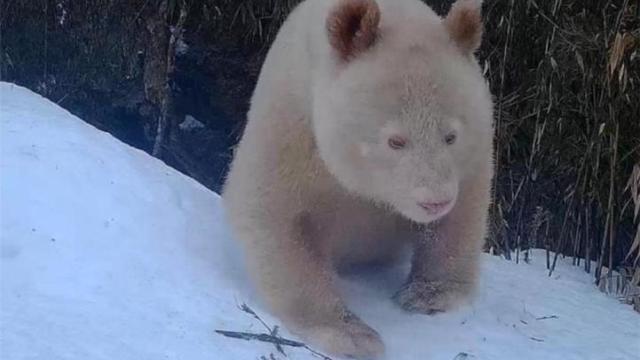
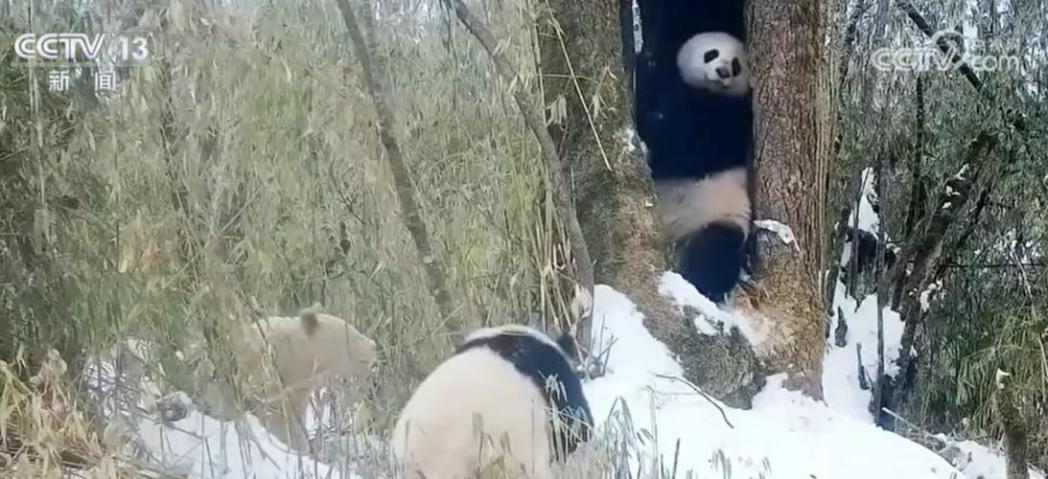
An all-white Panda spotted in the Wolong area
Accurate at time of publication: 20 November 2026
Protecting Panda Forests
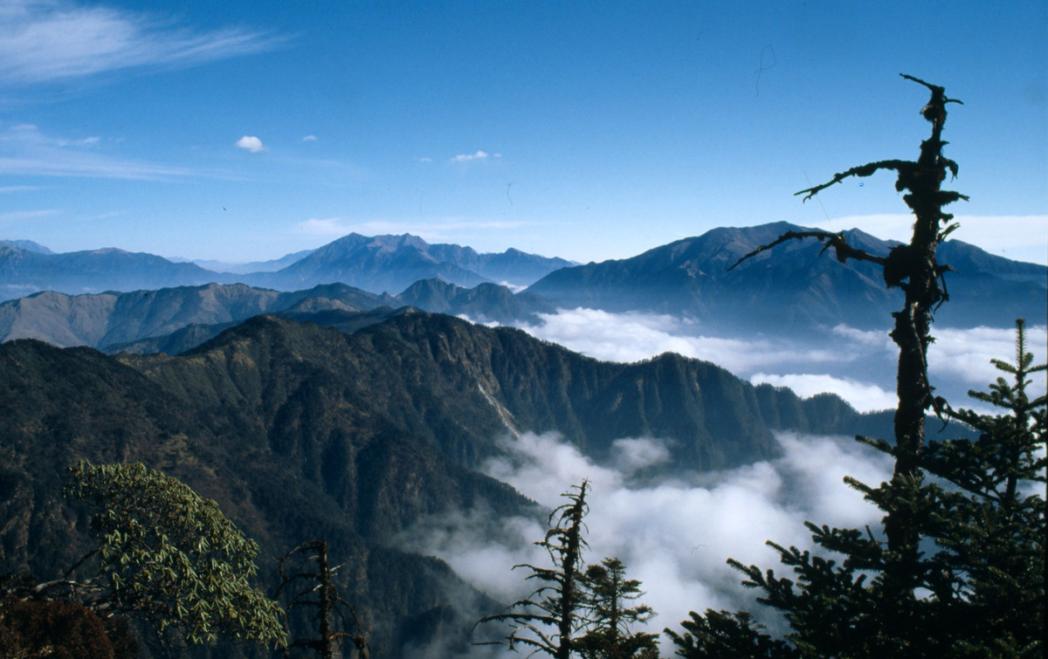
In 1978, panda researcher Hu Jinchu established the world's first wild giant panda field observation station - known as a Wuyipeng - in Wolong, Sichuan. In 1980, Hu and WWF's invited scientist Dr. George Schaller began joint field research there, marking China's first international collaboration in endangered species conservation. Local partners, rangers and communities continue this important work today, monitoring, protecting and restoring wild giant panda populations and their habitat. Camera traps play a key role in this work, providing non-intrusive insight into the world of Wolong’s giant pandas.
A little off-brand
When you think of a giant panda, you think of black and white, dark teddy bear ears and endearing eye patches. A species so recognisable they’re the face of WWF. But every so often, pandas may go ‘off brand’.
This year, the Wolong area of Giant Panda National Park released new footage from such cameras. Captured between 2024 and 2026, the footage documents the activities of the world’s only known wild white giant panda.
Trekking and Tracking for a rare sighting
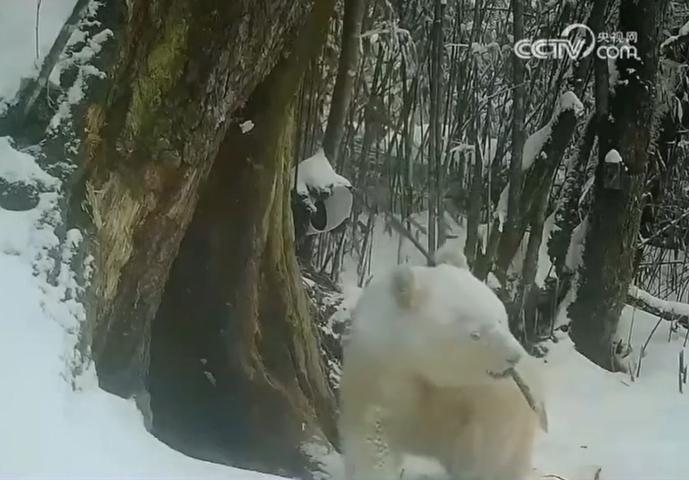
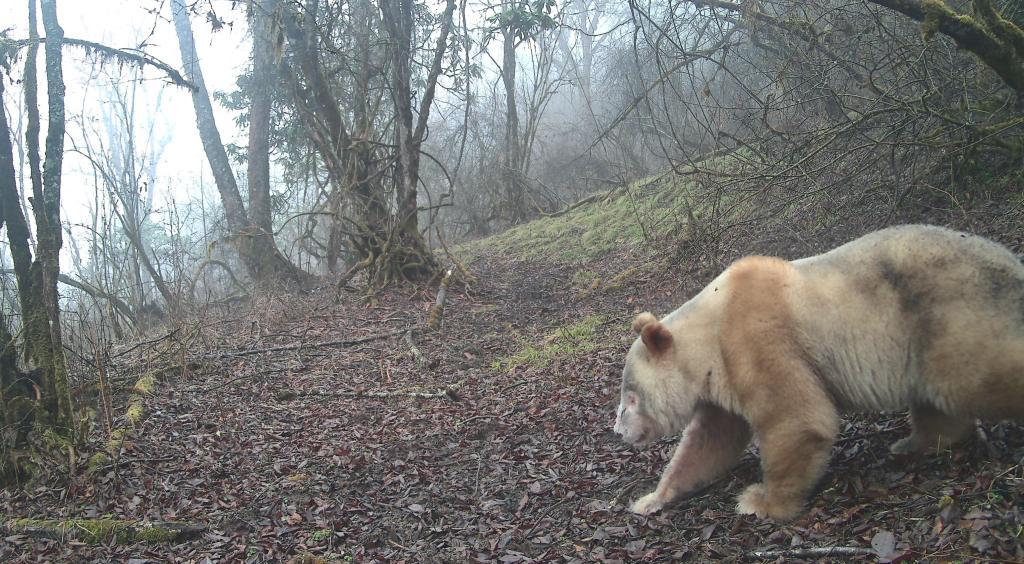
The unique panda was first discovered in 2019 as a juvenile. To track and study giant pandas over the long term, the Giant Panda National Park Wolong area Administration established a dedicated conservation and research programme. To monitor this panda and others living in the same area. A network of camera traps was deployed across a 15km2 area around the site where the panda was first discovered. To reach the site, rangers are required to hike for ten hours, wading through water and dense bamboo forest at altitude. Over the years, these dedicated individuals have confirmed this is a male panda and tracked his behaviour, movements, growth and development, as well as changes in the local wild giant panda population. Today, the white panda appears to be thriving as an adult, in good shape and moving with ease through the forest. In camera trap recordings from 2026, we can also see his legs and ears have developed a subtle brown tint - a nod to the black markings we’re used to seeing on giant pandas.
Life in the Forest
The cameras have regularly recorded him following a favoured path leading to a hollowed-out tree in which he spends time climbing and playing. On one occasion, he found the hollow already occupied by a giant panda mother and cub. They duo weren’t up for sharing, driving away the white panda before he could get too close.
Such tree hollows found in ancient forests provide important denning habitat for pandas as a safe place to give birth and raise their cubs. This exceptionally rare footage highlights the high-quality and stable habitat that Wolong provides for wild giant pandas to thrive – albino or otherwise!
-
 © Bethany Whant
Author
Bethany Whant, Stories & Content Researcher, WWF-UK
/
Have a question about this article?
Get in touch: contentunit@wwf.org.uk