
Icy Insights: Duties Of A Penguin Researcher On The Edge Of Antarctica #2
Accurate at time of publication: 7 January 2026
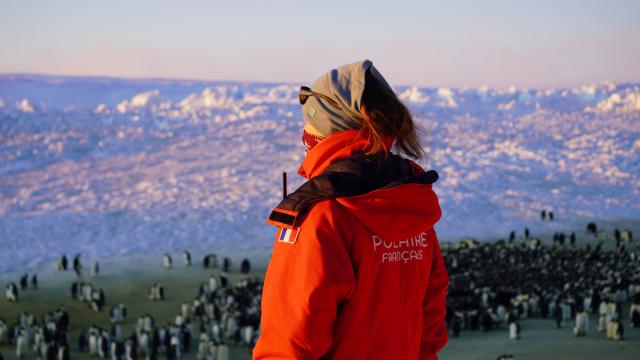
Investigating Antarctica
In 1956, around 5km off the shore of the east Antarctic mainland, in the Pointe Géologie archipelago, the Dumont d’Urville (DDU) research station was created. The research station covers a wide range of scientific disciplines, including atmospheric and seismic research, but has a strong focus on birds' studies. These species, which are top predators and often range widely across the ocean, are used as indicators of the health of the Southern Ocean ecosystem.
In 2010, the Centre d'Etudes Biologiques de Chizé (CEBC), a CNRS lab, began carrying out research here to identify biodiversity hotpots using these ecosystem sentinels and understand and predict the effects of climate change on biodiversity. Every year, several researchers, students and field assistants journey to the field to ensure this long-term monitoring continues. They are investigating seabird species’ population characteristics, foraging behaviour, at-sea distribution, and life cycles.
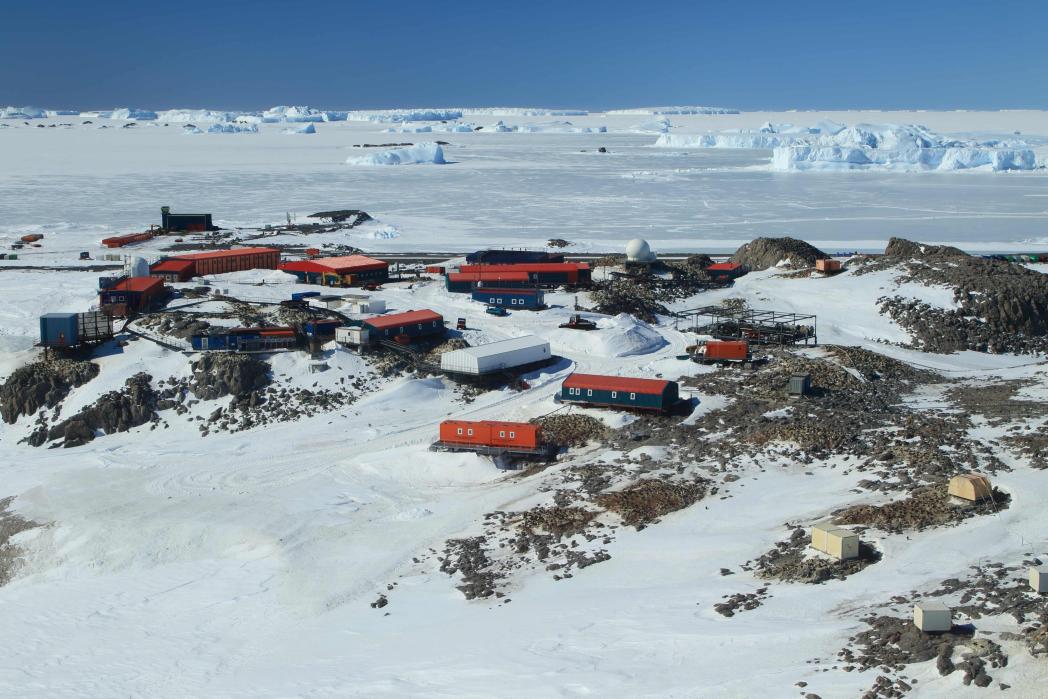
The fieldwork at the DDU largely focuses on bird colonies during their reproductive cycles (from egg laying to chick fledging), marking birds and seals with rings or tags to provide individual monitoring, deploying miniature GPS and geolocators to study foraging trips during the breeding or winter periods, respectively, and documenting some specific behaviours such as chick kidnapping.
The study area extends over approximately 50km² and 50 islands. Part of the archipelago was designated under the Antarctic Treaty System as an Antarctic Specially Protected Area for its importance as a nesting site for emperor and Adélie penguins, among other birds.
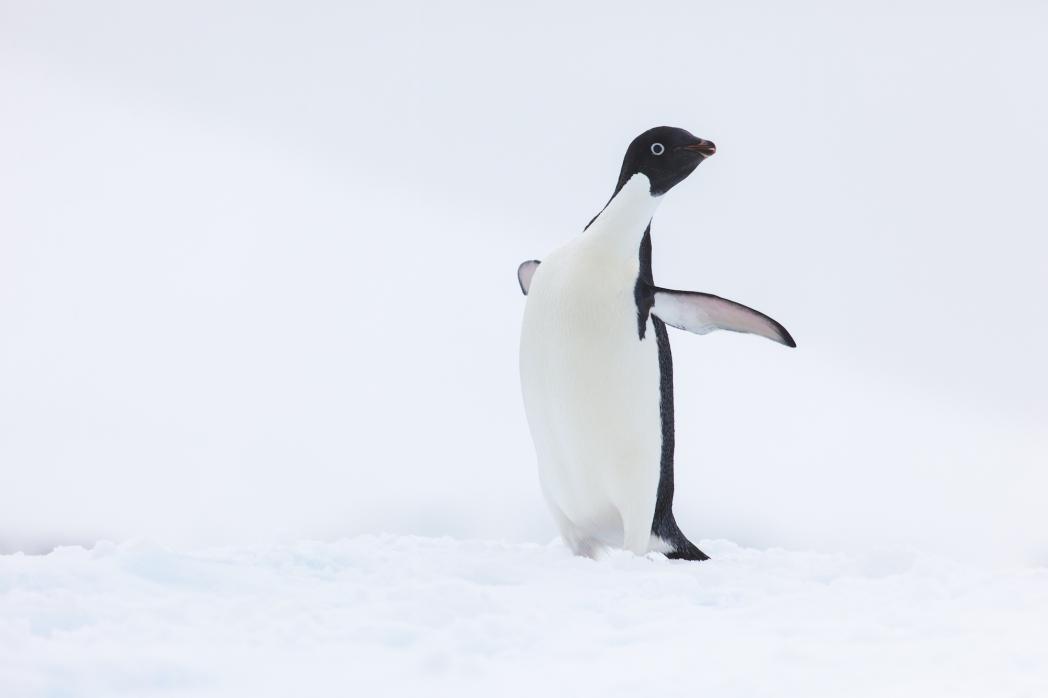
WWF has worked with the CEBC since 2010, focussing on monitoring the response of Adélie penguins to climate change. WWF funds support the running of the penguin research team in DDU. From tagging and tracking to technical analyses and modelling, the team’s vital research gives us insight into these plucky little penguins' lives to inform conservation and advocacy efforts to protect them, their home and the stable climate they rely on. For example, by understanding where the penguins go when they feed, we can understand the most important areas to protect.
During this time, with WWF's support, the penguin research team at the CEBC has published over 45 scientific articles based on research carried out from the DDU, working with over 40 students and researchers.
Meet Amandine, an Adélie ally
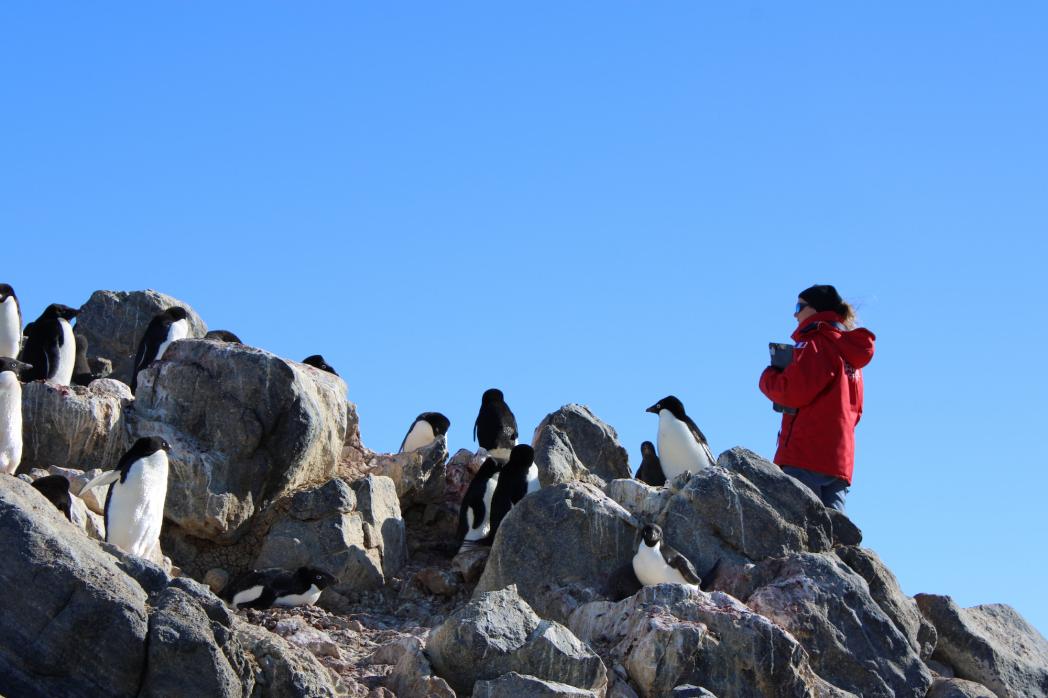
In 2025, Amandine Barles is the latest dedicated field assistant to join the CEBC research team at the DDU, studying birds and marine mammals as sentinels of global changes in the Southern Ocean.
Braving the Austral winter of Antarctica, with temperatures dropping to -35°C, is no mean feat and the powerful weather and biological rhythms of this wild place dictate her schedule. In her duties of monitoring breeding populations of marine predators at the station, no two days look the same.
The archipelago supports around 50,000 pairs of nesting Adélie penguins. To understand how this emblematic species may be affected by global changes, Amandine supports the research team with rigorous counts. Each Adélie penguin colony of the archipelago is counted 3 to 5 times annually, at different moments during their reproductive cycle. This continues the long-term monitoring of this population that has been conducted annually since 1989! This provides invaluable long-term insight into how Adélie penguins are currently being impacted by climate change and how they may be impacted in years to come. For example, we know krill (one of their main food sources) rely on sea ice to breed and feed under, and warmer temperatures are affecting chick hatching times, emerging when food is scarcer - what does this mean for the penguins and their future?
It’s a high stakes situation, and there are a lot of birds to keep track of, so the team’s diverse areas of expertise and research techniques are key. For example, other members of the team work to fit Adélie penguins with GPS trackers, using the data to understand more about Adélie penguin feeding behaviour and how this is being impacted by environmental change. It’s a team game - the more data we have, the better!!
"It sounds cliché but I really don't have a "typical day". My work is very dependent on the life cycle of the species and the weather."
Amandine Barles, CNRS field assistant
A glimmer of hope
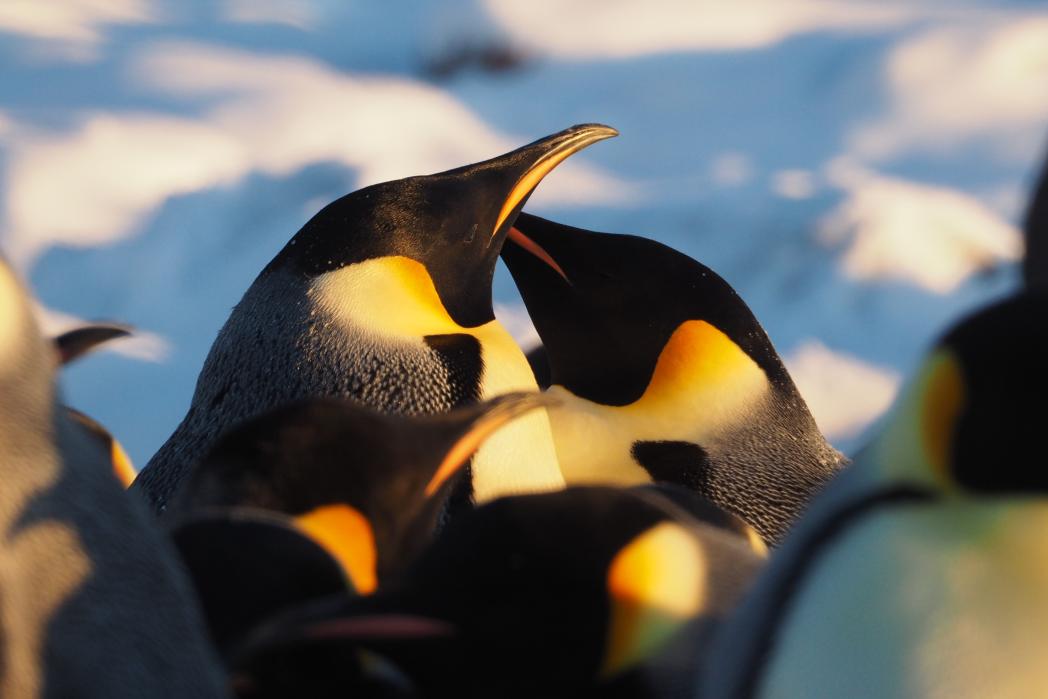
The Pointe Géologie archipelago also supports a colony of 5,000 pairs of Emperor penguins. With a reliance on land-fast sea ice (stable sea ice that is firmly attached to the shore) on which they breed and raise their chicks, this penguin’s prognosis can look bleak. Current predictions suggest that in scenarios in which greenhouse gas emissions continue to rise at current levels, emperor penguin populations will fall by 99% by the end of the century, leading to the virtual extinction of this charismatic species.
But in 2025, from Amandine, from CNRS, from the Pointe Géologie archipelago, we received a glimmer of hope.
Among her Adélie assignments and diverse research duties, Amandine supports the team in monitoring the emperor colony when they are present from March to December. Every year, the team count the number of incubating males in the colony in late June, when the females are gone. This data continues the annual monitoring of this colony that has taken place since 1952, with the count of males representing the number of breeding pairs for the year. Later in the season, this can be compared to the mortality of eggs and chicks to generate an estimate for the reproductive success of the year. When Amandine wrote to us in late August 2025, her field journal contained some promising early insight from the year’s counts…
"For now, 2025 seems to be a good year for the emperor penguins of Pointe Géologie, with low mortality for chicks and the highest number of incubating males counted since 1975! Hopefully it stays that way!"
Amandine Barles, CNRS field assistant
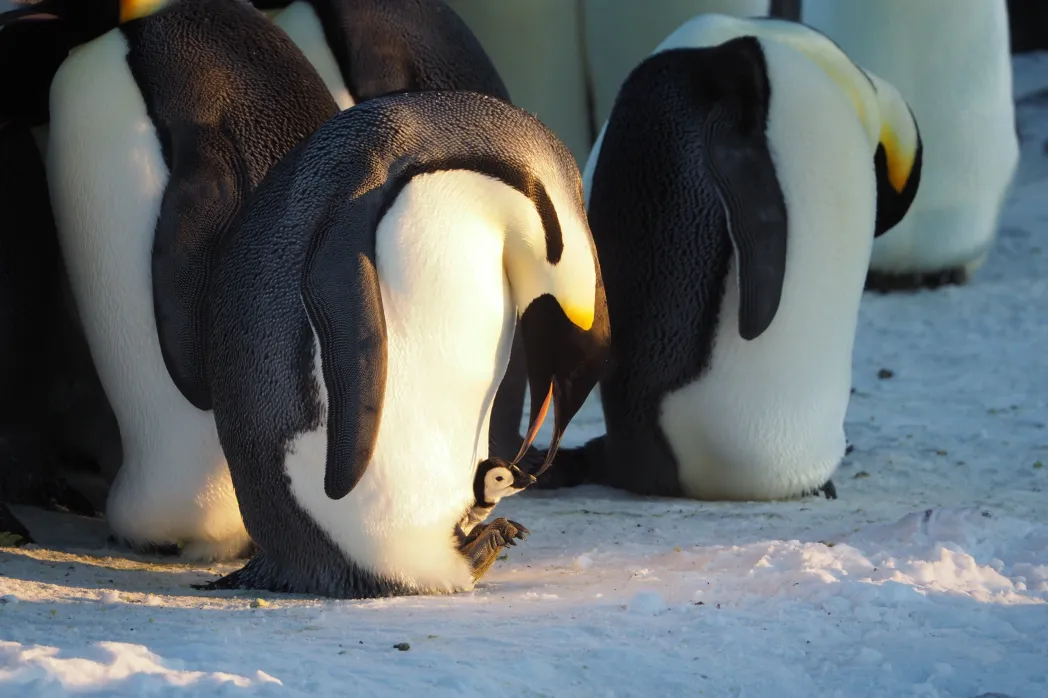
Along with these encouraging data, Amandine’s field journal also gave us a privileged view into her rather unique workplace. Through her camera lens, she shows us the beauty that is Antarctica, her photos giving us another reason to remain hopeful and inspired, driving forward on our efforts to protect penguins together.
-
 © Bethany Whant
Author
Bethany Whant, Senior Content Research Executive, WWF-UK
/
Have a question about this article?
Get in touch: contentunit@wwf.org.uk