
War, Energy and the Cost of Food: The Urgent Need to Transform Our Food System – Part 2
Accurate at time of publication: 28 April 2026
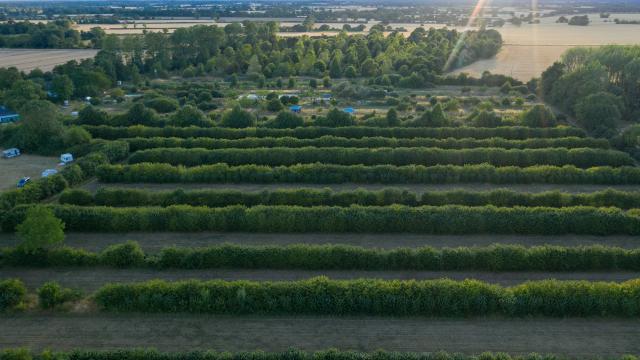
In this two-part blog, we take learnings from the clean energy transition to explore how we might transform and build a better food system - based on what, where and how food is produced.
How we produce
The required food system transition should take a leaf from the clean energy transition in how it produces. Nature-positive farming and clean technologies - in the form of ‘nature-based solutions’ - offer a way out of food production price spikes and a route to lower environmental impacts.
Nitrogen fertiliser costs UK farmers about £397 million a year — roughly £21 to £52 per hectare — and accounts for nearly half of annual farming profits. Much of this fertiliser is not utilised by the crops. Instead, it leaks into rivers, causing serious environmental harm and damaging freshwater ecosystems.
Reducing our reliance on synthetic fertilisers and other costly and volatile inputs (such as pesticides and herbicides) is essential to shield us from volatile fossil fuel prices, build resilience and to mitigate environmental harm. Encouragingly, this transition is achievable - whether through embracing innovative alternatives or more efficient, targeted use.
Certified low-carbon organic fertilisers such as compost and digestate can significantly reduce dependency on synthetic fertilisers, put “Pounds in Pockets” of farmers, and reduce impact on the natural environment.
WWF-supported trials are under way at the Holkham Estate in Norfolk to test reduction of chemical fertiliser through the use of seaweed stimulants to mitigate nitrogen and phosphorus pollution in Norfolk's waters. First year figures in 2024 offer encouraging results.
WWF-UK also modelled changes in the profitability of typical dairy farms resulting from the transition to regenerative farming practices, and found they can be more profitable and more resilient to changes in the price of milk or inputs like fertilisers. They have lower revenue and milk volumes, but their profit margins are higher i.e. they are better at converting revenues into profits. They also have much lower environmental impacts. Carbon footprints are reduced by half for the whole farm and on a per hectare basis. The nature benefits include: lower nutrient pollution of water and soil, as a result of lower stocking rate and reduced fertilisers application; better soil health from plant diversity and rotational grazing; higher pollinator abundance and diversity delivered by more diverse grasslands. However, farmers can’t do it alone - government, industry and financial institutions must step up with the support needed to help farms transition to a more resilient future.
What we produce
One kilowatt-hour of electricity from either coal or clean renewables generates vastly different environmental impacts. The environmental impact of food calories similarly varies depending on the type of food and method of production. Still, food security is more than just having enough calories. It’s also about nutrition security i.e. the ability to provide a resilient supply of affordable, accessible, and sustainable food that meets the nutritional needs of society.
The ecological burden of feeding livestock is out of proportion to the contribution of meat, eggs and dairy to our calorie and protein provision. Grazing and feed crops represent 85% of the UK’s total agricultural land footprint whilst supplying only 32% of our calories and 48% of our protein. This is because the way we produce meat, eggs and dairy is inherently inefficient. Using arable land to grow crops to feed livestock, rather than using it to feed people directly, means that far fewer calories and more limited nutrients reach the human population than might otherwise be the case.
There are and will continue to be enough calories to feed the world to 2050 but there are global shortfalls and regional differences in availability of healthy foods which will also continue if we don’t do things differently.
Per capita global availability of food has increased since the 1960s and that should be celebrated. Agricultural innovations boosted productivity and helped to expand provision and supply of food in parts of Asia and Latin America (without being fully implemented in Sub-Saharan Africa). However, this so-called “Green Revolution” prioritised yield and efficiency, often at the cost of soil health and biodiversity, and ushered in an age of dependency on fossil fuel-based inputs. Sticking with this model perpetuates the environmental harms of food production, both now and into the future. Instead, Governments, industry, financial institutions and development donors should focus on land tenure security and advisory services for small scale farmers to boost crop yields in existing farmland, and invest in keeping our forests standing to stabilise the climate and transition to nature- positive agriculture.
Animal-based foods, oils and fats have risen beyond healthy diet targets globally, while fruits, vegetables, legumes, nuts, and seeds) are still well below target. This has happened at a cost to human health, coinciding with the rise in obesity rates across the globe, as well as at a cost to climate and nature. This is most starkly illustrated by industrial cattle ranching and soy production for animal feed which drive deforestation in the Amazon.
Despite the obsession with increasing protein from animal sources in diets, it’s not protein we lack. This is true globally (albeit with regional differences) and in the UK, where the current emphasis on growing the poultry sector does not align with the nutritional needs of the nation. And the environmental impacts of the vast chicken sheds are completely out of sync with public expectations for government to address river pollution.
Where we produce
Despite the allure of increasing self-sufficiency to protect from the volatility of global supply chains, this is not a realistic solution and where analogies with the energy sector are more limited.
To start with, there is the matter of what people like to eat. We will never be able to produce coffee, cocoa or bananas in the UK. Or lettuce and tomatoes in the winter as efficiently as other geographies. Trade has been important for food security, ever since humans started to move into cities, and will continue to be so in the future. Indeed, the UK relies on trade for a resilient nutritional diet. Half of the food we eat is imported, including 80% of fresh fruit, 60% of vegetables (rising to 90% over winter), and all our rice. We might seek to reduce this level of overseas dependence and eat more of what we grow on our shores, but we won’t eliminate imports. The bigger concern is the growing percentage (currently 16%) of agri-imports coming from highly vulnerable climate regions. Environmental damage abroad erodes food system resilience, increasing the UK exposure to price rises and food shortages.
Furthermore, without demanding minimum food production standards, trade encourages poor practices overseas, resulting in environmental harm that further undermines food system resilience and increases food and price insecurity for the UK. Due Diligence for Forest Risk Commodities is long overdue to ensure imports don’t contribute to deforestation. Core Environmental Standards for trade would further set a minimum floor on other environmental metrics to ensure responsible farmers and businesses – domestic and international – are not undercut. This would support long-term competitiveness by rewarding sustainable production.
Secondly there is a natural cap to how much we can produce domestically. On top of capital, technology and human resources, food production depends on natural resources such as land, water, energy, soil, biodiversity, and a stable and predictable climate. Extreme weather events and nature loss are affecting production at home and abroad.
Ecosystems can collapse fast, and the shock hits our shopping baskets almost overnight. Take overfishing: a fish that was once plentiful and affordable has been pushed to the brink of scarcity, with some UK retailers now halting sales of Atlantic mackerel.
This calls for domestic and international action to meet climate and nature goals to protect the natural resources required for stable levels of food production.
From volatility to reliability
Global food systems are exposed to volatility driven by fossil fuel dependence, climate change and nature loss. Rising energy and fertiliser costs exacerbated by conflicts have historically led to sharp increases in food prices, and these risks persist today. Environmental pressures are intensifying and several well-respected reports warn that global food security could come under serious threat in the near future. These overlapping risks highlight how deeply interconnected energy, climate, nature and food systems are, and how fragile current supply chains have become.
A transition towards more resilient and sustainable food systems is urgently needed. This includes adopting nature-positive farming methods that reduce reliance on fossil fuel inputs, improve profitability, and lower environmental impacts. It also calls for rethinking what food is produced and where it is produced, recognising the continued importance of global trade alongside stronger environmental standards in trade and in national production.
-
 © David Bebber / WWF-UK
Author
Sofia Parente, Head of Supply Chains Policy, WWF-UK
/
Have a question about this article?
Get in touch: policyinsights@wwf.org.uk