
The Ganges
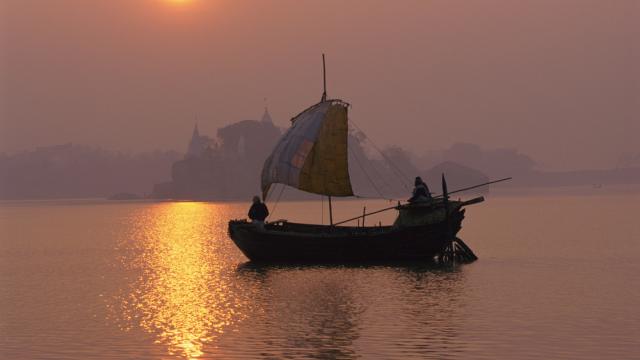
The sacred river Ganges is crucial for India, culturally, economically and environmentally.
About the Ganges and why it is so important
The Ganges river basin is the largest river basin in India. More than than 600 million people – nearly half of the country’s population – rely on the river for food security and essential freshwater resources.
The Ganges (known locally as the River Ganga) is also home to a wide range of rare and threatened species, including the iconic Ganges River dolphin, otters, freshwater turtles, and the critically endangered gharial. It is emblematic of India’s rich culture and is steeped in religious significance.
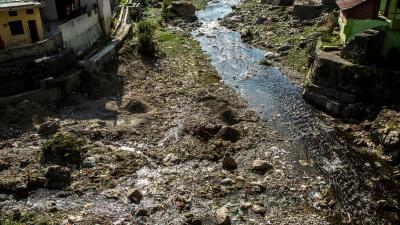
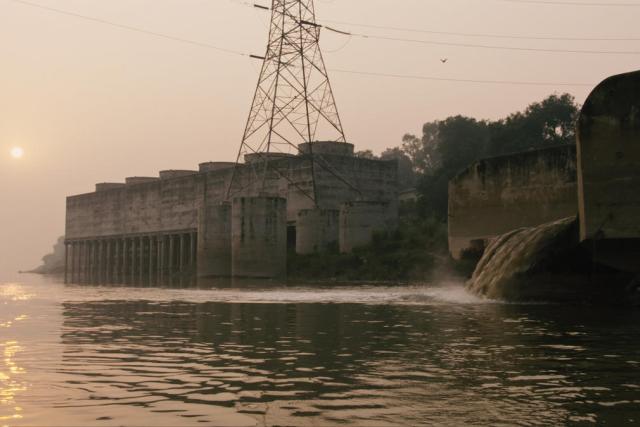
However, the Ganges faces many threats. This includes unsustainable use of freshwater for agriculture, fragmentation, industrial and urban pollution, and the impacts of climate change.
Commonly asked questions about the ganges
Where is the river Ganges?
The River Ganges originates from Uttarakhand in the Western Himalayas, flows down across northern India into Bangladesh, into the Bay of Bengal. [1]
How long is the river Ganges?
The River Ganges flows for approximately 2,525 km. [2]
Where does the river Ganges start?
The River Ganges starts in Gaumukh, located in Uttarakhand, India, in the Western Himalayas. [1]
What countries does the river ganges flow through?
The River Ganges flows through India and Bangladesh. The wider river basin extends into Nepal, Bhutan and China (Tibet). [1]
What is the river Ganges used for?
As well as being a critical freshwater ecosystem, the River Ganges is a vital source of water and livelihoods, supporting agriculture, industry, fisheries, transport, tourism, and religious and cultural practices. [3]
How polluted is the river Ganges?
The Ganges faces severe pollution from various sources, including industrial waste, sewage and agricultural runoff. Contaminants include organoflurine compounds, which are used in industrial applications and are extremely difficult to break down. Synthetic chemicals linked to harmful impacts on human and animal health, known as PFAS, fall within this group. [4]
Why do people bath in the river Ganges?
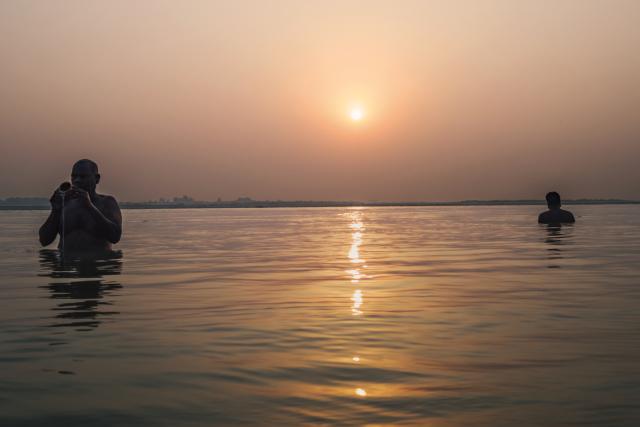
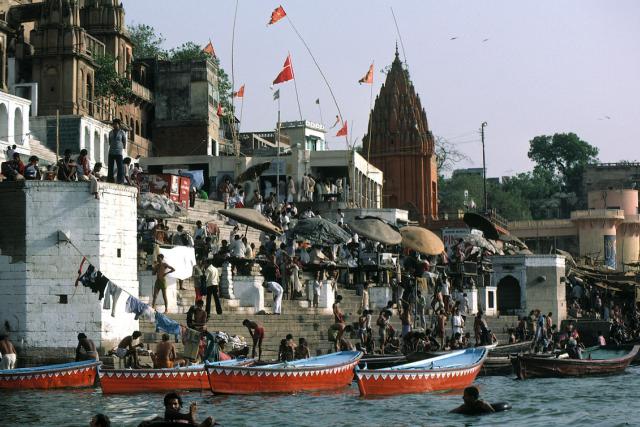
People bathe in the River Ganges (Ganga) for religious and spiritual reasons, linked to Hinduism. [5]
What Wildlife lives in the Ganges Basin?
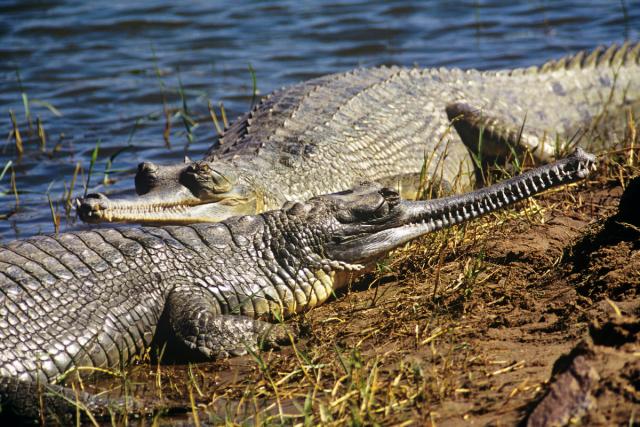
The Ganges and its river basin support lots of wonderful wildlife, particularly river dolphins, otters, freshwater turtles and gharials (small bulbous-nosed crocodiles).
-

River dolphins
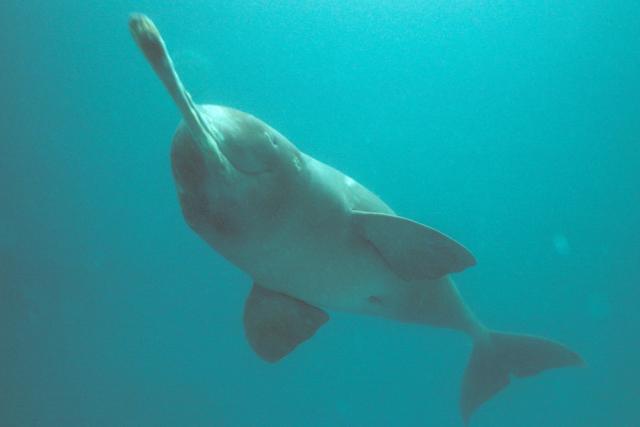
MoreClose The Ganges River dolphin is India’s national aquatic animal. These greyish-brown dolphins are functionally blind – they occupy murky waters full of sediment that has been washed downstream from the Himalayas, so rather than relying on their limited eyesight, they navigate using echolocation. With only around 6000 left, Ganges River Dolphins are classified as Endangered. Major threats include habitat fragmentation by dams and barrages, entanglement in fishing nets, toxic river pollution, and targeted hunting for their oily blubber. River dolphins are top predators in the Ganges, meaning they are a reliable indicator of health of the entire river ecosystem.
-
 © David Lawson / WWF-UK
Gharials
MoreClose Gharials are crucial for healthy river ecosystems. As specialised piscivores (fish-eaters), gharials sustain healthy fish populations. They are highly sensitive to environmental disturbances which makes them key indicators of the Ganges’ ecological health. A thriving gharial population indicates clean water, a flourishing fish population and balanced riparian ecosystem.
-
 © Suyash Keshari / WWF-Australia
Tigers
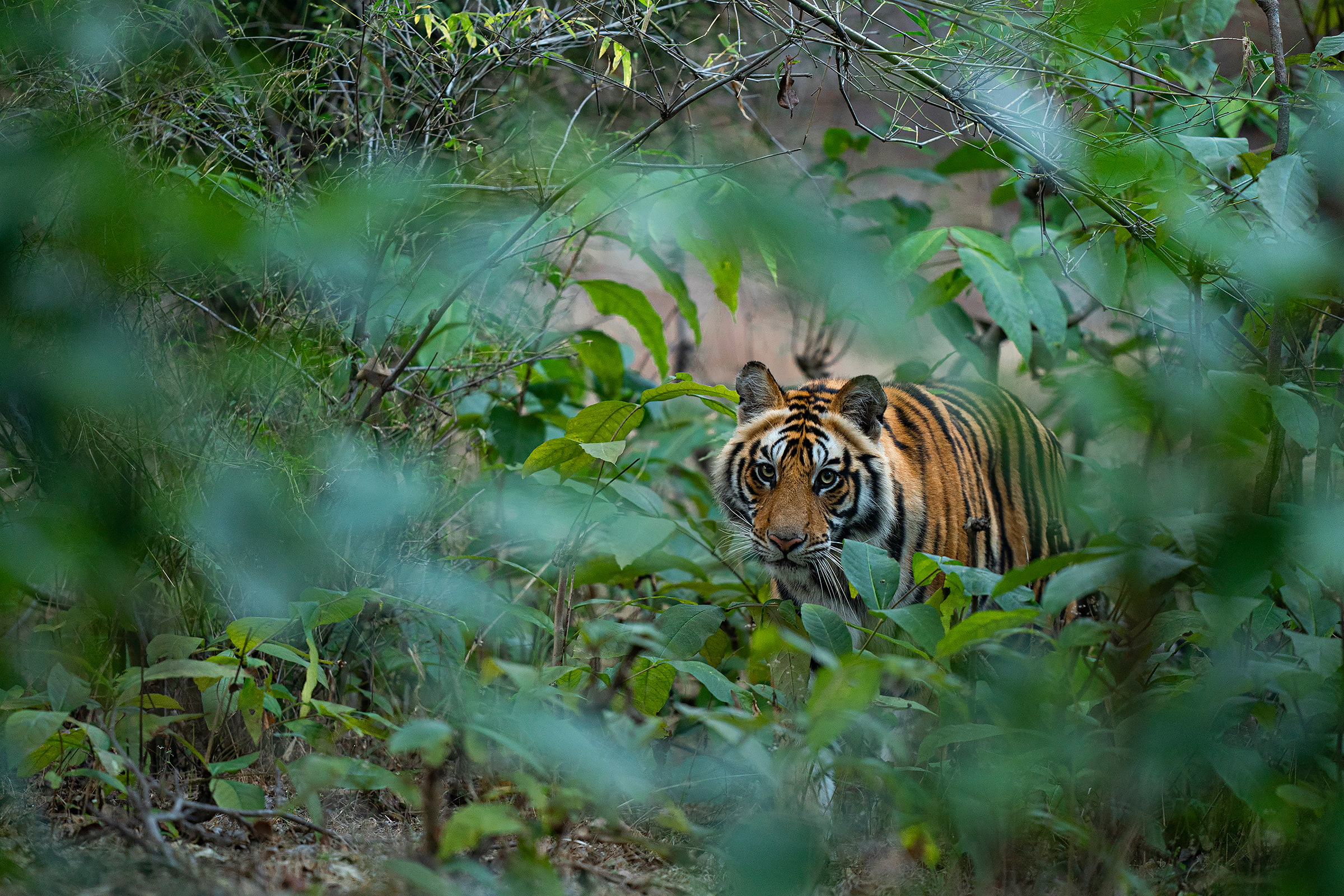
MoreClose The Ganges River and its tributaries help sustain important tiger reserves in northern India, including Rajaji and Corbett. Bengal tigers inhabit the mangrove forests in the Gangetic delta region of India and Bangladesh, known as the Sundarbans. This is the only place in the world where tigers live among coastal mangrove forests
-
 © Ola Jennersten / WWF-Sweden
Turtles
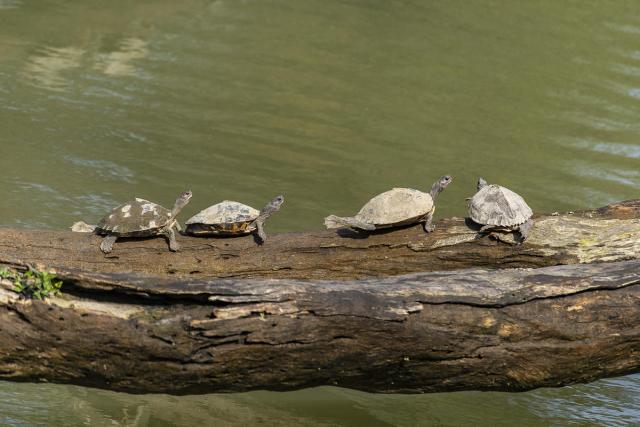
MoreClose The Ganges River is home to 13 native species of freshwater turtle, including roofed turtles, soft-shelled turtles, and tent turtles. These turtles have special adaptions for life in freshwater and play a key role in maintaining the health of the river by scavenging dead organic matter, fish, and controlling aquatic plants and weeds.
-
 © Gareth Nixon
Otters
MoreClose Three species of otter are found in the Ganges River: smooth-coated otter, Eurasian otter, and the Asian small-clawed otter. Otters play a crucial role in maintaining healthy aquatic ecosystems. They help regulate populations of fish and crustaceans in their riverine homes. The river Ganga and surrounding flood plains provide essential food, shelter and habitat for otters to build dens and raise their young.
/
-

-
 © Robin Darius / Felis
-

How we're helping the Ganges river
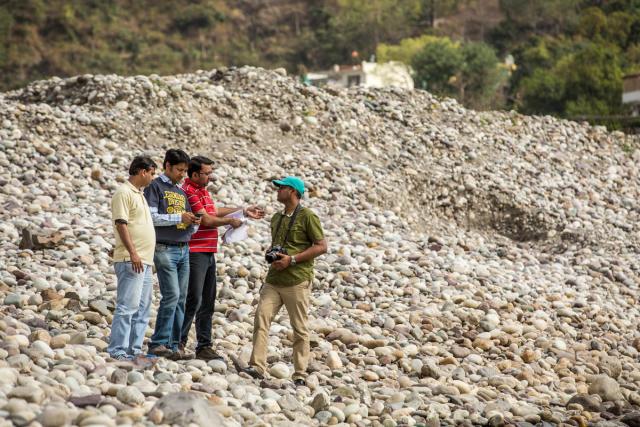
WWF and Reckitt are working together in the Ganga to ensure the improvement of ecosystem health, recovery of aquatic species, and that local communities and businesses benefit from sustainable, nature-positive approaches and inclusive shared management of freshwater systems.
-
 © Robin Darius / Felis
Mitras – friends of the Ganges
MoreClose The word Mitra means ‘friend’ in Hindi. Our Mitras initiative invites volunteers – as individuals or groups – to get involved in various aspects of conservation in and around the Ganges and Ramganga rivers. There are now thousands of people doing just that: concerned citizens trained to gather water quality data and farmers helping to protect turtle eggs; collect rubbish; and 'baal mitras' are 'young friends' who get involved for example in releasing new turtle hatchings. Awareness-raising and political activity are important elements of the programme. In India, smaller, less powerful groups are often ignored by the powers-that-be, so it’s crucial that our ‘Mitras’ have the strength in numbers and the know-how to approach the authorities and make a case for change.
-
 © Tinderflint / WWF-UK
Working with business on freshwater
MoreClose Through our Reckitt Partnership, we're working with metalware and leather sectors along the Ganges River to adopt cleaner production practices in Moradabad and Kanpur. This includes the uptake of sustainability charters that will help to reduce water use and improve the way pollution is managed. We’re also focusing on knowledge-sharing and promoting sustainable business practices, for broader industry impact.
-
 © François Xavier Pelletier / WWF
Restoring Ecosystems
MoreClose By improving the conditions of aquatic habitats, we’re working to protect and restore populations of river dolphins, turtles and the Critically Endangered gharial. We’re also conducting seasonal population surveys to monitor species numbers and assess the overall health of the River Ganges ecosystem.
-
 © Michèle Dépraz / WWF
Sustainable Livelihoods
MoreClose We’re working with local farmers to reduce their water use and implement nature-friendly farming techniques, while increasing yields. We’re also supporting urban communities to adopt ‘water smart’ behaviour through education and knowledge sharing, helping to encourage sustainable water use in cities.
/
Adopt a tiger
Adopt a tiger
Your adoption will help fund tiger protection projects such as movement monitoring and reducing poaching and will also help fund other vital work around the world. When you choose an animal adoption, you are supporting both your chosen animals as well as wider work to help bring our world back to life.
Explore More
Top 10 facts about tigers

Rivers and wetlands

Go Wild – WWF’s Club for Kids
Sources
- Springer Nature Link, The Ganges, Cultural, Economic and Environmental Significance, https://link.springer.com/book/10.1007/978-3-030-79117-9
- Poll Res. 39 (November Suppl. Issue) : S266-S271 (2020), River health assessment of Ganga basin in India: Acomparative perspective, https://envirobiotechjournals.com/PR/NovSupplIssue2020/Poll%20Res-42-Without%20email.pdf
- Springer Nature Link, Economic Significance of the Ganga, https://link.springer.com/chapter/10.1007/978-3-030-79117-9_8
- The James Hutton Institute, Landmark study into Ganges River pollution reveals that standard monitoring identifies only 1% of organofluorine contamination, https://www.hutton.ac.uk/landmark-study-into-ganges-river-pollution-reveals-that-standard-monitoring-identifies-only-1-of-organofluorine-contamination/
- Harvard Divinity school, Pollution and India's Living River, https://rpl.hds.harvard.edu/religion-in-context/case-studies/climate-change/pollution-indias-living-river