

Adélie penguin:
Around 10,000,000 mature individuals

Can be found:
South Orkney and South Sandwich Islands, and Antarctica

Threats:
Climate change, fisheries
What sound do Adélie penguins make?
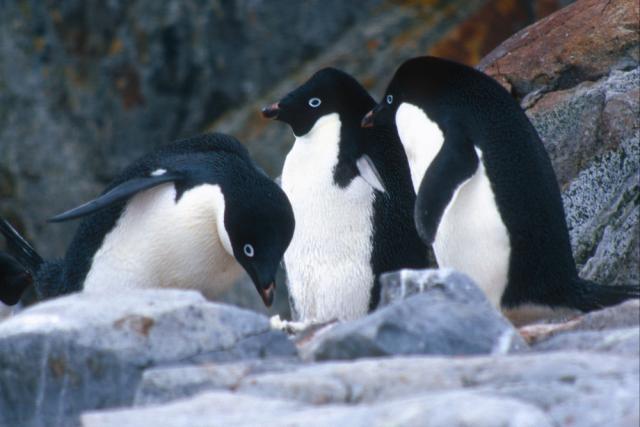
Adélie penguin colony
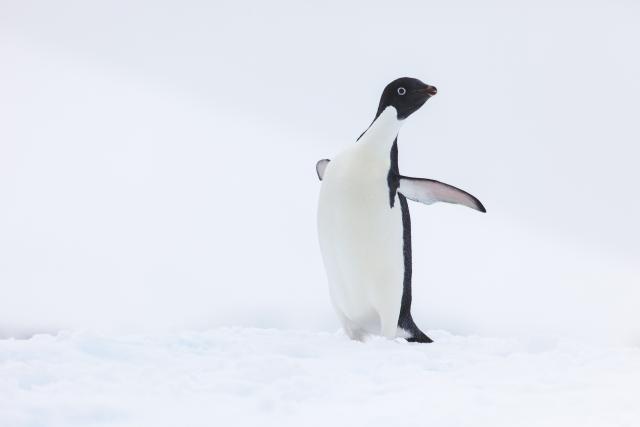
Adélie penguin
(Pygoscelis adeliae)
The Adélie (pronounced "uh-day-lee") is the littlest, and also the most widespread, species of penguin in the Antarctic.
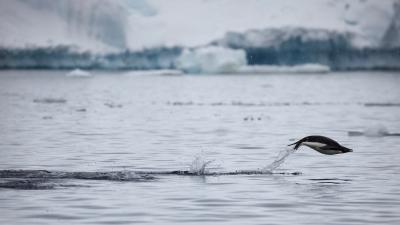
They might look a bit clumsy on land, but penguins are brilliant swimmers. They can dive down to 180 metres – though they tend to catch their food (mainly krill and fish) much closer to the surface.
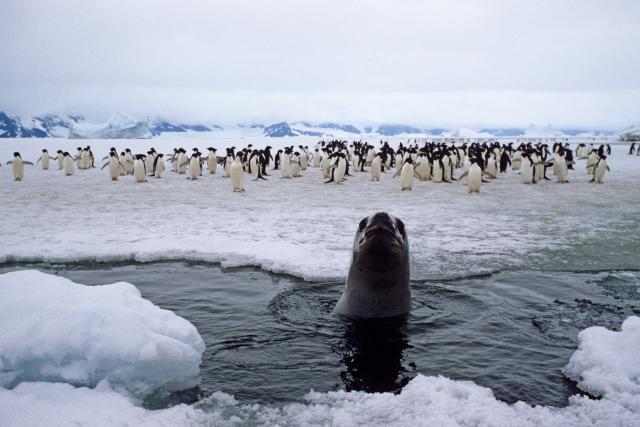
Penguins may seem cute to us, but they're excellent predators and very efficient foragers. Adélies have a feisty attitude too. They’ve been known to slap or strike potential predators – seals or large seabirds – or even attack visiting researchers with their flippers.
Adélie penguin populations are increasing in East Antarctica. However, in the Antarctic Peninsula, Adélie penguin populations have fallen by 65% in the past 25 years. This is due to climate change - the biggest threat facing them right now.
Why are Adélie penguins important?
Adélie penguins are a vital part of the Antarctic food chain – they eat tiny creatures like krill and small fish, and are a source of food for predators like leopard seals and orcas.
By protecting Adélie penguins we’re helping look after their ocean environment, which is good for all the wildlife that depends on it.
Key facts about Adélie penguins
What habitat does an Adélie penguin live in?
Adélie penguins live in frozen environments. They are found on the Antarctic continent and on a number of sub-Antarctic islands including Bouvet Island, South Orkneys and the South Sandwich Islands. Two mega-colonies of Adélie penguins are on Antarctica's remote Danger Islands.[1]
How many Adélie penguins are there in the wild?
There are around ten million Adélie penguins in the wild.[1]
How big is an Adélie penguin?
Adélie penguins are approximately 70cm tall (around the same height as a standard side table). [2] They weigh 3-6kg (about the same as an average house cat).
What does an Adélie penguin eat?
Adélie penguins mainly feed on krill, as well as on fish and squid.[1]
What is the IUCN status of Adélie penguins?
Adélie penguins are classed as 'Least Concern' on the IUCN RedList and their population trend is increasing.[1]
Where do Adélie penguins live?
Explore the map below to see the IUCN (International Union for Conservation of Nature) range data for Adélie penguins.[3]
-
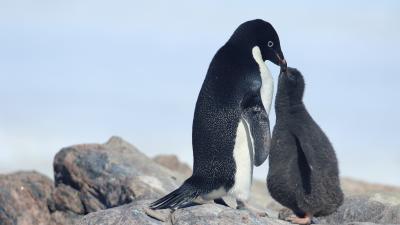 © Natacha Planque / IPEV / CNRS
 -
 © WWF-Aus / Chris Johnson
How we’re helping
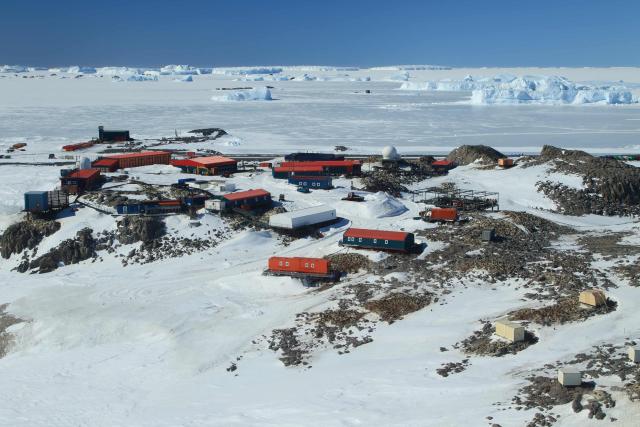
WWF is supporting the Centre d'Etudes Biologiques de Chizé (CEBC) in the Centre National de la Recherche Scientifique (CNRS) to understand more about the impacts of climate change on Adélie penguins and their Antarctic neighbours.
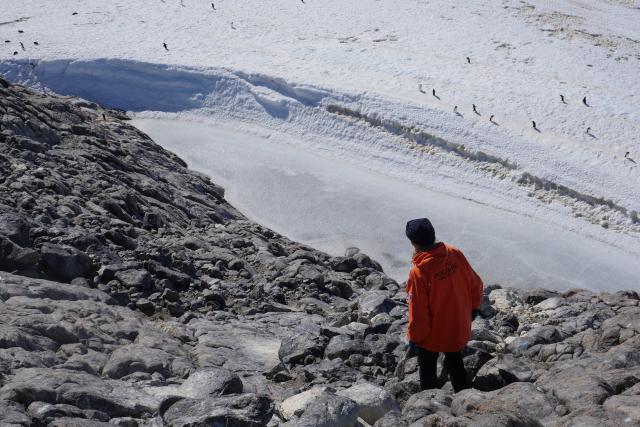
Icy Insights: Duties Of A Penguin Researcher On The Edge Of Antarctica
Step into the world of penguin researcher, Natacha Planque, learning about her year-round data gathering duties on the edge of Antarctica.
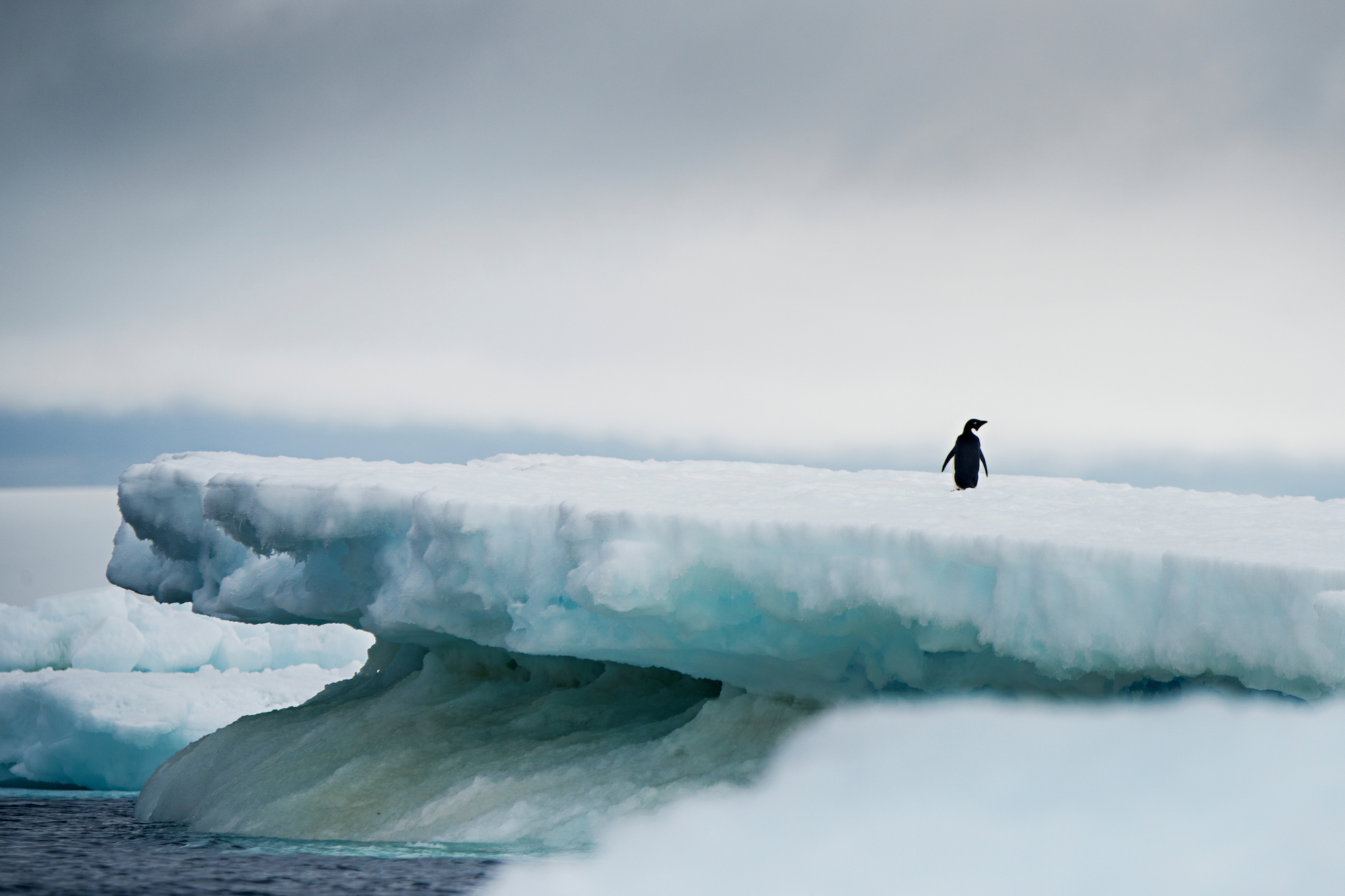
Adopt a Penguin
Adopt a Penguin
Your adoption will help protect penguins in the Antarctic and help fund our vital work around the world.
We also recommend
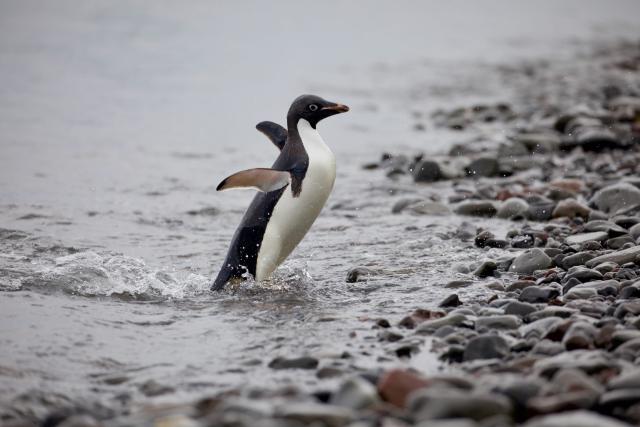
10 Facts about Adélie penguins
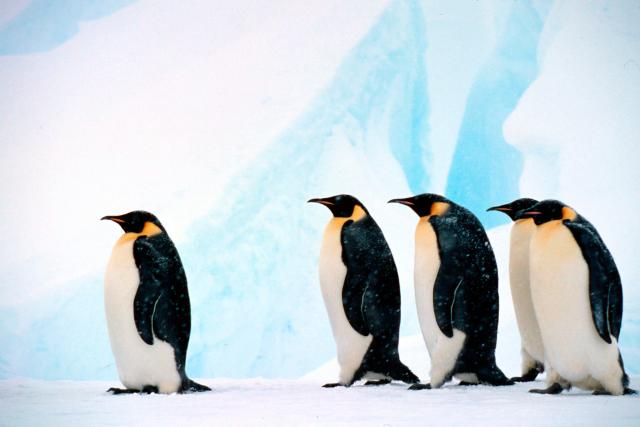
Test your penguin knowledge

Go Wild – WWF’s Club for Kids
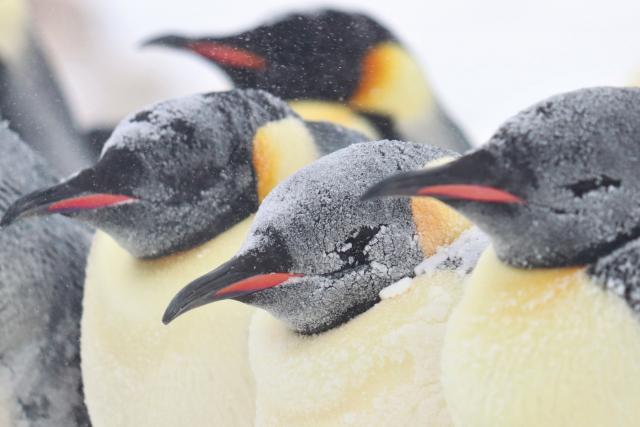
Penguin awareness day 2026
Sources
- BirdLife International and Handbook of the Birds of the World (2016) 2006. Pygoscelis adeliae. The IUCN Red List of Threatened Species. Version 2025-2 https://www.iucnredlist.org/species/22697758/157660553 Accessed on 19/01/2026
- West Antarctic Peninsula https://www.jstor.org/stable/pdf/24862081.pdf Accessed 15/01/2026
- Why Ice Shelves Matter | National Snow and Ice Data Center https://nsidc.org/learn/parts-cryosphere/ice-shelves/why-ice-shelves-matter Accessed 15/01/2026
- Australian Government - About Antarctica - Adélie penguins. https://www.antarctica.gov.au/about-antarctica/animals/penguins/adelie-penguin/ Accessed on 11/04/25
- BirdLife International. 2020. Pygoscelis adeliae. The IUCN Red List of Threatened Species 2020: e.T22697758A157660553. https://dx.doi.org/10.2305/IUCN.UK.2020-3.RLTS.T22697758A157660553.en. Accessed on 11/04/25