

Dolphins:
Around 40-45 species

Can be found:
All the worlds oceans, from the tropics to the polar regions

Threats:
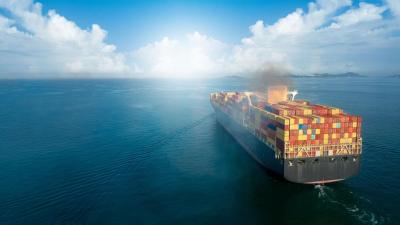
Fisheries, pollution, climate change
What sound do dolphins make?
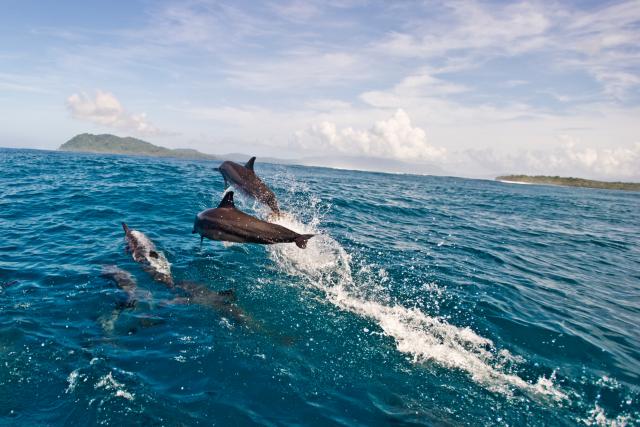
Dusky dolphin clicks and whistles
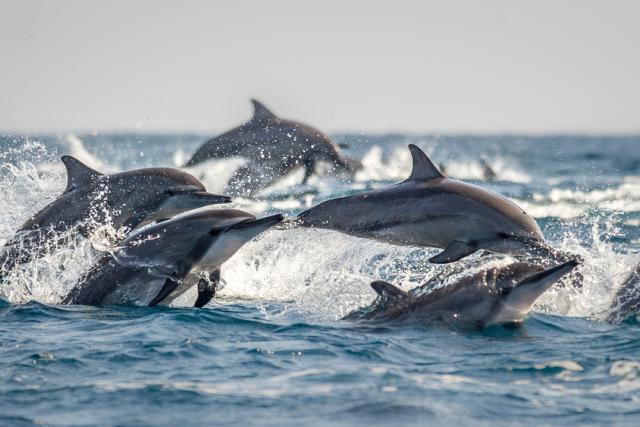
Dolphins
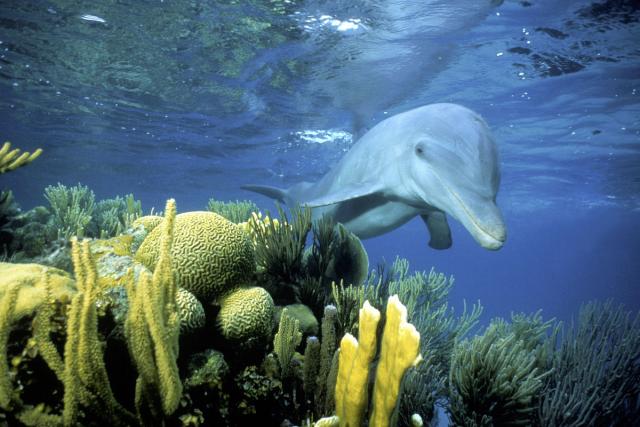
Dolphins are closely related to whales and porpoises - together they’re known as cetaceans. But dolphins are distinct because they usually have longer beaks, cone-shaped teeth, and a reputation for being especially social and acrobatic. They are also among the most intelligent marine animals, known for complex communication, cooperative behaviour, and even problem solving. Across every ocean and even in some of the world’s rivers - dolphins stand out as the sociable stars of the aquatic world.
UK Dolphin Species
At least seven dolphin species can be found in UK waters – the most frequently sighted including common dolphins and bottlenose dolphins. From time to time, other dolphin species also turn up around the UK. Our seas are constantly changing, and dolphins remind us of just how rich and surprising UK waters can be.
-
 © naturepl.com / Chris & Monique Fallows / WWF
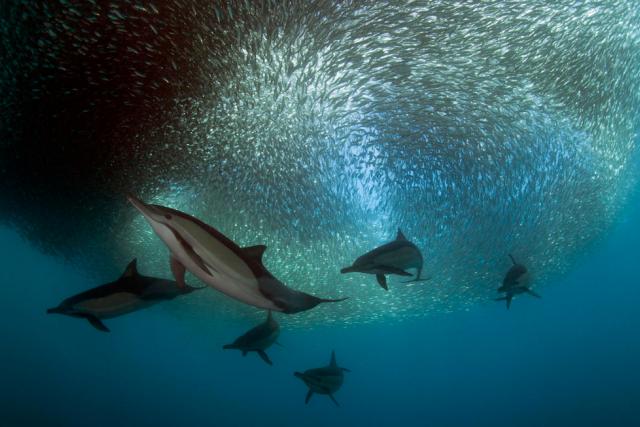
Common dolphin (Delphinus delphis)
MoreClose Fast, playful, and often seen in large groups, common dolphins are one of the most abundant species in the world. In UK waters they’re regularly spotted off the southwest coast, especially during summer when food is plentiful.
-
 © Judith van de Griendt / WWF
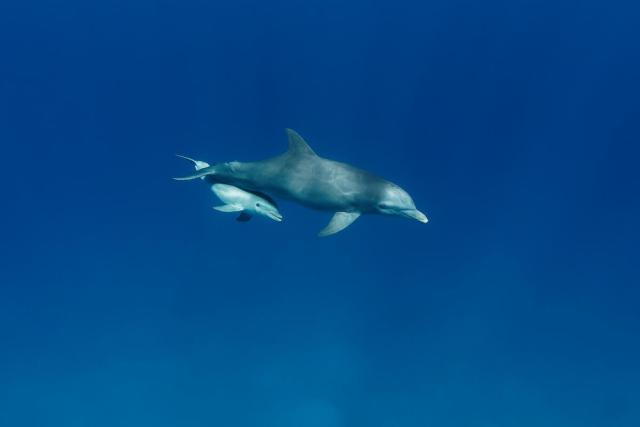
Bottlenose dolphin (Tursiops truncatus)
MoreClose These are the most famous dolphin, known for their curiosity and intelligence. In the UK, resident groups, or ‘pods’, live in places like Cardigan Bay in Wales and the Moray Firth in Scotland, making them a highlight for coastal wildlife watchers.
-
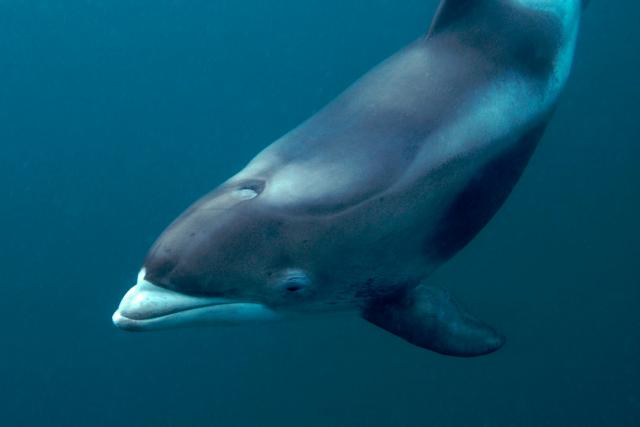 © Rudolf Svenson / WWF
White-beaked dolphin (Lagenorhynchus albirostris)
MoreClose A strong, hardy species that thrives in colder seas, white-beaked dolphins are most common in the North Sea and around Scotland. They’re powerful swimmers and are often seen leaping clear of the water.
-
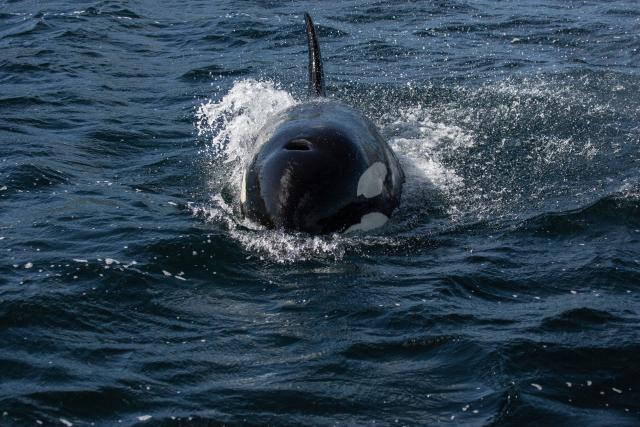 © Hugh Harrop / WWF-UK
Killer whale or orca (Orcinus orca)
MoreClose Killer whales are actually the largest species of dolphin in the world. While they are rare visitors to most of the UK, they can be frequently seen around the northern isles of Scotland, the Orkney Islands and Shetlands Islands.
/
Freshwater Dolphins
Not all dolphins live in the sea - a few remarkable species are found in freshwater rivers. Six different kinds of river dolphins live in Asia and South America, and many of them are among the most endangered mammals on Earth.
-
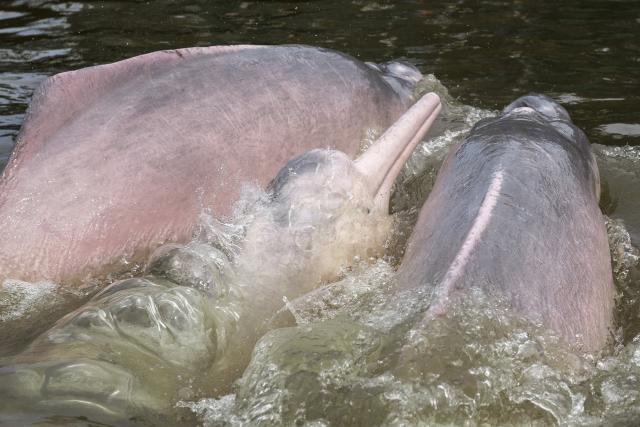 © Jaime Rojo / WWF-UK
Amazon river dolphin, or boto (Inia geoffrensis)
MoreClose Known for their pinkish colour, botos are found in the Amazon and Orinoco river systems. They’re highly intelligent, flexible, and can even swim through flooded forests during the rainy season.
-
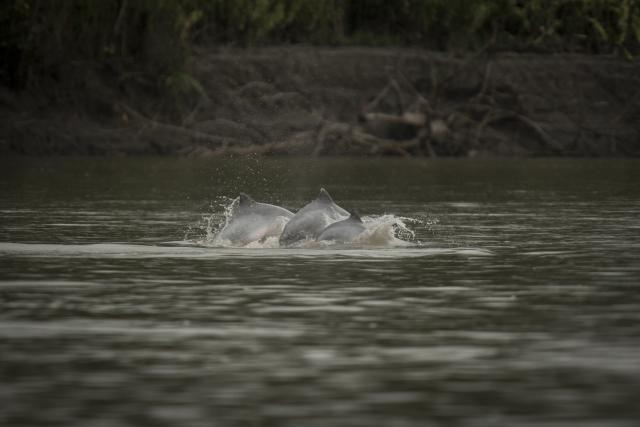 © Fernando Trujillo / Fundacion Omacha
Tucuxi dolphin (Sotalia fluviatilis)
MoreClose Smaller and more grey in colour than the boto, tucuxis also live in the Amazon basin. They are playful and fast swimmers, but face serious threats from dam building and pollution
-
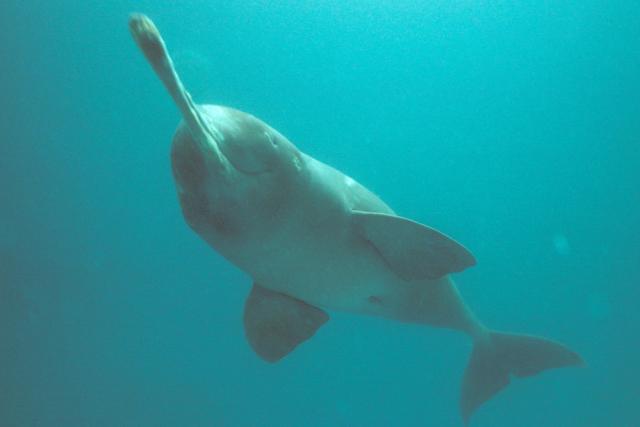 © François Xavier Pelletier / WWF
Ganges river dolphin (Platanista gangetica gangetica)
MoreClose Living in the Ganges, Brahmaputra, and Meghna rivers of India, Nepal, and Bangladesh, this species is blind and navigates with echolocation. It is the national aquatic animal of India.
-
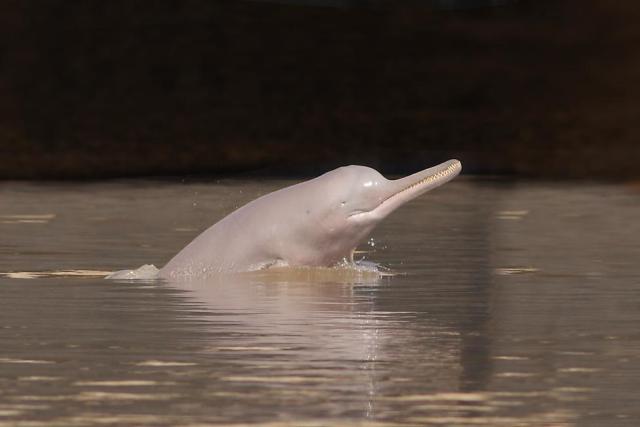 © WWF-Pakistan
Indus river dolphin (Platanista gangetica minor)
MoreClose A close relative of the Ganges dolphin, the Indus dolphin survives only in the Indus River of Pakistan. Once widespread, today it is restricted to just a few stretches of river due to dams and irrigation.
-
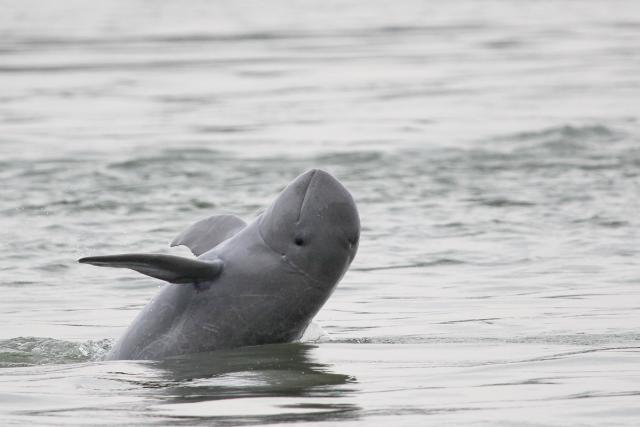 © Cambodia WWF / Gerry Ryan / WWF-Greater Mekong
Irrawaddy dolphin (Orcaella brevirostris)
MoreClose This species can live in both rivers and coastal waters. Freshwater populations survive in the Mekong, Ayeyarwady, and Mahakam rivers, but they are very small and under severe pressure from fishing nets and habitat loss.
-
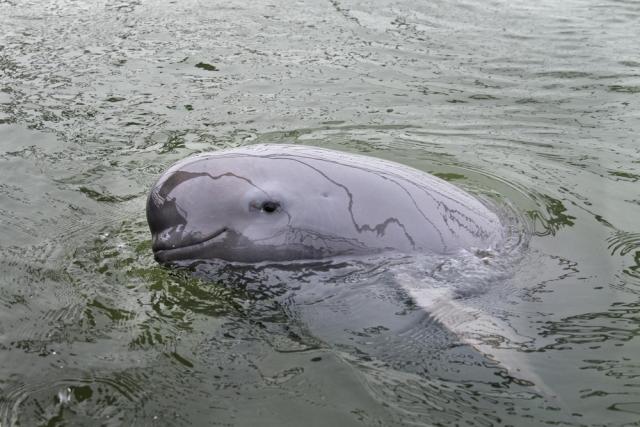 © Justin Jin / WWF-US
Yangtze finless porpoise (Neophocaena asiaeorientalis)
MoreClose Not a true dolphin but closely related, this porpoise is the only surviving cetacean in China’s Yangtze River. It’s known for its intelligence, but sadly it is critically endangered.
/
Why are they so important?
Dolphins do much more than amaze us with their intelligence and acrobatics - they are vital for the health of our oceans and rivers.
As top predators, dolphins help keep marine food webs in balance. By feeding on fish, squid, and other sea life, they prevent certain species from becoming too abundant, which could throw entire ecosystems out of sync.
They are also guardians of the seas and rivers. Because dolphins are highly sensitive to changes in their environment, their populations often reflect the health of the waters they live in. A decline in dolphins can be an early warning sign of pollution, overfishing, or habitat damage.
Finally, dolphins act as nutrient movers. By feeding in one area and releasing waste in another, they recycle nutrients throughout the ocean. This process helps sustain plankton and other tiny organisms at the base of the food chain, which in turn supports the entire marine ecosystem.
By protecting dolphins we’re helping look after our oceans – and that’s good for all the wildlife and billions of people who depend on the sea.
Key facts about dolphins
What habitat do dolphins live in?
Dolphins live in a wide variety of environments - from warm tropical seas to cold temperate waters, and from shallow coasts to the open ocean. Some species stay in one place year-round; others travel long distances to find food or warmer waters. These seasonal movements - known as migration - can take dolphins across entire ocean basins. A few unique species also live in freshwater rivers, like the Amazon and Ganges, and can even swim through flooded forests in the rainy season.
How many dolphins are left in the wild?
Globally, there are thought to be millions of dolphins, making them among the most numerous marine mammals. The common dolphin (Delphinus delphis) is thought to be the most numerous dolphin on Earth, with populations in the millions, while others survive in only tiny, threatened groups.
How big is a dolphin?
Dolphins come in many shapes and sizes. The smallest, the Hector’s dolphin (Cephalorhynchus hectori) of New Zealand, reaches just 1.2 metres and weighs 40kg. At the other extreme, the Killer whale or orca (Orcinus orca) - also part of the dolphin family - can grow over 9 metres and weigh more than 5,000kg.
What do dolphins eat?
Most dolphins are carnivores, eating fish, squid, and other marine animals. Diets depend on species and habitat. For instance, the Risso’s dolphin (Grampus griseus) specialises in hunting squid in deeper offshore waters.
What is the IUCN status of dolphins?
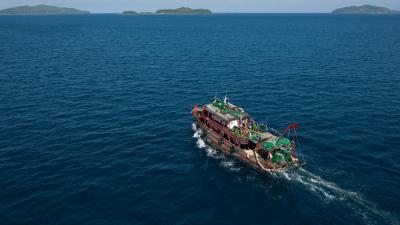
Dolphins face very different levels of threat depending on the species. While some, like the common dolphin, are listed as least concern, others - including river dolphins and some coastal populations - are considered Endangered or Critically Endangered due to bycatch, pollution, and habitat loss. Unfortunately, at least one species – the Yangtze river dolphin (baiji) – has already gone extinct after years of intense human pressures on its habitat.
-
 © Jürgen Freund / WWF
 -
 © Shutterstock / GreenOak
 -
 © Global Warming Images / WWF
How we're helping
Sound of Safety: Protecting River Dolphins
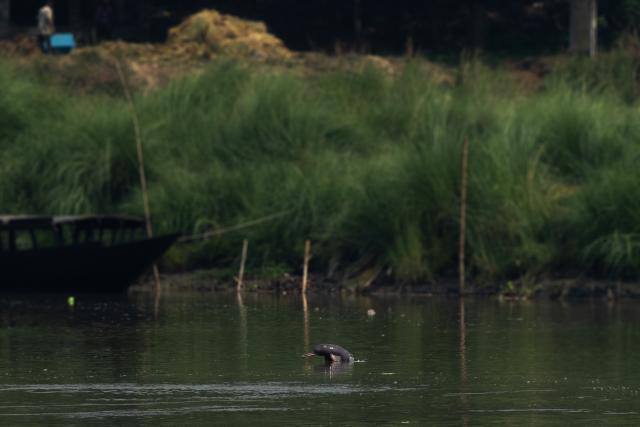
Through our Sound of Safety project, WWF is protecting endangered river dolphins in South Asia from getting caught in fishing nets. By working with local communities and trialling acoustic “pingers” that gently steer dolphins away, we’ve helped reduce bycatch to zero in test areas, while also improving catches and protecting fishers’ livelihoods. The project is proving that people and dolphins can thrive together when simple, smart solutions are put in place.
Join WWF
Join WWF
Your WWF membership not only supports our work to restore nature and help tackle climate change but provides you with expert advice on how you can make a difference in your own life.
We also recommend
10 Facts about Dolphins
Take a Dolphin quiz
World ocean day – 8 June