
Hunting in the shadows of the Amazon
Accurate at time of publication: 28 November 2025

The issue
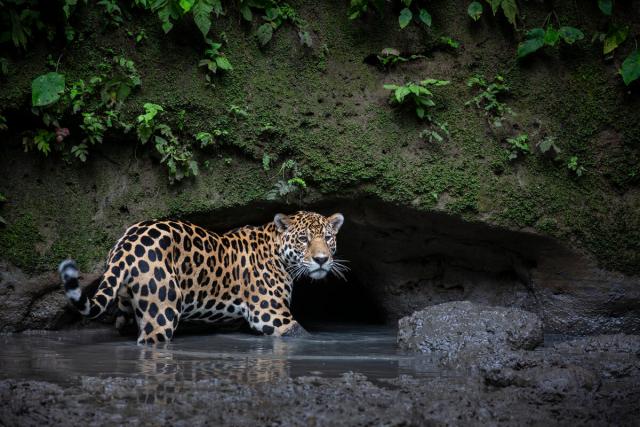
These iconic big cats have lost over 50% of their former range, and are increasingly being threatened by rapid habitat loss, forest fires, illegal wildlife trade and retaliatory killing due to human-jaguar conflict. Dedicated efforts are essential to protect the jaguar, whose status reflects the overall health of the ecosystem – protecting jaguars protects their Amazon home.
The advance of deforestation in Apuí (south Brazilian Amazon) has intensified conflict between people and large felines, including jaguars. A decrease in availability of prey further increases conflict between people and jaguars - for example through predation of livestock. Retaliatory jaguar killing is common in the region – Marcelo Oliveira, conservation specialist at WWF-Brazil, shares that the number may have reached thousands in recent years.
The Solution
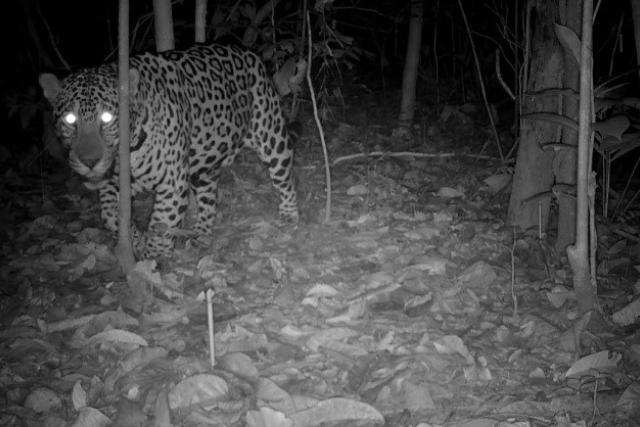
Aiming to reduce recurrent conflicts between people and jaguars in the territory, WWF-Brazil brought together small-scale cattle farmers, Indigenous people and local communities in a training and continuous support process to reduce conflict. Techniques presented for conflict prevention and reduction included what to do on sighting a jaguar, installation of solar powered lights and bells on cattle and fences to deter jaguars and adoption of cattle management best practice, such as not leaving calves near the forest. Participants also learned how to install and use camera traps and identify footprints – essential to researchers’ work and understanding wildlife in the region.
The 18 participants were strategically chosen to represent the local communities. They will become a local reference to disseminate knowledge and help solve and reduce human-jaguar conflicts in their communities.

Result
Following the training, they have reported no further cases of jaguar attacks on livestock and domestic animals in their communities.
Felipe Feliciani is a biologist who has dedicated the last 15 years to conserving wildlife. Working as a conservation analyst at WWF-Brazil, he plays a key role in their work to protect jaguars. Integral to the Apuí coexistence workshop, Felipe got to work with the people living alongside these big cats, and witnessed first-hand the importance and impact of this project. Due to this training and support process they they have reported no further cases of jaguar attacks on livestock and domestic animals in their communities.
“Many participants commented that they had never felt heard, or that they never had the opportunity to learn more about how to live in harmony with jaguars. I believe it was one of the most important actions ever taken for the conservation of jaguars in the region, the positive impacts were clear and very immediate."
Felipe Feliciani, conservation analyst at WWF-Brazil