Forest surveillance - Innovation against deforestation
Accurate at time of publication: 11 February 2026

Project overview
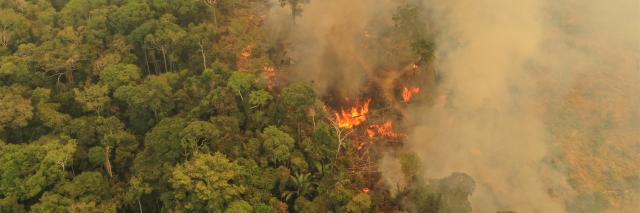
Forest Foresight is an innovative AI-driven technology for preventing illegal deforestation before it begins. The AI technology reviews data like the physical features of an area, population density, and past forest cover. Once trained by this information, it reads real-time satellite images, detecting early deforestation predictors (such as expanding roads), and alerts local authorities to threats. All of this culminates in supporting local stakeholders in intervening in time to prevent deforestation, before irreversible damage is done.
By implementing the power of prediction, Forest Foresight can support and empower existing collaboration with local stakeholders, and produce greater impact in tackling deforestation.
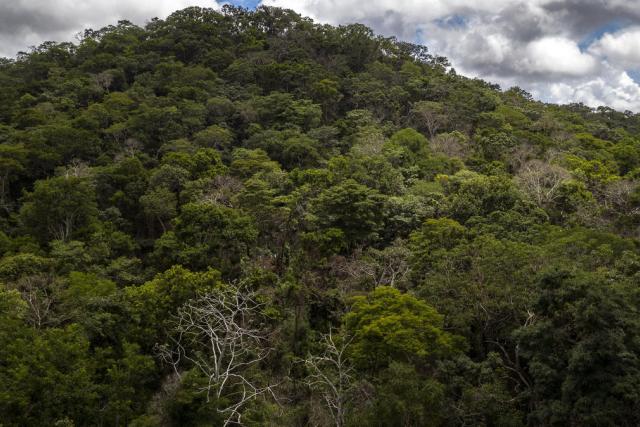
In Bolivia, as of May 2025, Forest Foresight is now being used to cover 3.3 million hectares of forest in Concepción and Charagua, Chiquitanía, work funded by WWF-UK.
Why are we doing it?
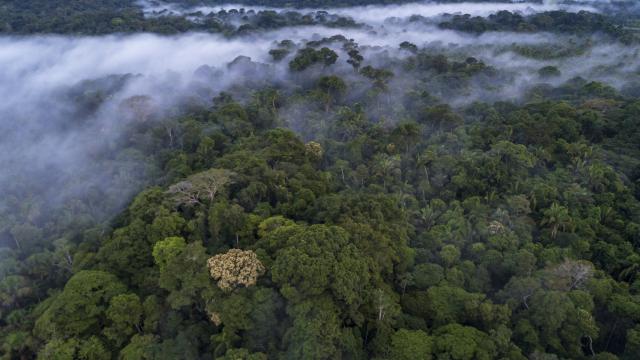
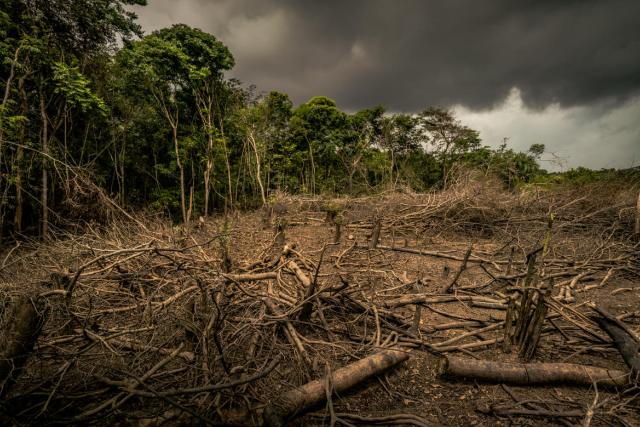
Forests are crucial for the health of our planet - they provide resources, are home to millions of people and 80% of land-based wildlife, and are our key ally in tackling and adapting to climate change. Primary forests (forests that have faced limited negative human disturbances) are some of the densest, most ecologically significant and carbon-rich forests on Earth. Almost half of the world’s original forests have already been lost, and illegal deforestation has been accelerating at alarming rates in recent years. In 2021, primary forest areas equivalent to the size of Denmark were illegally cleared for the purpose of growing crops for food and animal feed alone. These primary forests cannot simply be replanted. Once gone, they’re gone forever. What’s more, deforestation is the second largest source of greenhouse gas emissions globally, and so therefore a key driver of climate change. It is urgent that we halt illegal deforestation activities before it’s too late.
Bolivia and the Amazon
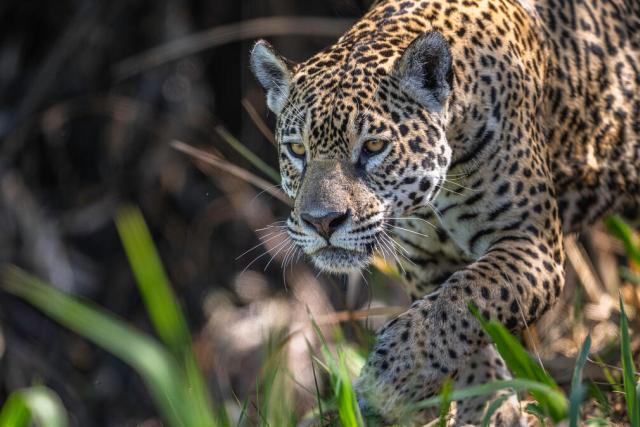
In the Amazon, around 17% of the forest has already been lost, and a further 17% degraded. Some scientists estimate that if we lose a further 3-8% of the Amazon (reaching a 20-25% total loss) it could pass an irreversible tipping point. The rainforest would then no longer be able to sustain itself. This could have catastrophic and irreversible effects for the rainforest, the people and wildlife who live there (such as jaguars and river dolphins), and the global climate.
In Bolivia, one of the most biodiverse countries on Earth, deforestation has been relentless, in the Amazon, and beyond. Between 1985 and 2022, Bolivia lost a total of 7.9 million hectares of forest, and this is increasing year on year. Concepción (Chiquitanía, in the Amazon river basin) and Charagua (Chaco, outside of the Amazon) are two of the five most deforested regions in Bolivia. 70% of the deforestation here is illegal.
Project Impact and next steps
This work is setting a ‘greenprint' following successful trials in Indonesia and Gabon, the predictive power of Forest Foresight is also now being tested in Peru and being scaled up to protect even greater areas of forest in Bolivia.
As of 2025, the system was integrated into existing deforestation tracking systems in Bolivia's Santa Cruz department. This will allow improved monitoring of three additional high-deforestation areas: Guarayos, with the highest rate of illegal deforestation; San Ignacio, with the largest deforested area; and Magdalena.