

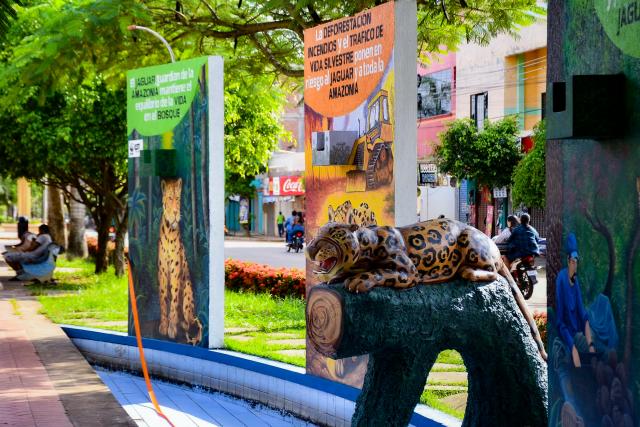
Project overview
The project aims to reduce human-jaguar conflict, jaguar killing, and supply and demand for jaguar parts while strengthening livelihoods of marginalised communities from the Manuripi-Santa Rosa Corridor (MSRC) in the Bolivian Amazon. The project addresses key drivers of jaguar illegal wildlife trade (IWT) by:
- Changing attitudes, behaviours and social norms towards jaguars through social marketing and behaviour change campaigns;
- Strengthening livelihoods by reducing economic losses, food vulnerability from reduced jaguar conflict and coexistence incentives;
- Improving multi-institutional coordination, and preparedness to address conflict and IWT.
Why we are doing it?
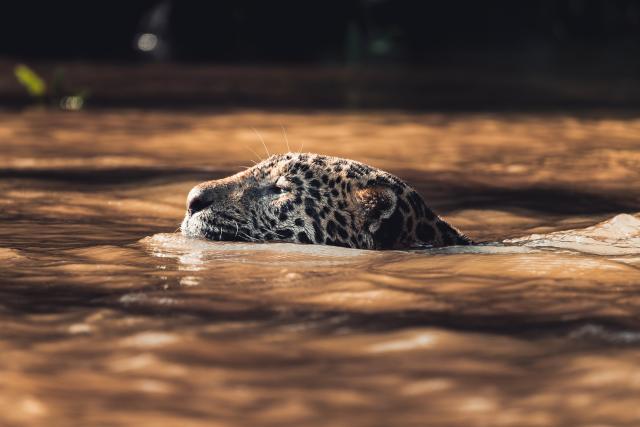
Jaguars, top predators and ecosystem health regulators, are increasingly threatened by habitat loss, conflict, and IWT. Since 2014, Bolivian authorities have seized around 700 jaguar teeth for export to China, positioning Bolivia as the largest source of jaguar parts for international IWT. In addition to international IWT, studies report high jaguar poaching and local use and demand for parts in or near the project area of MSRC, Pando Department, bordering Peru and Brazil.
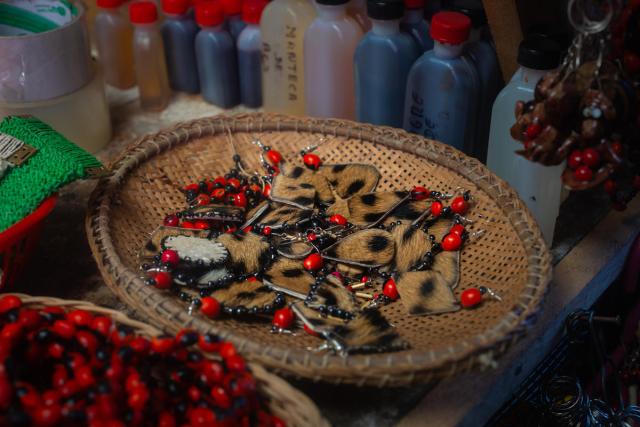
Jaguar and other cats’ parts are consumed locally for decorative, spiritual, and medicinal purposes. Besides foreign and domestic demand, jaguar poaching and IWT in the MSRC is driven by: fear-driven killing, poverty (low-income individuals more likely to sell jaguar parts), weak institutional presence, lack of law awareness, weak coordination between the government and other stakeholders, low preparedness to address IWT, and human-jaguar conflict. Human-jaguar conflict in the form of livestock depredation is particularly important, causing significant economic losses, affecting around 24-50% of surveyed corridor households. It increases likelihood of jaguar part possession and supply (at least 36% jaguar traders obtained supply from conflict). Losing livestock to jaguars also prompts negative perceptions, incentivising further jaguar killing and trade.
Law awareness is low with 85% of survey participants (1107 people) unaware about the illegality of killing jaguars and over half preferring jaguar population reduction, and supporting jaguar killing. As Jaguars are slow-reproducing species with naturally low densities and large territorial requirements, poaching increases jaguar extinction risk. This is particularly concerning given Bolivia’s importance in guaranteeing jaguar connectivity between the Amazon and southern sub-populations in Chaco-Pantanal and Yungas biomes.
Communities in the MSRC are amongst the poorest in Pando (less than $400 USD/month), lacking access to basic sanitation, education and health services. While their main economies are non-timber forest products, they rely on livestock for subsistence and food security. Mitigating human-jaguar conflict is key to reducing supply of jaguar parts, strengthening communities’ livelihoods, limiting the need to hunt for food, and removing incentives to engage in IWT for income.
Project impact
Communities and jaguar populations thrive in the Manuripi-Santa Rosa Corridor (MSRC), as local communities transition from poaching and IWT to jaguar stewardship through changed behaviours, improved livelihoods and strengthened governance.
By 2027, we hope the project outcome will be, the IWT of jaguars is reduced as MSRC communities change behaviours, livelihoods are enhanced from reduced jaguar conflict and community incentives, and institutions are strengthened to address conflict and IWT.
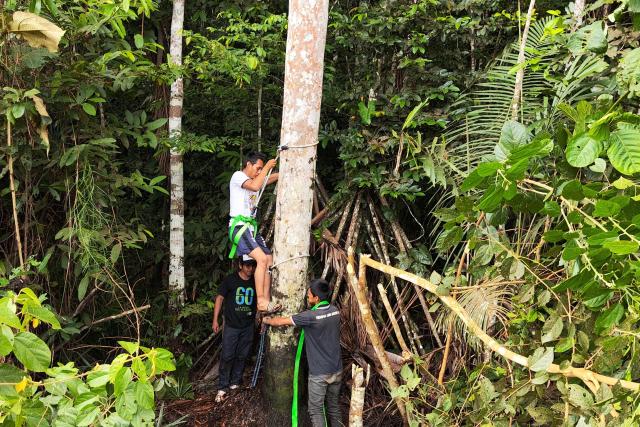
The image depicted here shows improved livelihoods training – using WWF-supported safety equipment for non-timber forest product harvesting.
Next steps
The project ends on 31 March 2027. We are currently working on implementing project activities under the following three project outputs:
- Output 1: Behaviour change in the MSRC: increasing tolerance towards jaguars, discouraging IWT
- Output 2: Strengthened livelihoods to minimise conflict with jaguars, jaguar poaching and IWT
- Output 3: Strengthen institutions and increase coordination to address jaguar conflict and IWT
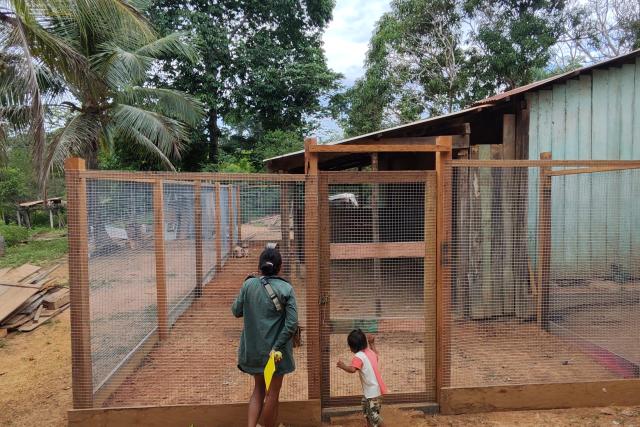
The image depicted here shows an improved livestock pen constructed as part of project to tackle livestock depredation by jaguars. Helping to supports livelihoods and coexistence.
Adopt a jaguar
Adopt a jaguar
Your adoptions will help protect jaguars in the Amazon and help fund our other vital work around the world. When you choose an animal adoption, you are supporting both your chosen animals as well as wider work to help bring our world back to life.