Walrus from space

Walrus are experiencing the effects of a warming climate. Thanks to people like you, we have collected vital information that can help.
Project overview
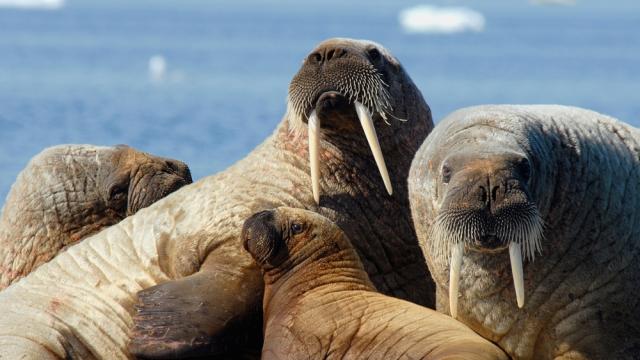
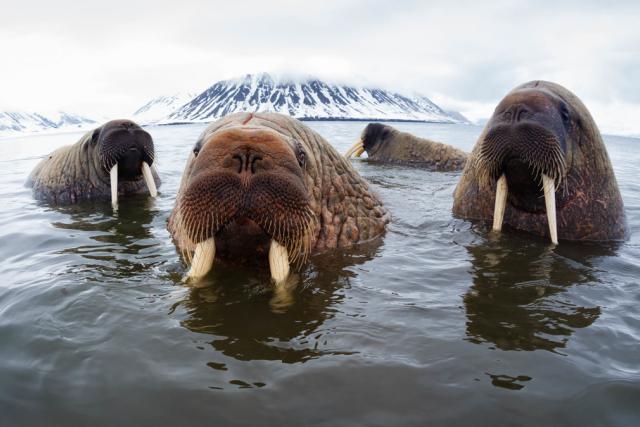
Walrus are facing the reality of the climate crisis. With your help, and in collaboration with the British Antarctic Survey (BAS), we have been working hard to understand more about how they are affected.
Since 2021, over 37 thousand members of the public from 68 countries have contributed to conservation science by searching for, and counting walrus in over a million satellite images. This epic effort now means the public participation phase of the Walrus from Space project is complete.
The project, which has been in cooperation with scientists around the Arctic, has been collecting data to carry out a census of Atlantic walrus populations in Canada, Greenland and the Norwegian Arctic. Now that the data has been collected, it is over to the dedicated science team to analyse it.
At a time when Arctic ecosystems are changing rapidly, this work has never been more important. This vital research will help to identify how Atlantic walrus populations change over time in comparison to their environment, giving scientists a better understanding of the impact of climate change on populations and help to safeguard their future.
Walrus from Space – An Arctic Expedition by WWF & British Antarctic Survey
In July 2022, the Walrus from Space team - made up of scientists from WWF-UK, and British Antarctic Survey, in collaboration with scientists from the Norwegian Polar Institute - visited Svalbard, Norway, to carry out research that will help to validate walrus counts.
The team were based at Ny-Ålesund research station, from where they carried out the work over the course of one week. The team travelled by small boat to different walrus haul-outs with the aim of gathering synchronous very high resolution (VHR) satellite imagery, high-definition UAV (drone) imagery, and ground counts to calibrate and verify satellite counts of Atlantic walrus.
Why this work matters
The Arctic is in meltdown, putting walrus and other species that live there at risk.
The climate crisis is causing the Arctic to warm almost four times faster than the global average. The sea ice that walrus depend on is disappearing at a staggering rate. Summer Arctic sea ice extent is shrinking by 12.6% per decade as a result of warming temperatures.
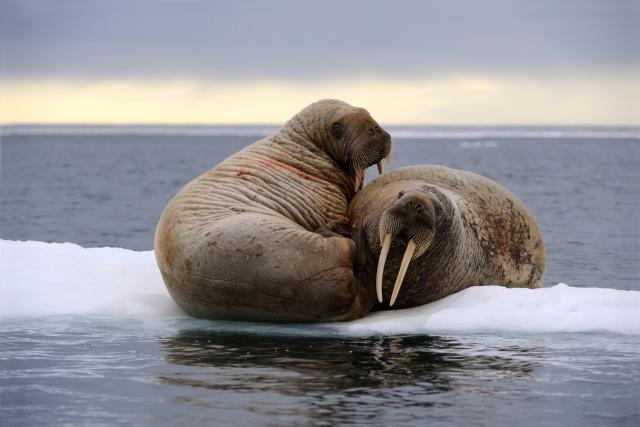
Resting on land, as opposed to sea ice, may force walrus to swim further and expend more energy to reach their food (which is also being impacted by the climate crisis) and reduces the region that they can forage.
The Arctic Ocean is becoming more acidic as it absorbs carbon dioxide. This makes it difficult for animals like bivalve molluscs (clams), sea snails and crabs – the main prey of walrus – to build their shells.
Walrus can also be disturbed by shipping traffic and industrial development as the Arctic becomes more accessible to such activities when sea ice is lost.
The Arctic is a vast and changing place. Because of this, there have been challenges in the past when trying to learn about where walrus are, how many there are, the trends in their population, and how the climate crisis is affecting them.
Project impact
The information gathered with the help of the public during this project, coupled with the knowledge of other research groups, Indigenous Peoples and local communities of the Arctic will be crucial to conservation efforts. While there is more work to be done behind the scenes by the science team, together we have already:
- Gathered a wealth of valuable data and observations.
- Searched and counted walrus in over a million satellite images.
- Begun to understand how climate change is impacting this iconic species.
- Already helped scientists across the Arctic who are working on their own walrus research projects.
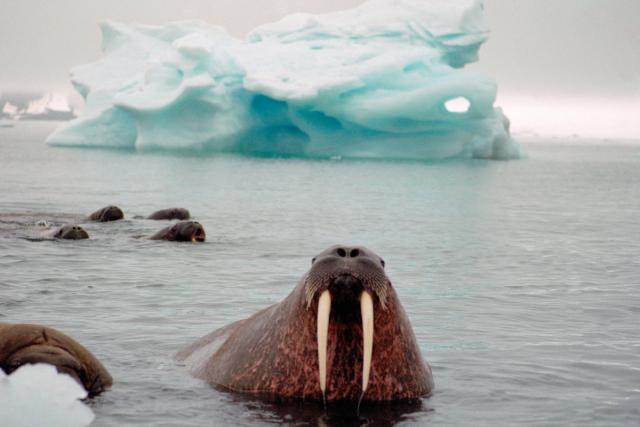
- Learnt that walrus are spending time at several haul-out sites in Svalbard, including at newly discovered sites found by walrus detectives.
- Used some of the data already found to compile a database based on expert and Indigenous knowledge, that is regularly updated and publicly available, so that people can learn more about this magnificent species.
- Used satellites as part of our research method, which does not disturb walrus, and helped us cover vast areas at once, many of which would normally be difficult and time-consuming to access.
This project has been a huge undertaking. Thank you from us here at WWF and the British Antarctic Survey. We're incredibly grateful to every one of you who got involved.
If you have a question about the Walrus from Space project, our friendly Supporter Care team are happy to help! You can email us at SupporterCare@wwf.org.uk.