
Safe passage: Protecting pacific giants
Accurate at time of publication: 5 February 2026
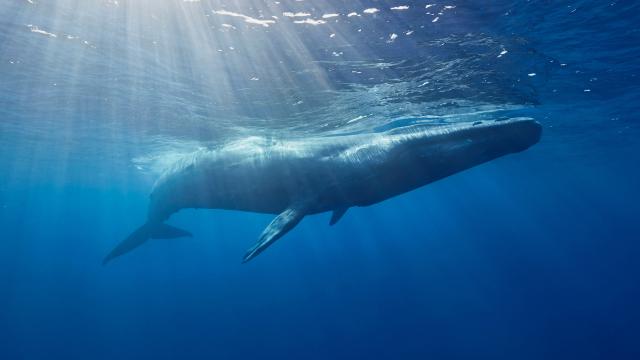
Blue whales were significantly depleted by commercial whaling activities worldwide. In 1982 the International Whaling Commission decided there should be a pause in commercial whaling on all whale species, and populations have since shown signs of recovering, including blue whales. Though numbers remain at a fraction of what they once were, this is an important reminder of the importance and power of international collaboration in protecting our marine wildlife.
Blue whales in the Eastern South Pacific are endangered. Entanglement and mortality in fishing gear, ship strikes, and climate change are the main threats to large cetaceans. Understanding the large-scale distribution patterns and identifying critical habitat and migration routes of these marine giants is crucial in addressing these issues.
Every year, having bred in the warm waters off Central America, this distinct blue whale population migrates through the high seas to the shores of southern Chile to feed – they do not head to polar waters as many others do! Another unique behaviour exists in these blue whales – a 2020 study found evidence of a globally unique Southeast Pacific blue whale song type.
Please note: Blue whale footage seen here is representative only.
Audio credit © Susannah Buchan / WWF Chile.
Yacqueline Montecinos is WWF-Chile's Marine Biodiversity and Ocean Policy Coordinator. Her work includes leading the coordination of the Eastern Pacific Blue Corridor for Whales, a migration super-highway. This forms part of the wider WWF-led ‘Blue Corridors for Whales’ project - in February 2022, WWF and science partners published a global report called ‘Protecting Blue Corridors’. Collaborating with 50 research groups and analysing 30 years of data, for the first time we mapped the global routes of migratory whales between key breeding and foraging locations, identifying critical ocean areas that overlap with a range of threats from human activities. WWF-UK supports this project.
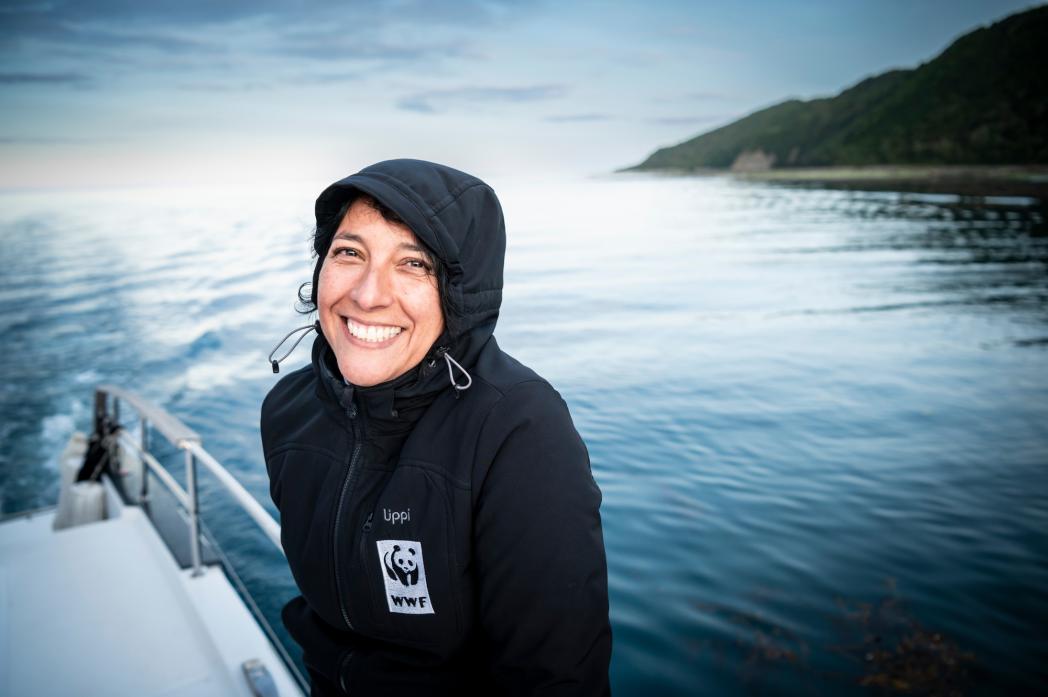
“Highly migratory whales have no idea about geographic limits, about political boundaries. […] They don’t know about national and international waters. They are going to move between them without asking for permission. Because of that, they need very well designed and very well connected marine protected areas. If we have more whales, we will have healthier oceans, more productive oceans.”
Yacqueline Montecinos, Marine Biodiversity and Ocean Policy Coordinator, WWF-Chile
Yacqueline and others at WWF are working with external partners within the Easter blue corridor, as part of a coalition of NGOs, in support of the Chilean government to promote a Marine Protected Area (MPA) in international waters. To strengthen the Eastern Pacific proposal, WWF is working with the NGO coalition to satellite tag some of these whales to gather crucial data currently lacking in the proposal. Plans are already in place to tag whales off the Galapagos Islands, with future hopes of tagging whales in other strategic locations to gain further insight into how the whales are using the region.
Critically, in close collaboration with governments, the MPA will protect the 6,000-mile migratory route of this unique population of blue whales, as well as an important starting route for others’ long migration to Antarctic waters. It will be presented for consideration under the High Seas Treaty (HST). The team have hopes it could be one of the first MPAs in international waters under the new HST.
WWF have been involved in shaping the treaty since negotiations began 2 decades ago, ensuring it will benefit nature. Importantly, the HST will provide a legal framework and clear process for establishing networks of MPAs in international waters for the first time.
-
 © Bethany Whant
Author
Bethany Whant, Senior Content Research Executive, WWF-UK
/
Have a question about this article?
Get in touch: contentunit@wwf.org.uk