
A Silverback's Legacy: Life in the Nkuringo Mountain Gorilla Group
Accurate at time of publication: 24 April 2026
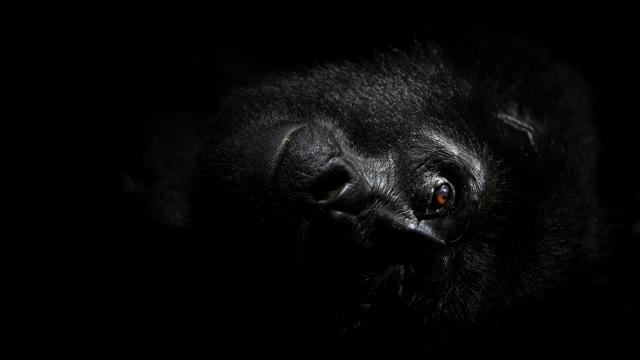
The Nkuringo group
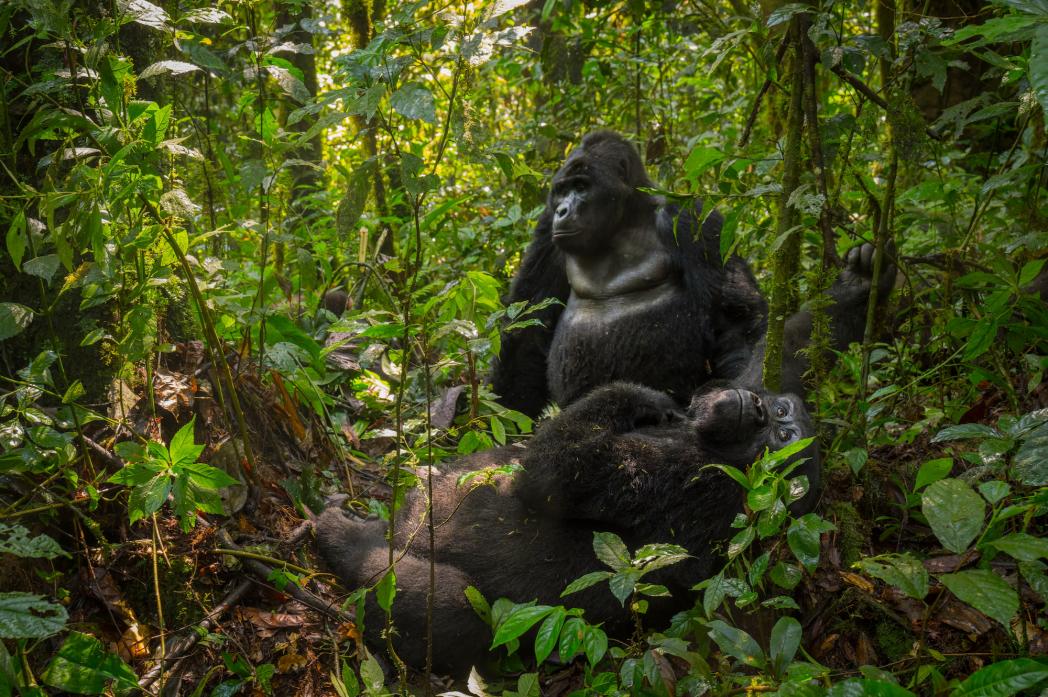
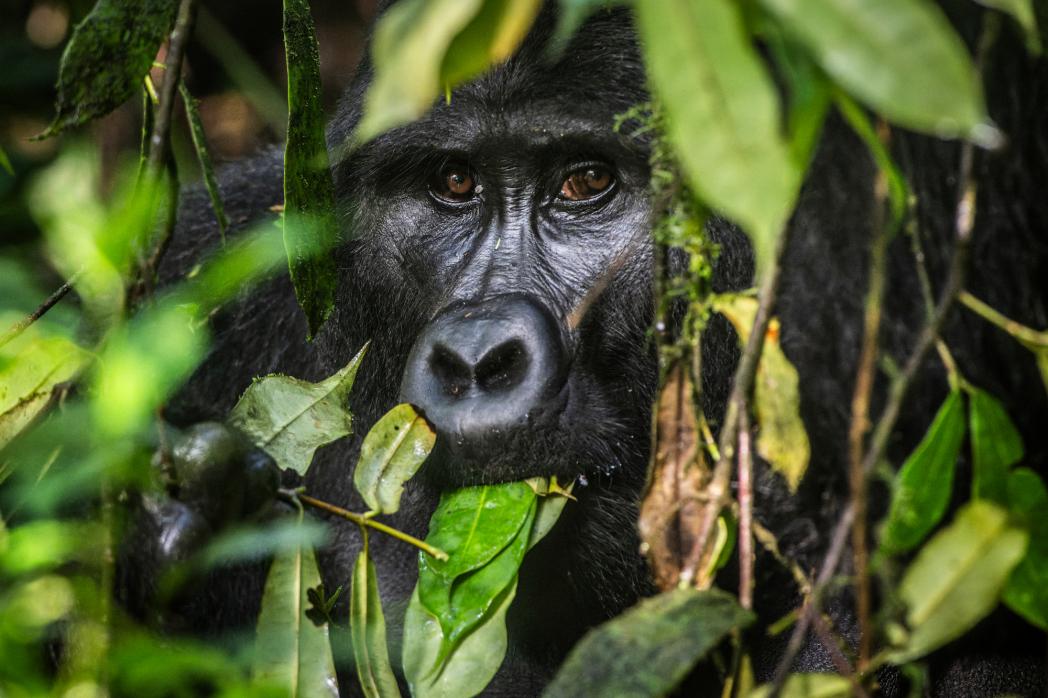
Nestled amid a tangle of tropical vines beneath thick, humid air, a family of mountain gorillas go about their usual habits: stripping away leaves from trees to eat, mothers clinging to their infants, juveniles playing. The dominant silverback - the guardian of the troop - looks on, ready to defend its members at the first hint of a threat.
This is the Nkuringo group: a ‘troop’ (family group) of endangered mountain gorillas who inhabit the Nkuringo sector of Bwindi Impenetrable National Park in Uganda.
They’re habituated, which means they’re accustomed to the presence of humans. This is a long-term, intensive process that takes several years to complete and has played an important role in supporting mountain gorilla conservation
Years of habitat destruction, poaching and disease transmission pushed mountain gorilla to the brink of extinction, and in the early 1980’s it was estimated that there were less than 400 individuals.
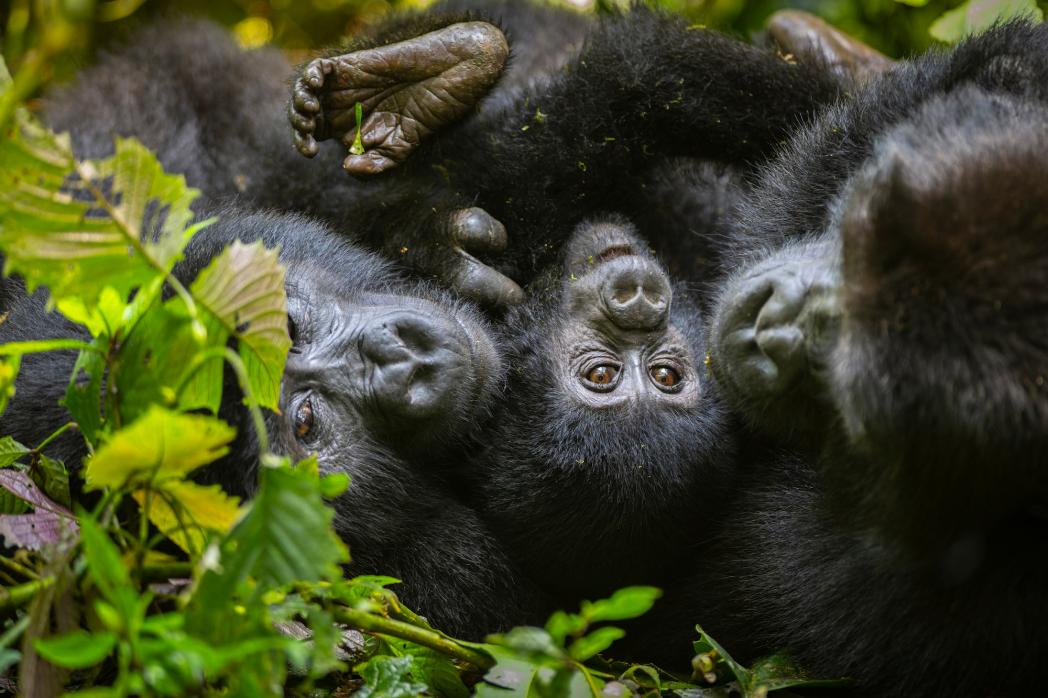
But due in large part to decades of conservation efforts by the International Gorilla Conservation Programme (IGCP), a coalition of WWF, Conservation International, and Fauna & Flora, mountain gorilla numbers have been increasing, despite ongoing challenges.
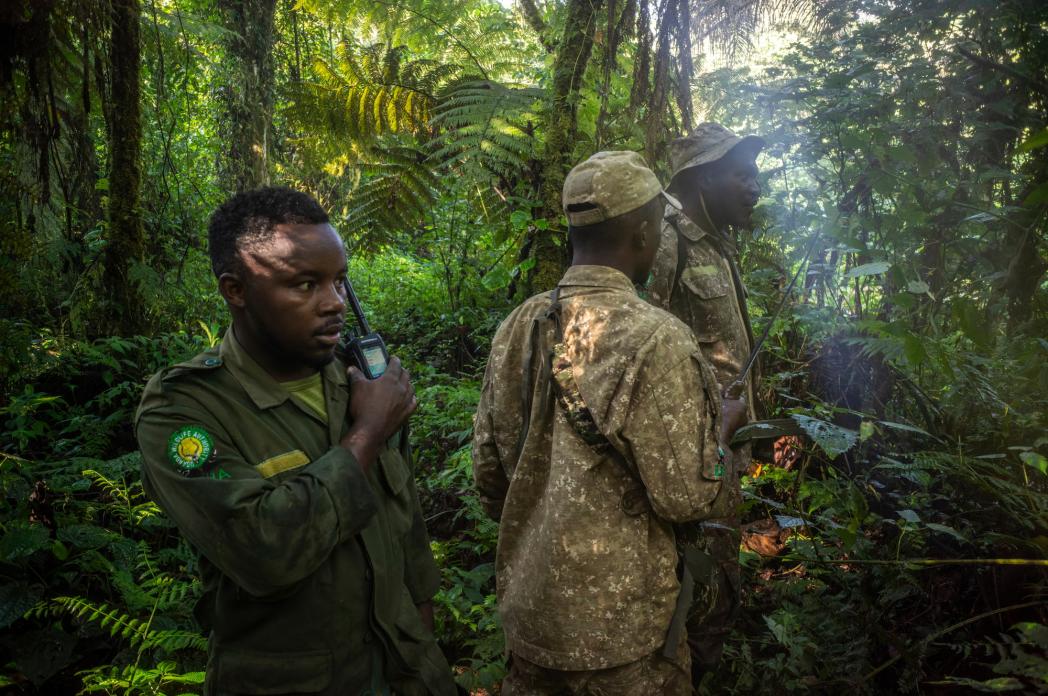
Each day, rangers enter the park to remove snares and check for other signs of habitat disturbance. Rangers also play a critical role in monitoring the health of gorillas in habituated groups. Habituation has also allowed for mountain gorilla tourism: groups can be observed, from a safe distance, by tourists, guides, and storytellers, including photographer Jasper Doest.
“The Nkuringo group was the first ever habituated in this part of the park,” says Jasper, informed by his knowledgeable guide.
“A pioneering family, once home to six silverbacks. Today it numbers fifteen: two silverbacks, one blackback, six females, and six infants. Their lineage is deeply entangled with the history of gorilla conservation in Uganda.”
Rafiki Junior: A living legacy
Today, the group is thriving, maintained under the watchful eye of IGCP and park authorities.
But is has a tragic history. In June 2020, the group’s dominant Silverback, Rafiki – which means friend in Swahili – was killed by a poacher. In the wake of the event, rangers in Bwindi reported that the group remained around Rafiki’s death place for a week. They believed this was the group’s way of mourning and coming to terms with the loss of their silverback.
Levi Rwamuhanda, a ranger guide at Bwindi’s Nkuringo sector, explains that two blackbacks – young male gorillas between the ages of 8 and 12, yet to grow the distinctive silvery hair on their backs that marks them as silverbacks – shared leadership of the group.
“After the death of Rafiki, there were two blackbacks. One was Rwamutwe, and one was Tabu. These two blackbacks together led the group, until they also became silverbacks. Today, they remain in the same family, but the group is being led by Rwamutwe, who is the older brother of Tabu.”
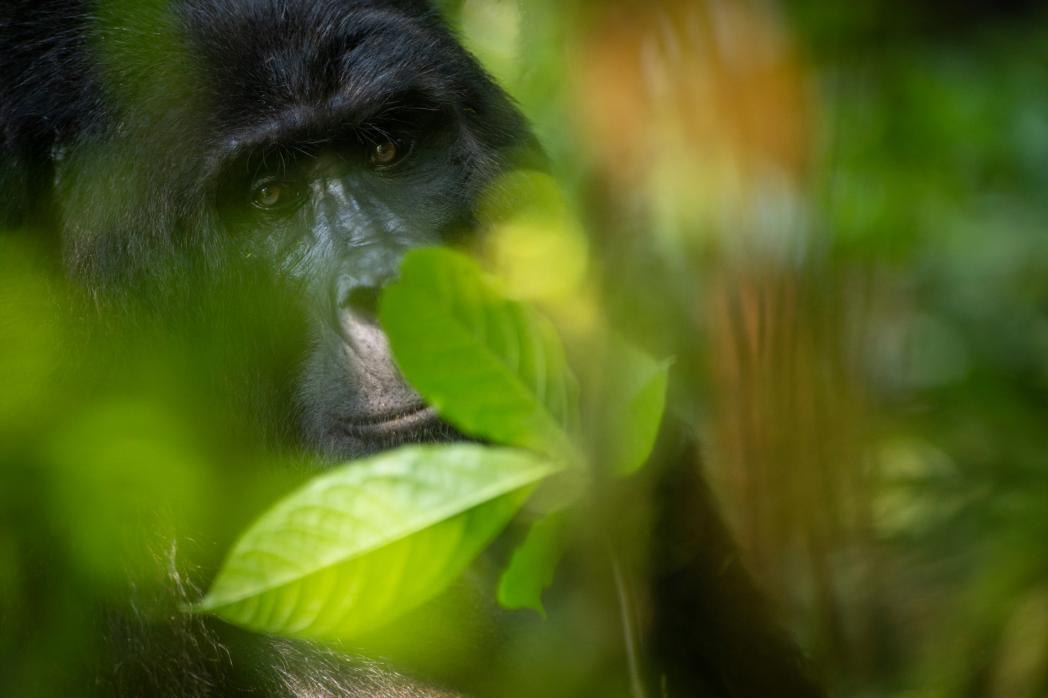
In the tragedy of Rafiki’s death, there was hope: he left behind one pregnant female, named Nderema. She gave birth to a healthy infant male on the 3rd of January 2021. He was named Rafiki Junior in memory of his father and as a way of carrying on the great silverback’s legacy.
“Rafiki Junior… he’s a very interesting juvenile,” says Levi. “I have been monitoring and watching him right from the time he was born in January 2021, 6 months after the death of his father Rafiki. He’s energetic, curious, and very calm. Because whenever we are there monitoring him, he plays, he climbs, that’s a sign that he’s energetic and he will become a very good silverback one day.”
On the day that Jasper ventured into the thick vegetation and challenging terrain of Bwindi to observe Rafiki, he observed similar qualities in the young mountain gorilla:
“Smaller than I imagined, but vibrant, alive, his movements both cautious and curious—eyes wide, peering at us through a veil of leaves. For a moment, those eyes met mine. It was only a heartbeat, but it felt longer, like a bridge stretching across all the loss and hope carried in his name. His father gone, but his life unfolding, tender and resilient, here in this forest that is both impenetrable and achingly fragile.”
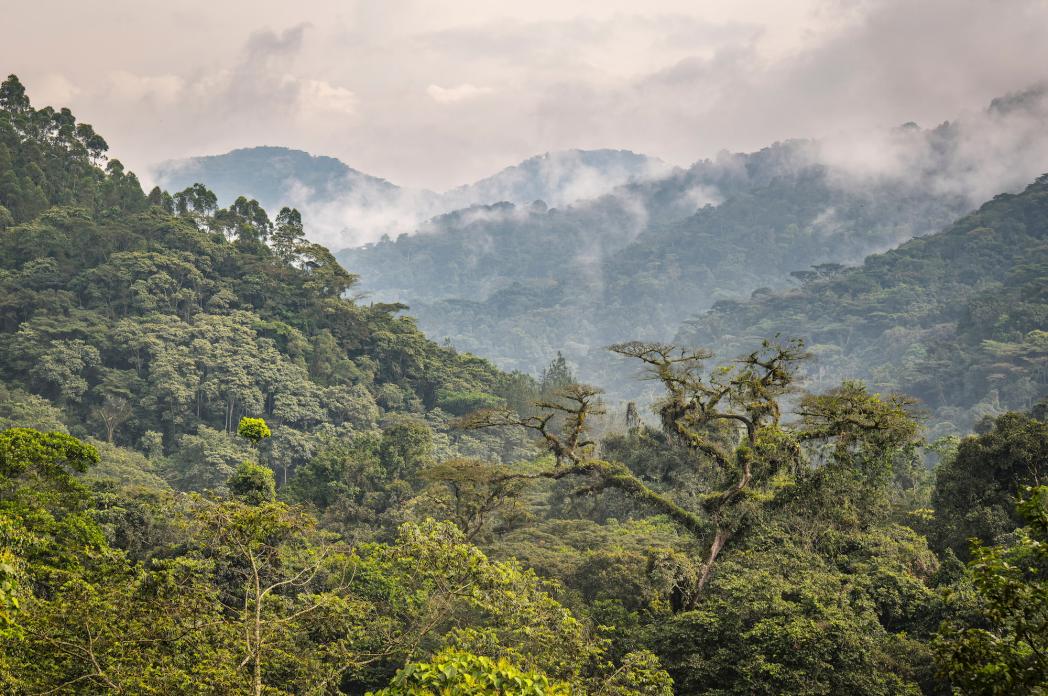
"The forest lies before me in endless shades of green, breathing with a quiet rhythm that feels both eternal and fragile. Somehow, the absence of Rafiki—the silverback whose life was ended by a poacher—is still felt in these mountains."
Jasper Doest, Photographer, WWF Ambassador
The gorilla census: counting for conservation
Rafiki Junior and his family will all be included in the current mountain gorilla census – an effort to determine the latest figure for these endangered great apes in the Bwindi-Sarambwe ecosystem. The census is the first in 7 years and is essential to understand the effectiveness of current conservation measures and inform future efforts.
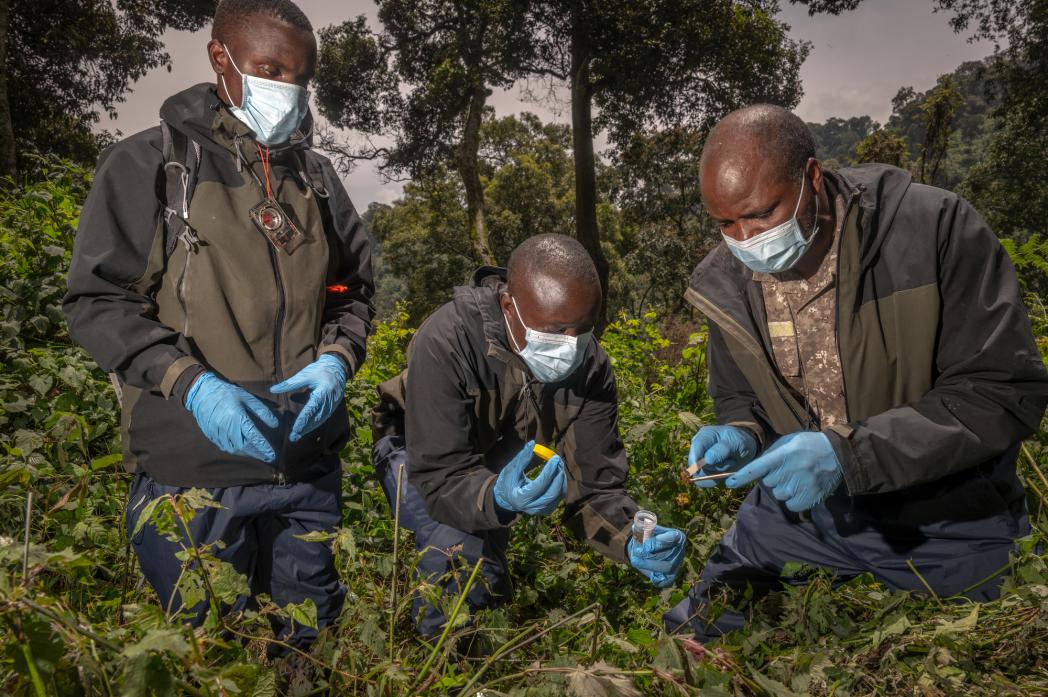
Census teams ‘sweep’ the forest on foot, searching for signs of gorillas. The ability to navigate through the dense mountain forest habitat and track the gorillas across steep and challenging terrain is not easily mastered – the trackers are specially trained. These same skills are used by ranger guides during the tourist visits:
“What makes these treks possible is the quiet work of another team already out there before us—trackers who follow the gorillas at a respectful distance every day,” says Jasper. "Their role is part science, part guardianship: monitoring the gorillas’ health, watching their movements, and making sure they are safe. But it is also what allows us to find them without wandering aimlessly through a labyrinth of green. Without the trackers, it would be like looking for a needle in a haystack. Instead, their phone calls, radio updates and an array of what seems like imitated animal sounds guide our ranger, providing shortcuts so that the time we spend is not in search, but in presence.”
The Nkuringo group is one of over 40 habituated mountain gorilla families that inhabit the subspecies’ last remaining stronghold. The entire global population is confined to two isolated patches of Afromontane Forest in East-Central Africa: one in the Virunga Massif – a region spanning three national parks in Uganda, Rwanda and the Democratic Republic of Congo (DRC) – and one in Bwindi Impenetrable National Park, Uganda, which connects to Sarambwe Nature Reserve, in the DRC.
Like other forest ecosystems around the world, mountain gorilla habitat serves as a refuge for other species to thrive against a backdrop of habitat degradation. In Bwindi, the mountain gorillas’ dense forest habitat is richly biodiverse, home to many other globally threatened species including chimpanzees and African forest elephants.
According to Jasper, the wildness and grandeur of the forest became more apparent as the ventured deeper into the habitat to find the gorillas.
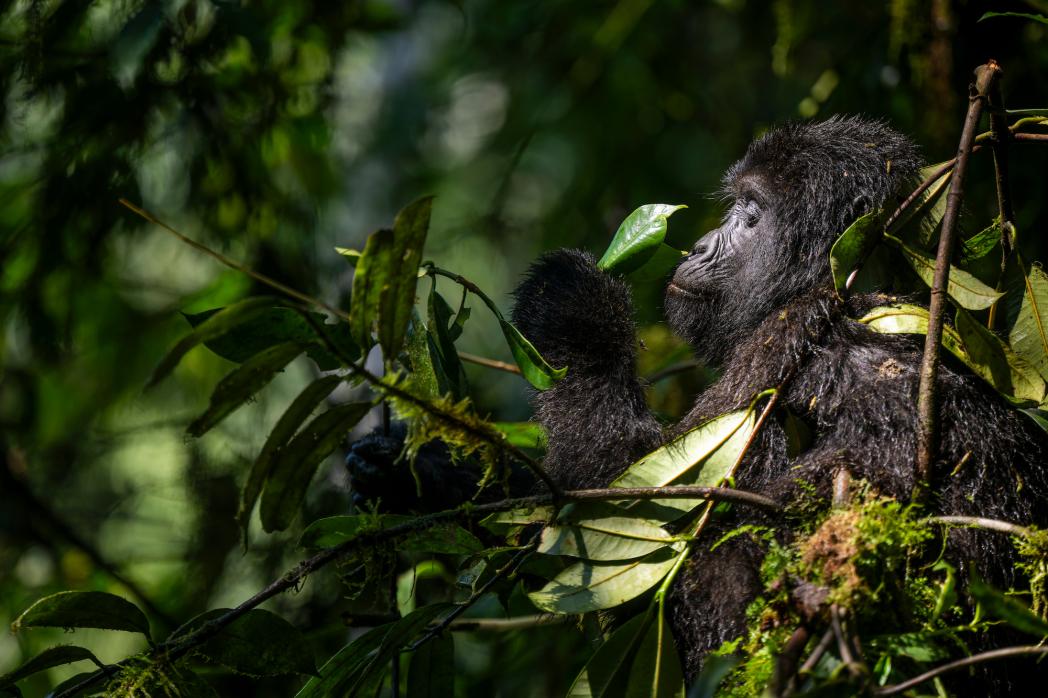
“The deeper we walked, the more the forest pressed in. Moist air clung to my skin. Birdsong echoed in unpredictable patterns, and somewhere the sounds of chimpanzees echo through the forest. I felt small, swallowed, yet strangely at peace—as if the forest itself was reshaping the rhythm of my breath.”
Family groups range in size with an average of 10 family members, but some can have as many as 40 individuals. Family life is structured – both males and females care for the infants: hugging, carrying and playing with them. When they mature, around half of mountain gorilla offspring will disperse from their natal group to join or form a new troop.
Rafiki Junior, only a juvenile, will remain in his birth group for some time. Continued conservation efforts by ICGP and partners to protect the gorillas and the communities that surround them, will help to ensure a positive future for the gorillas.
“When I look at Rafiki Jr, I feel that in the future, he will do very well,” says Levi. “He will become a good member of the family, and maybe at one time, when he grows mature, he can become a very good silverback or very good leader.”
-
 © Zoe Brown
Author
Zoe Brown, Stories & Content Executive, WWF-UK
/
Have a question about this article?
Get in touch: contentunit@wwf.org.uk