
Amur leopard
With likely less than 200 left in the wild, the Amur leopard could be the most endangered big cat on Earth.
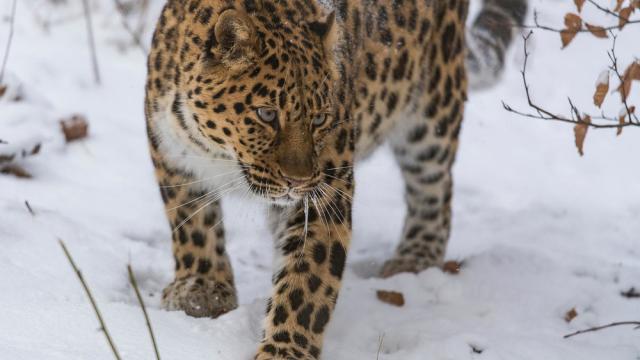

Amur leopard:
Fewer than 200 remain

Can be found:
Russia and China

Threats:
Illegal wildlife trade, environmental damage, climate change
Amur leopard
(Panthera pardus orientalis)
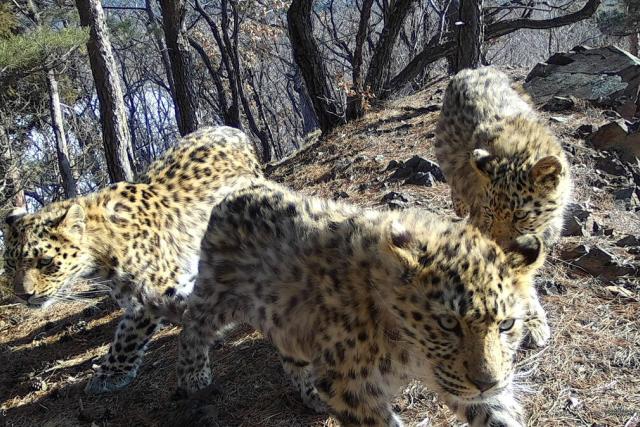
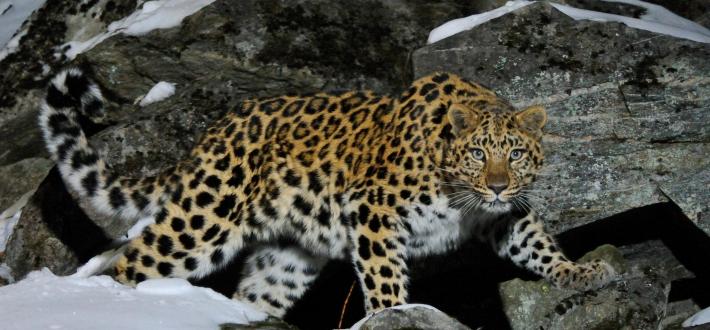
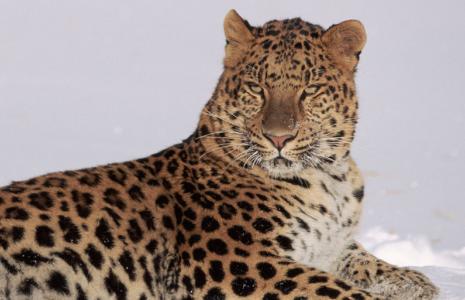
Not many people ever see an Amur leopard in the wild. Not surprising, as there are so few of them, but a shame considering how beautiful they are. Thick, luscious, black-ringed coats and a huge furry tails they can wrap around themselves to keep warm.
The good news is, having been driven to the edge of extinction, their numbers appear to be rising thanks to conservation work. The Amur leopard is a nocturnal animal that lives and hunts alone – mainly in the vast forests of Russia and China. During the harsh winter, the hairs of that unique coat can grow up to 7cm long.
Over the years the Amur leopard hasn't just been hunted mercilessly, its homelands have been gradually destroyed and fragmented by unsustainable logging, forest fires, road building, farming, and industrial development.
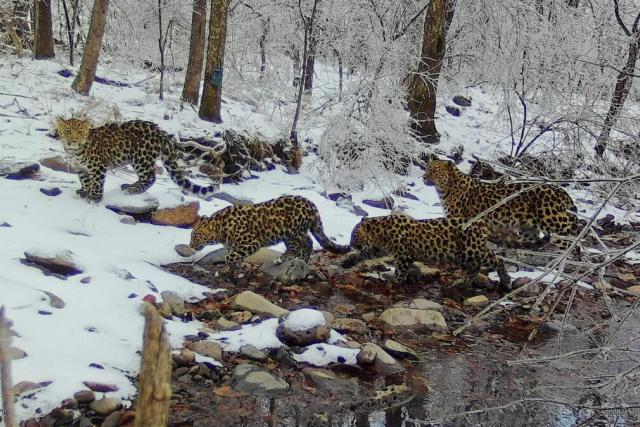
But recent research shows conservation work is having a positive effect, and wild Amur leopard numbers are believed to have increased to around 130 adults, [1] in Russia and north-east China. The Amur leopard, however, still remains one of the rarest and most critically endangered leopard subspecies in the world.
Why are Amur leopards important?
Amur leopards are top predators in their landscape, so they’re crucial role for keeping the right balance of species in their area. That also affects the health of the forests and wider environment, which provides local wildlife and people with food, water and other resources.
Key facts
Where do Amur leopards live?
Until the late 19th century, the Amur leopard was distributed across the southern stretches of the Amur-Ussuri region in Russian Manchuria, North China and the Korean Peninsula reaching as far south as Beijing. [2]
In the 21st century Amur leopards are now found only in an area of about 3,000 km2 along the border of Russia, China, and North Korea. [3]
How many Amur leopards are left?
According to the IUCN, in 2023, there were estimated to be around 130 mature individuals. [1]
How big are amur leopards?
Males usually weigh 32-48kg, but can weigh up to 75kg. Females are smaller, at 25-43kg.[4]
What do amur leopards eat?
The Amur leopard's main prey is roe deer, wild boar, and sika deer, but they also eat badgers and hares.[5]
What is the IUCN status of Amur leopards?
The Amur leopard is critically endangered. Critically endangered is the highest risk before extinct in the wild.[4]
-
 © WWF-China
 -
 © Theodore Kaye / WWF China
 -
 © Global Warming Images / WWF
Our work with Amur leopards
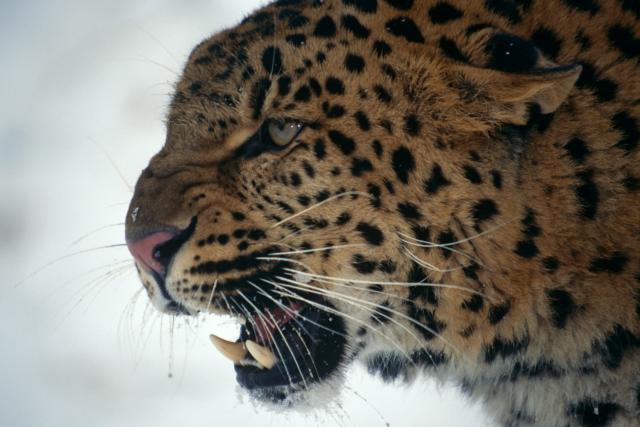
We are helping to conserve tigers and Amur leopards in the North-East China, which is part of the Amur-Heilong Ecoregion. We are supporting the recovery of their populations in the wild. Including, advising on and habitat restoration and connectivity approaches, strengthening the capacities of rangers to protect wildlife from poaching and illegal wildlife trade and exploring and piloting ways to enable coexistence between people and these big cats.

Join WWF
Join WWF
Join over 100,000 people who have taken action to help bring our world back to life. Your WWF membership not only supports our work to restore nature and help tackle climate change but provides you with expert advice on how you can make a difference in your own life.
We also recommend
10 Facts about Amur leopards
Take an Amur leopard quiz