

Seven marine turtle species:
Estimated around 6.5 million left*

Can be found:
Oceans everywhere except the polar seas

Threats:
Habitat loss, degradation, bycatch, poaching, illegal wildlife trade, climate change, marine pollution
Marine Turtle (Chelonioidea)
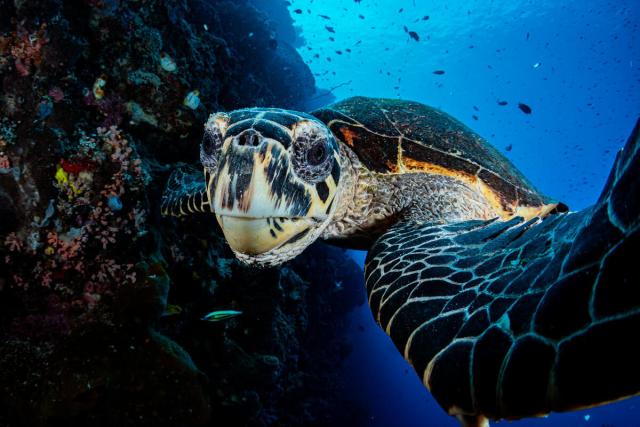
Hawksbill (Eretmochelys imbricata)
Loggerhead (Caretta caretta)
Leatherback (Dermochelys coriacea)
Olive ridley (Lepidochelys olivacea)
Kemp's ridley (Lepidochelys kempii)
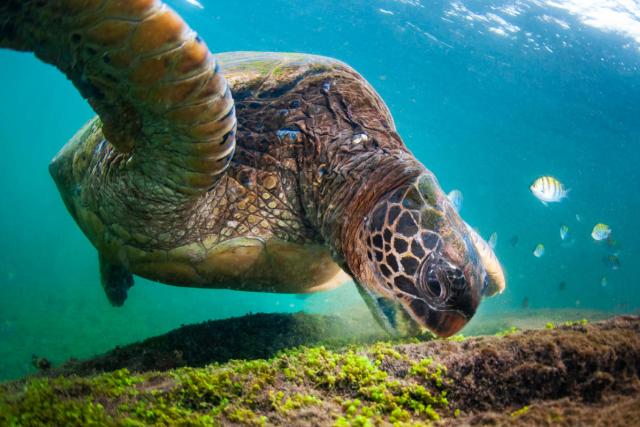
Green (Chelonia mydas)
Flatback (Natator depressus) [1]
There are seven species of marine turtles listed above. Marine turtles have been in our oceans for over 100 million years. They’re brilliant navigators, swimming hundreds or thousands of kilometres between feeding and nesting grounds. But they face lots of threats along the way – so we’re doing all we can to help them.
Marine turtle population estimates (including those stated above) are based on the number of egg-laying females – we can’t be sure of the numbers of elusive sea-dwelling males, or females that aren’t breeding. But we do know at least five of the seven species are at risk of extinction.
Why are they so important?
Some turtle species are actually important predators that play a key role in keeping ocean food chains healthy.
For example, hawksbill turtles eat lots of sea sponges, which could otherwise out-compete reef-building corals if left unchecked. Green turtles consume algae, helping prevent overgrowth on coral reefs, which is crucial for the health of the reef ecosystem. So, the turtles help maintain the balance of reef ecosystems and promote coral health, which are crucial for the survival of many other creatures.
The leatherback turtle is also a big eater of jellyfish, which helps regulate populations, indirectly supporting fish stocks – which benefits other animals in the food chain, as well as people.
Key facts about marine turtles
Where do marine turtles live?
Six of the seven marine turtles are widespread across the world, including UK waters, with the exception of the flatback turtle which is unique to Australian and Papua New Guinea. [2]
Green turtles are found worldwide - in the warm waters of the Atlantic Ocean, Indian Ocean and Pacific Ocean.
Hawksbill turtles are the most tropical marine turtle, nesting in 70 countries primarily between the Tropic of Cancer and the Tropic of Capricorn. [3]
How many marine turtles are left in the wild?
*While it is extremely difficult to calculate the exact number of marine turtles left in the wild, scientists estimate the population size to be around 6.5 million although the number of individuals varies significantly between the seven species. Worldwide populations of hawksbill for example, have reduced by at least 80% in the last 3 generations. [4]
What is the size and weight of marine turtles?
Adult hawksbill turtles are one of the lightest of the turtles, weighing on average 45-78kg (100-150 Ibs) and are approximately 60-105cm long. [5] Leatherbacks are the largest sea turtles. On average leatherbacks measure 150-200cm (4-6 ft) long and weigh 300-500kg (660-1,100 lbs). [6]
What do marine turtles eat?
Turtles don't have teeth - they use their beak-like mouth to grasp their food. [7]
Adults hawksbill turtles predominantly eat sponges but will also eat other invertebrates found around coral and rocky reefs.[5]
What is the IUCN status of marine turtles?
There are nine IUCN red list categories, from extinct to least concern, and two categories below this where there is deficient data or the species hasn't been evaluated. Critically endangered is one below at risk of extinction in the wild, and vulnerable sits below endangered. The seven marine turtle species are classified as follows:
- Loggerhead turtles – vulnerable
- Green turtles – least concern
- Leatherback turtles – vulnerable
- Hawksbill turtles – critically endangered
- Kemp’s Ridley turtles – critically endangered
- Olive Ridley turtles – vulnerable
- Flatback turtles – data deficient
Where do marine turtles live?
Explore the map below to see the IUCN (International Union for Conservation of Nature) range data for marine turtles. [8]
-
 © WWF-Pacific/Tom Vierus
 -
 © Shutterstock / Aqua Images / WWF -Peru
 -
 © Nicolas Job
 -
 © Global Warming Images / WWF
How we're helping marine turtles
There are critical gaps in understanding where and to what extent exploitation of marine turtles are taking place, and which populations are most at risk. We are working to fill these gaps, implementing targeted and effective conservation interventions that benefit not only turtles but also the communities that depend on them. We also conduct comprehensive surveys to assess the drivers and motivations behind the use and trade of sea turtles. This vital research helps us better understand the challenges facing turtle populations and informs effective conservation strategies.
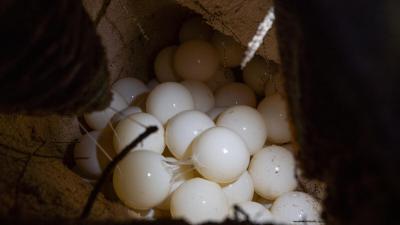
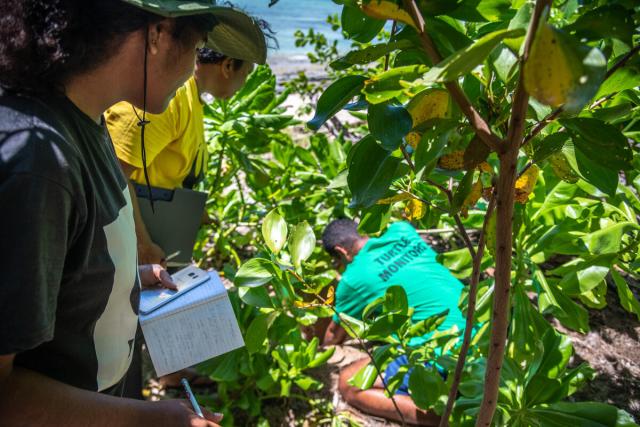
With your support, we’re actively working to protect marine turtles through a multifaceted approach that combines community engagement, research and policy development. Since 2010, WWF has supported the creation of the "Daunivonu" (turtle monitors) network, training community members in provinces such as Macuata, Bua, Lomaiviti, and Serua in Fiji. These dedicated volunteers monitor nesting sites, tag turtles, count eggs, and assist hatchlings, playing a crucial role in increasing awareness and enhancing conservation efforts in these regions.
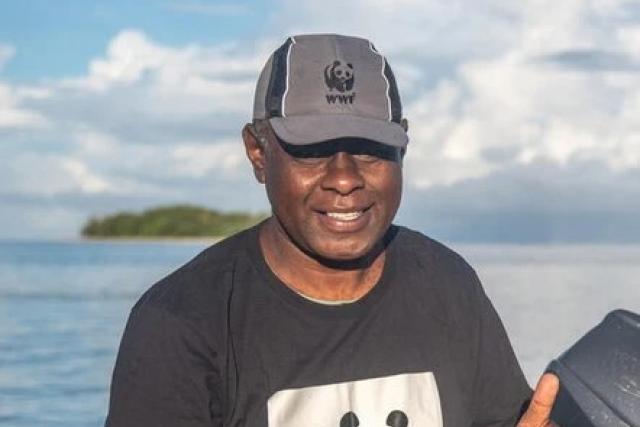
Emosi Time, Lead turtle monitor, Fiji
Emosi Time is a resident of Kavewa Island on Vanua Levu in Fiji. He was among the very first group of trained turtle monitors in Fiji and is now a lead community turtle monitor.
"I was taught from a very early age by my grandparents. They were traditional fishermen and know how to hunt sea turtle eggs. What I always do with the volunteers is show them how to identify the turtle nest so we can come back again and try to identify how many eggs are successfully hatched and those who are unhatched, so we can put it on the data sheet."
Adopt a Turtle
Adopt a Turtle
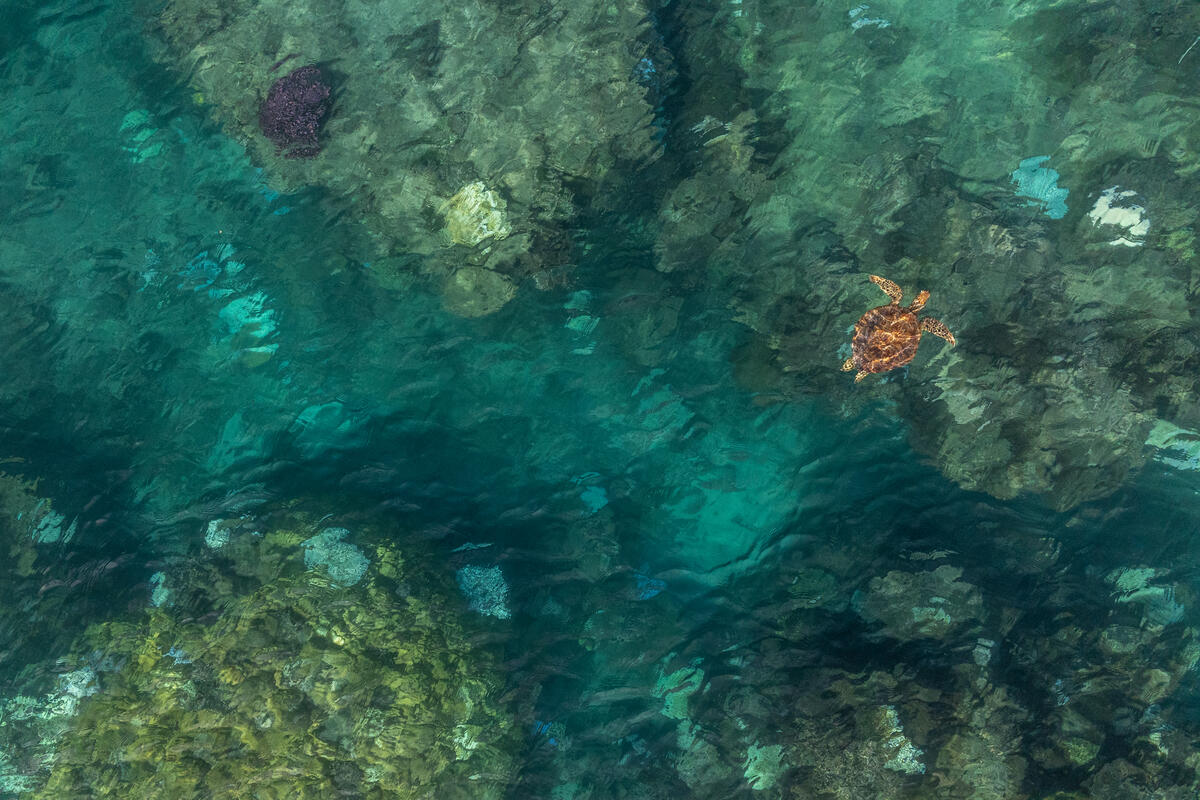
Adopt a marine turtle and help support our work in Fiji. We’re identifying important nesting sites and working with local people to help protect those beaches and the marine turtles that use them. When you choose an animal adoption, you are supporting both your chosen animals as well as wider work to help bring our world back to life.
We also recommend
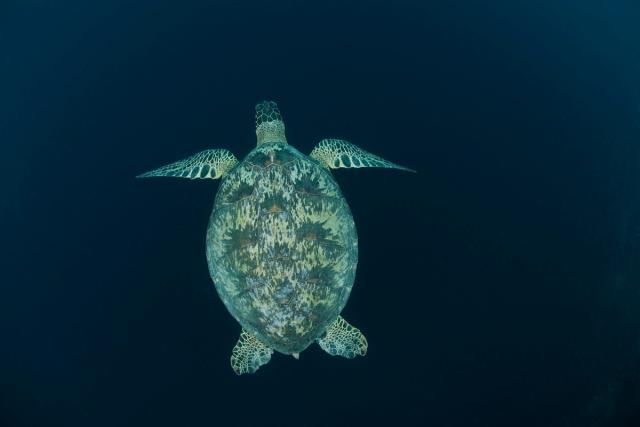
10 Facts about turtles
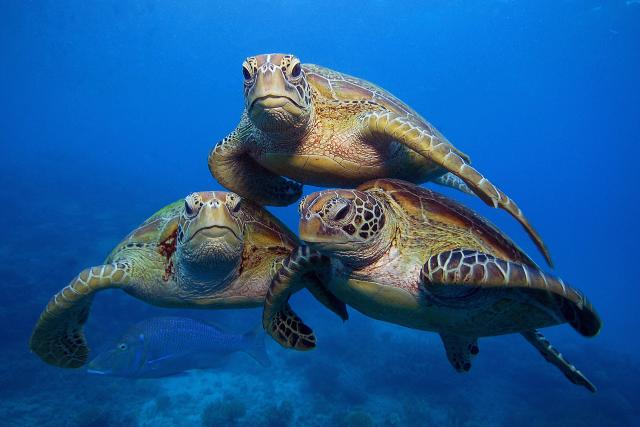
Take a turtle quiz
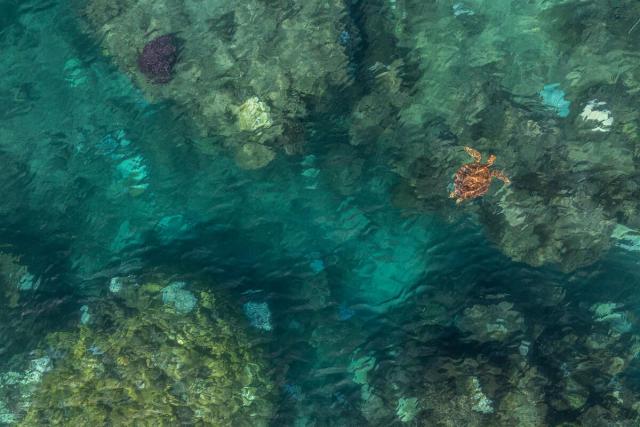
World turtle day – 16 June

Go Wild – WWF’s Club for Kids
Sources
- IUCN Redlist, marine turtles: https://www.iucnredlist.org/search?query=marine%20turtle&searchType=species
- NOAA Fisheries Species Database https://www.fisheries.noaa.gov/species/hawksbill-turtle
- Marine conservation society. https://www.mcsuk.org/news/seven-species-of-marine-turtles/
- Olive Ridley Project, how do sea turtles get? https://oliveridleyproject.org/ufaqs/how-big-do-sea-turtles-get/
- Mortimer, J.A & Donnelly, M. (ref: The IUCN Red List of Threatened Species 2008: e.T8005A12881238. IUCN SSC Marine Turtle Specialist Group). 2008. Eretmochelys imbricata.
- Hawksbills the most beautiful of sea turtles. SWOT volume XVII (2022) Jeanne A. Mortimer, et. al.
- Karleskint, G et al. (2009) Introduction to Marine Biology.
- The IUCN Red List of Threatened Species. Version 2025-2. https://www.iucnredlist.org. Downloaded on 05/08/2025