

African lion:
Around 23,000 remain

Can be found:
Sub-Saharan Africa

Threats:
Human-wildlife conflict, natural prey decline, loss of habitat
What sound do lions make?
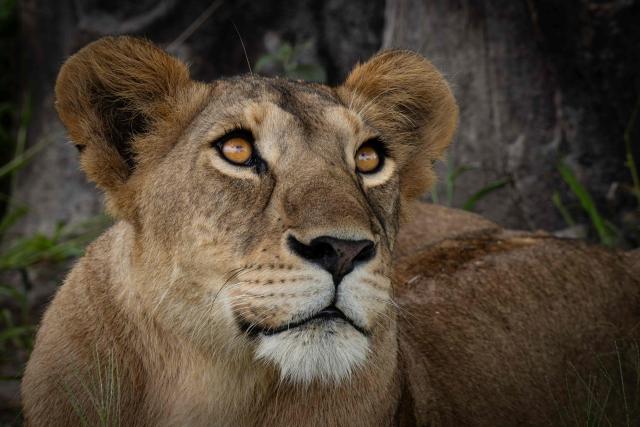
Natural sound of lion calling her mate
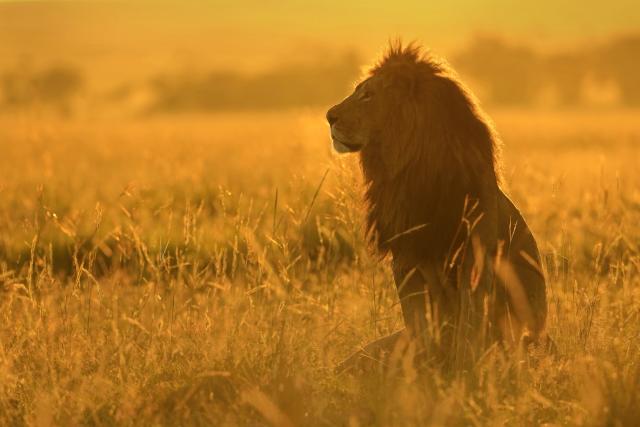
African Lion
(Panthera leo)
Lions are mammals and the most sociable of all big cats. They live in groups called prides, which usually consist of related females and their cubs. Dominant males, with their flowing manes (a sign of virility), fight to maintain breeding rights.
Powerful and majestic, the “king of the beasts” has no natural predators. But unthinkably, African lion numbers have plummeted - halving in just 30 years. Three-quarters of their populations are in decline. The main threats to African lions are human-wildlife conflict and natural prey decline, as well as habitat loss, climate change and wildlife trade. With around 23,000 African lions left in the wild, they’re officially classified as ‘vulnerable’, but require substantial and, in some cases, specific conservation efforts to halt their severe decline.[1]
Why are they so important?
Lions are top predators in their environment, whether that’s grasslands, desert or open woodland. It means they play a crucial role in keeping a healthy balance of numbers among other animals, especially herbivores like zebra and wildebeest – which in turn influences the condition of grasslands and savannahs. Lion landscapes provide a larger than average contribution to Africa’s ecosystem services; and contribute to national economies through tourism. For example, in Uganda, each lion is estimated to generate approximately £14,000 annually.
By protecting a lion’s landscape, we’re helping the whole ecosystem to thrive, which doesn’t just benefit wildlife but the people who rely on resources from nature as well.
Key facts about African lions
What is the habitat of a African lions?
Lions occupy less than 8% of their historic range.[2]
Most lions (nearly 95%) are found in southern and eastern Africa. Lions are found in a range of habitats and are common in semi-arid desert areas.[2]
Lions are highly adaptable and can live in very dry areas such as the Kalahari desert. Here they get most of their water from their prey and sometimes will even drink from plants such as the Tsamma melon.[3]
Lions prefer open woodland, thick bush, scrub and grasslands. They need some cover to help them stalk a good supply of prey, and also some shade to rest in the heat of the day.[3]
How many African lions are left in the wild?
There are around 23,000 African lions left in the wild.[2]
African lion numbers have declined by 30% since 2006.[2]
How big are African lions?
Males are around the size of a refrigerator whereas females are smaller and similar in size to a bulky armchair.
On average males weigh 190kg and females weigh 126kg.[3]
Male lions can measure up to 250cm long from head to body. Shoulder height is usually up to 123cm.[3]
What do African lions eat and drink?
Lions mainly prey on ungulates like buffalo, wildebeest, waterbuck and antelopes, as well as giraffe, warthog and zebra.[3]
Lions can eat up to 40kg of meat in a single meal - which is around a quarter of their body weight. [3]
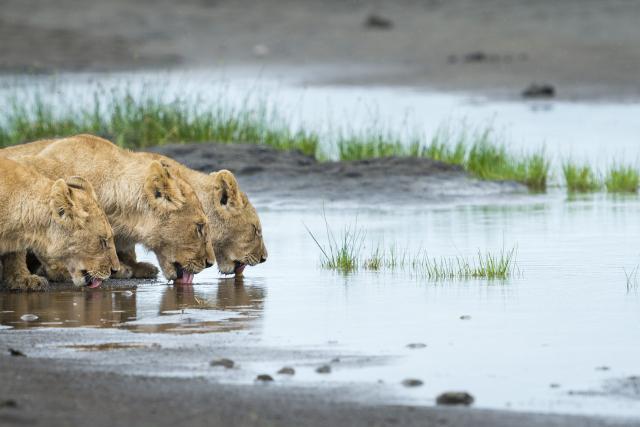
Lions get lots of moisture from their food and sometimes even from plants so they do not have to drink much water.[3]
What is the IUCN status of African lions?
Lions are listed as vulnerable on the IUCN Red List, which means they are at high risk of extinction in the wild.[2]
Lions are listed as ‘Largely depleted’ on the IUCN green list, meaning their populations are much lower than they historically were and they are at a high risk of further declines without continued conservation efforts.[4]
Where do African lions live?
Explore the map below to see the IUCN (International Union for Conservation of Nature) range data for lions [5]
-
 © Juozas Cernius / WWF-UK
 -
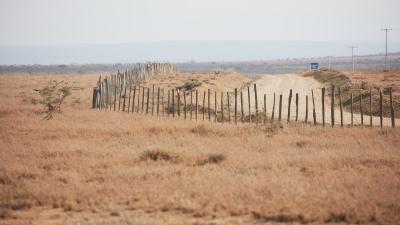 © Juozas Cernius / WWF-UK
 -
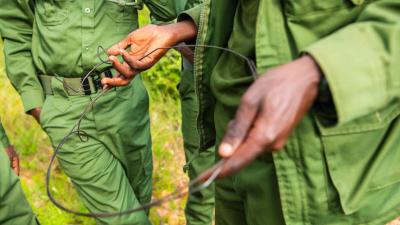 © Greg Armfield / WWF-UK
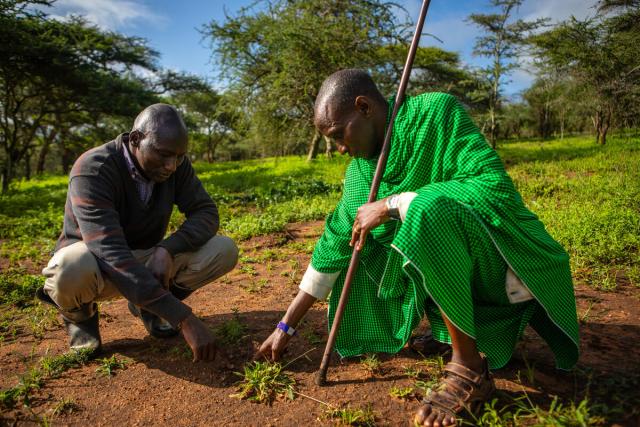
How we're helping
We work closely alongside local partners, government agencies and communities in East Africa to help protect and increase lion populations by addressing key threats and supporting the coexistence of local communities and lions. Your donations help support critical work including:
- Monitoring lion populations in key sites or lionscapes, including lion censuses, field equipment and GPS tracking collars.
- Supporting training for community rangers and conservancy members, such as on anti-poaching, livestock management to prevent predation, and on human-lion conflict response.
- Improving ranger welfare including the upgrade of living standards and supply of rations.
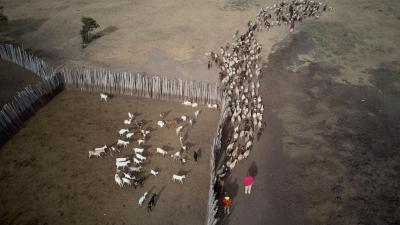
- Ensuring lions and communities continue to coexist by providing predator-proof bomas and other protective measures such as ‘lion lights’.
- Supporting the implementation of Kenya’s National Lion Action Plan, which is critical to guide the country’s lion conservation strategy.
- Helping restore and reconnect critical habitats for lions and their natural prey, to have space to roam and thrive.
- Funding vital research to guide conservation efforts.
- Helping tackle the illegal wildlife trade and reduce the demand for lion parts and other wildlife trade products.
- Implement new technologies to improve lion protection, and reduce human lion conflict.
Become a member
Become a member
Over 100,000 people who have taken action to help bring our world back to life. Join us with a WWF membership.
We also recommend

Go Wild - WWF's Club for Kids
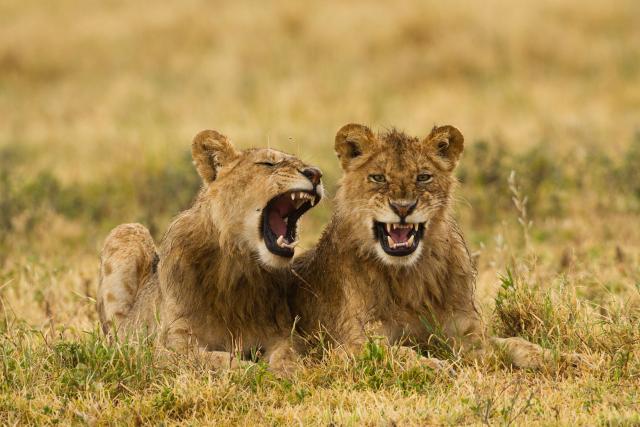
Top 10 facts about lions
Take a lion quiz
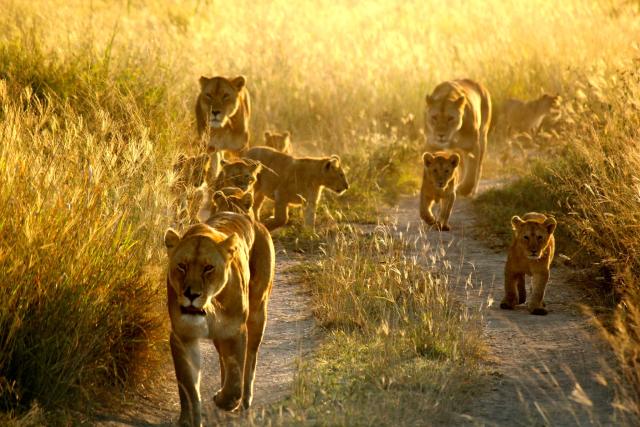
The Lions of Mkomazi - Counting Big Cats
Sources
- African Lion Database. Unpublished Data. 2023 2024. Panthera leo. The IUCN Red List of Threatened Species. Version 2025-1. https://www.iucnredlist.org. Downloaded on 05/08/2025
- https://www.sciencedirect.com/science/article/pii/S2351989425003610. Accessed 28/10/25
- Nicholson, S., Bauer, H., Strampelli, P., Sogbohossou, E., Ikanda, D., Tumenta, P.F., Venktraman, M., Chapron, G. & Loveridge, A. 2023. Panthera leo. The IUCN Red List of Threatened Species 2023: e.T15951A231696234. https://dx.doi.org/10.2305/IUCN.UK.2023-1.RLTS.T15951A231696234.en.
- Wilson DE & Mittermeier RA eds (2009). Handbook of Mammals of the World, Vol 1 Carnivores
- https://ewt.org/iucn-green-status-lion-conservation