

Tigers:
Estimated 5,711 remain

Can be found:
Mainland Asia and Indonesia

Threats:
Illegal wildlife trade, human wildlife conflict, habitat loss and fragmentation, climate change
What sound do tigers make?
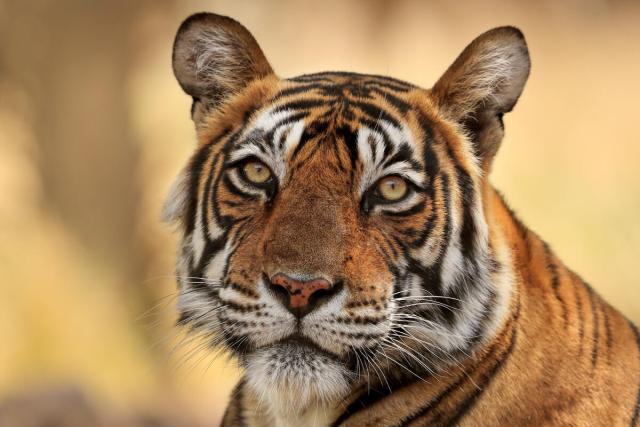
Tiger
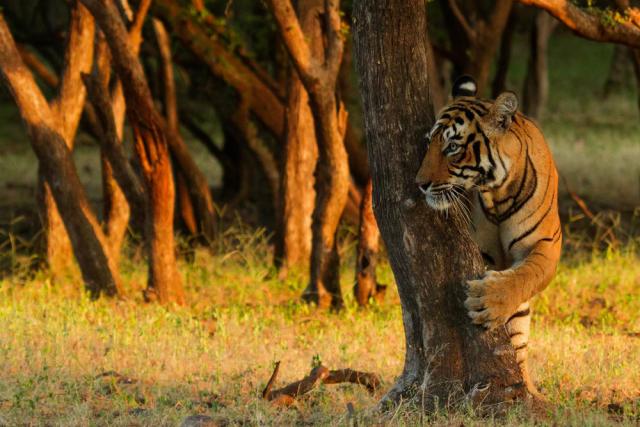
Tigers
(Panthera tigris)
The beautiful, awe-inspiring tiger is one of our world’s most iconic animals. But here’s the shocking truth. Wild tiger numbers dropped by around 95% since the beginning of the 20th century. Now, for the first time in conservation history, their numbers are on the increase.
We have been working to help secure a viable future for wild tigers. In recent years, with crucial support from local communities and commitment from various governments, the decline in global tiger numbers has halted. But there’s a lot more work to do.
We’re working closely with governments and community groups in critical tiger landscapes – and your support is crucial, as always. Will you join us, and help protect this amazing wild cat?
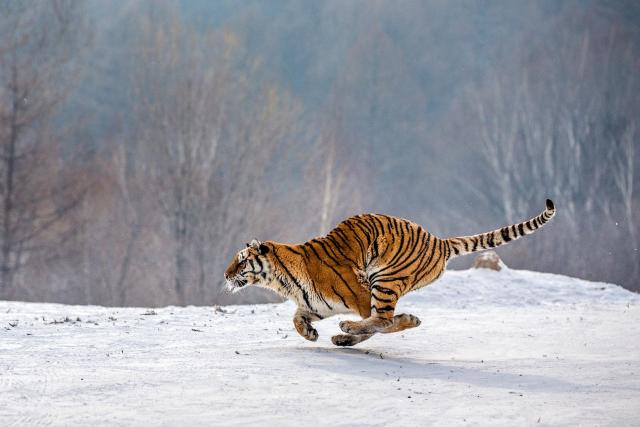
Why are they so important?
As top predators and ‘umbrella species’, tigers help to keep their environment healthy.
It’s the way things naturally work in the wild – the predators prey on other animals, in this case herbivores (plant eaters) such as deer. But without enough tigers to eat them, herbivores can overgraze and damage the land, disrupting the balance of the local environment.
Local people also depend on a healthy environment for food, water and lots of other resources. Our tiger conservation efforts are also benefiting people and wildlife sharing that environment.
Key facts about tigers
Where do tigers live?
Continental tigers are found across mainland Asia from India and Nepal to the Russian Far East. Tigers used to roam most of Asia, but now they occupy around just 8% of their original range.[1][2]
How many tigers are left in the wild?
Though Tiger numbers are now on the rise at 5,711 in 2025, the tiger population was previously around 100,000 tigers at the beginning of the 20th century. [3]
There are more tigers in captivity than are left in the wild. [4]
How long do they live?
Wild tigers only live between 12-15 years on average. [5]
What is the size and weight of a tiger?
Tigers in the Russian Far East are the largest and heaviest of all the big cats - males can weigh up to around 300kg. Tigers in Sumatra are the smallest, weighing up to 140kg. A tiger's tail is around one metre long. [5]
What do tigers eat?
Tigers main prey is deer. They also eat wild boar. [6]
What is the IUCN status of tigers?
Tigers are classified as endangered. [7] The next classification up is critically endangered, which puts them at high risk of extinction in the wild.
Where do tigers live?
Explore the map below to see the IUCN (International Union for Conservation of Nature) range data for tigers. [7]
-
 © Jim Jabara / WWF
 -
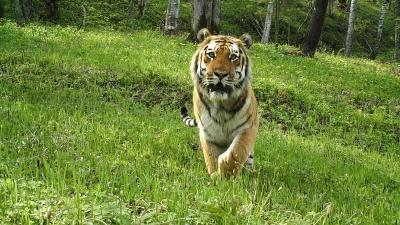 © Suiyang Forestry Bureau
 -
 © Edwin Giesbers / naturepl.com
 -
 © Richard Barrett 2017
How we're helping tigers
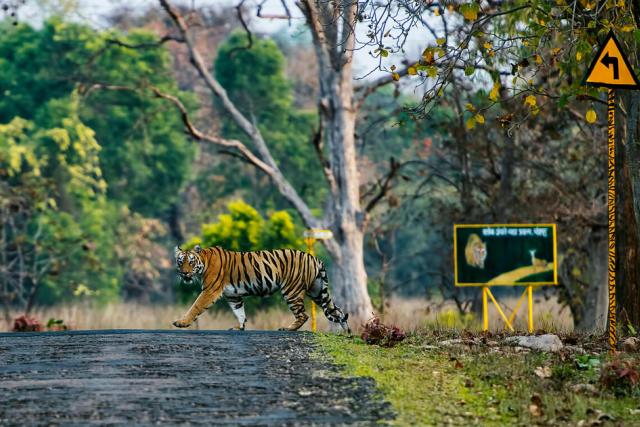
Tigers remain in less than 8% [8] of their historic range but there is huge potential to expand tiger ranges with the right conditions. Tiger recovery areas have been identified, and WWF is working to support the return of wild tigers within critical landscapes. Many of these recovery areas serve as critical carbon sinks. Protecting these important landscapes for tiger recovery would not only help contribute to global climate change mitigation goals but would also generate significant ecological benefits to people, wildlife and the planet.
Adopt a tiger
Adopt a tiger
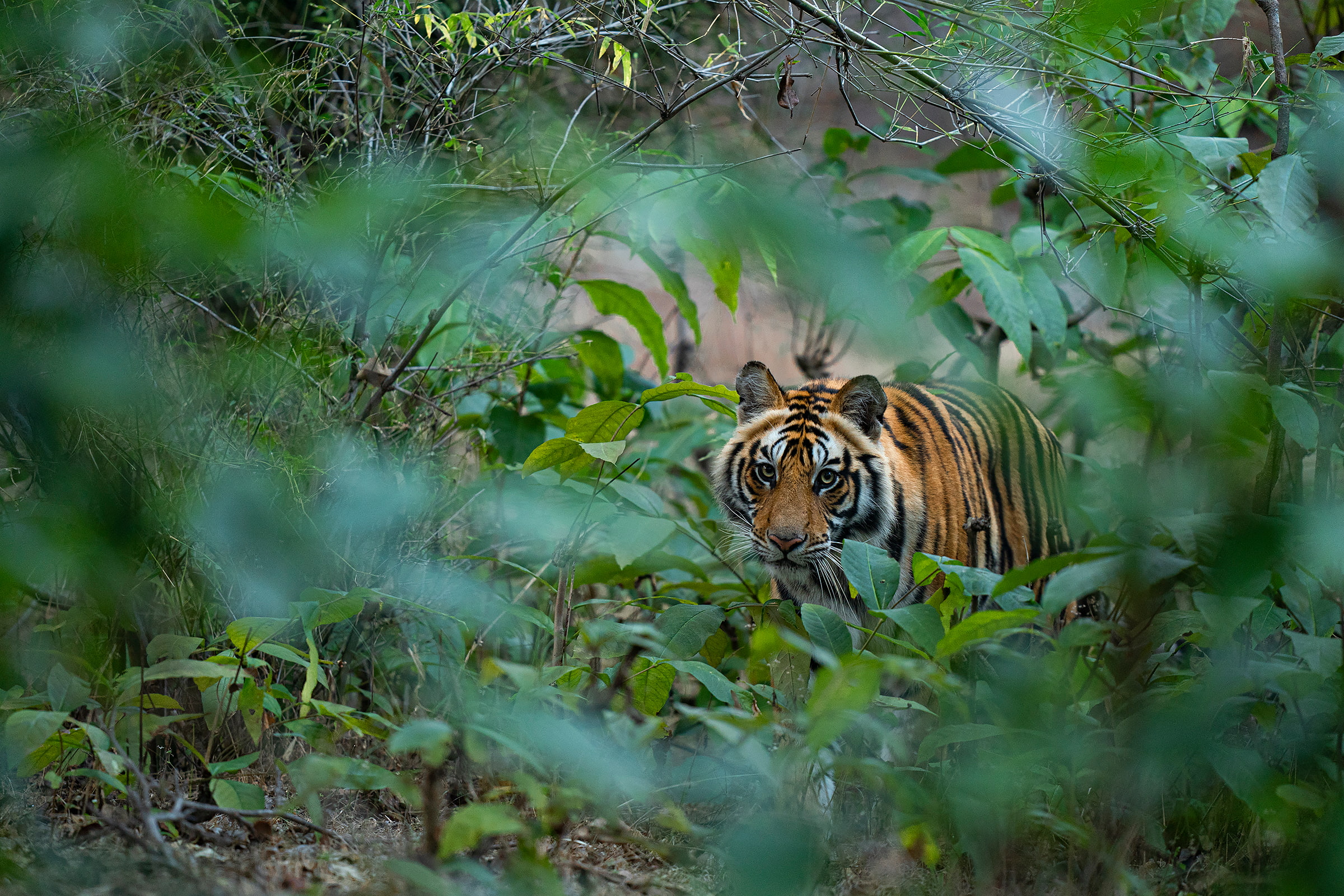
Your adoption will help fund tiger protection projects such as movement monitoring and reducing poaching and will also help fund other vital work around the world. When you choose an animal adoption, you are supporting both your chosen animals as well as wider work to help bring our world back to life.
We also recommend
10 Facts about tigers
Take a tiger quiz
World tiger day – 29 July

Go Wild – WWF’s Club for Kids
Sources
- IUCN SSC Cat Specialist Group | Tiger https://www.catsg.org/living-species-tiger
- The IUCN Red List of Threatened Species 2022: e.T15955A214862019. Goodrich, J., Wibisono, H., Miquelle, D., Lynam, A.J., Sanderson, E., Chapman, S., Gray, T.N.E., Chanchani, P. & Harihar, A. 2022. Panthera tigris.
- Frontiers | Range-wide trends in tiger conservation landscapes, 2001 - 2020
- Map range data: ©IUCN SSC Cat Specialist Group 2022. Panthera tigris. The IUCN Red List of Threatened Species. Version 2025-2. Downloaded on 18.09.2025
- UNODC, World Wildlife Crime Report 2020, United Nations Office on Drugs and Crime, 2020
- On the eve of the Global Tiger Day,... - Global Tiger Forum | Facebook
- Frontiers in Conservation Science. Sanderson Eric W. et. al. (2023) Range-wide trends in tiger conservation landscapes, 2001 - 2020.
- A revised taxonomy of the Felidae. The final report of the Cat Classification Task Force of the IUCN/ SSC Cat Specialist Group. Cat News Special Issue 11, 80 pp. Kitchener A. C., Breitenmoser-Würsten Ch., Eizirik E., Gentry A., Werdelin L., Wilting A., Yamaguchi N., Abramov A. V., Christiansen P., Driscoll C., Duckworth J. W., Johnson W., Luo S.-J., Meijaard E., O’Donoghue P., Sanderson J., Seymour K., Bruford M., Groves C., Hoffmann M., Nowell K., Timmons Z. & Tobe S. 2017.
- Tackling tiger trafficking framework August 2022