

African rhino:
Around 6,788 black and 15,752 white rhinos remain

Can be found:
Mainly across southern and eastern Africa

Threats:
Illegal wildlife trade, habitat loss & climate change
What sound do African rhinos make?
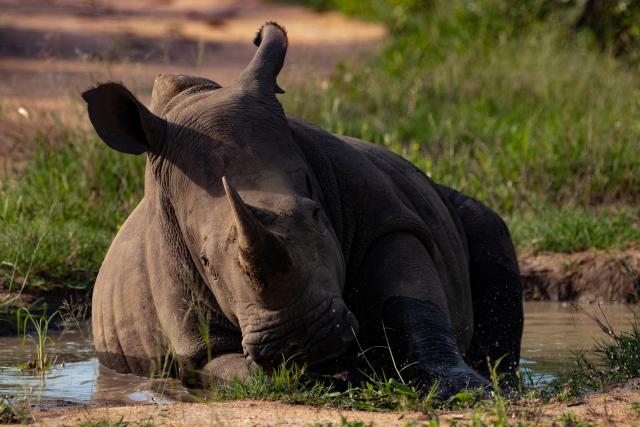
White rhinoceros recorded in the wild at Kruger National Park
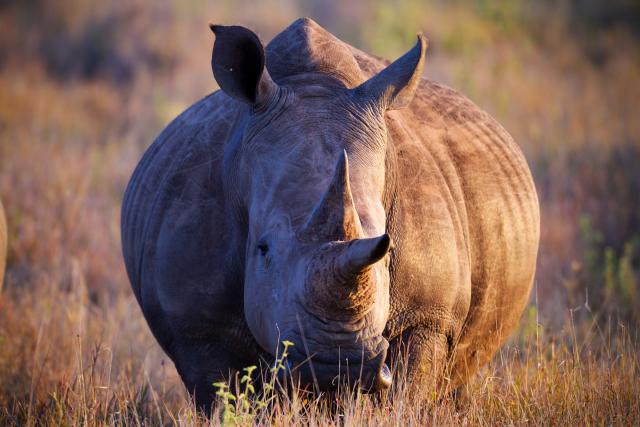
African Rhinoceros
White Rhino (Ceratotherium simum)
Black Rhino (Diceros bicornis)
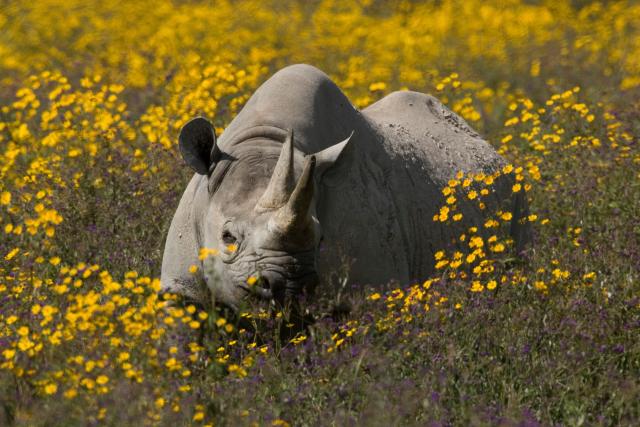
The rhinoceros is Africa’s armoured giant – like a tank on legs – and has been on our planet for millions of years. But right now they need our help. Poaching of rhinos for their horns, habitat loss and climate change are huge threats to both white and black rhinos.
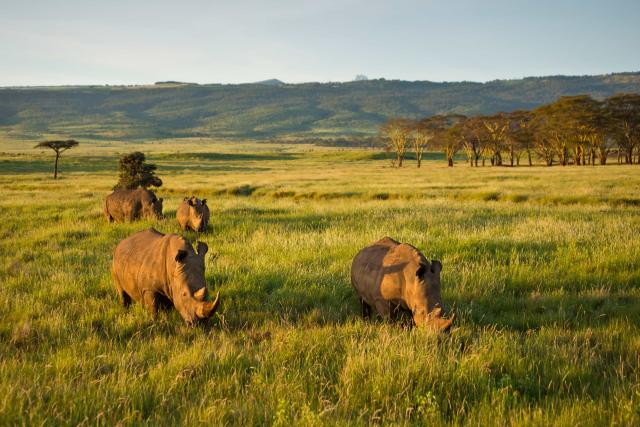
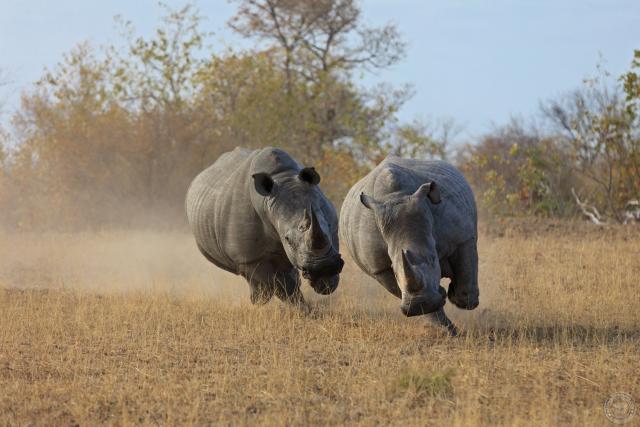
The southern subspecies of white rhino is a conservation success story, with the population recovering from under 100 in 1895 to over 21,000 individuals at the end of 2012. However, a surge in poaching in the last decade has caused white rhino numbers to decline, with around 15,752 remaining in the wild today. Sadly, there are only two individuals of the northern subspecies of white rhino remaining in the world. They mainly roam grassland and open savannah.
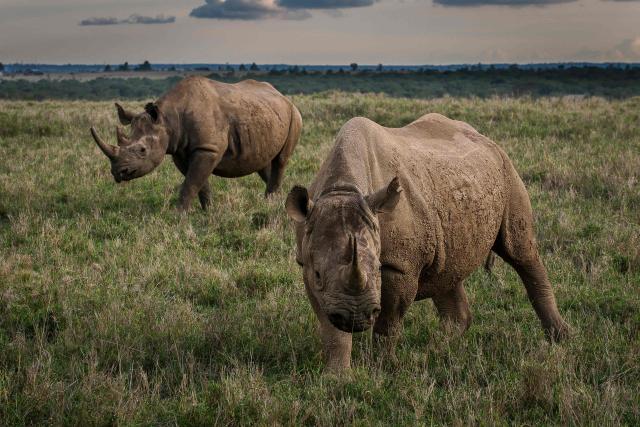
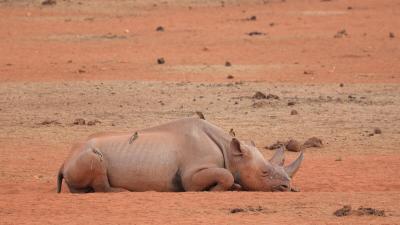
For the black rhino (slightly smaller, with a more pointed top lip) the worst period was between 1960 and 1995, when around 98% of them were lost to large-scale poaching. However, from a low of around 2,500 individuals in the mid 1990s, black rhino populations have increased to around 6,788 individuals today.
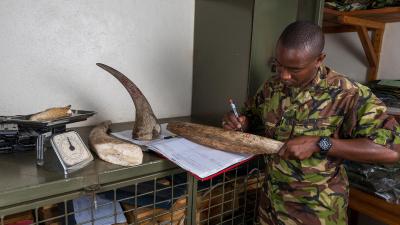
Poaching of rhinos for their horns is still a huge threat, with poachers and international criminal syndicates increasingly better equipped.
Why are they so important?
It’s not just because they’re a precious link to our planet’s ancient past - rhinos also play a crucial role in their environment.
White rhinos are big grazers, eating lots of vegetation, which helps shape the African landscape. By creating clearings and enriching soil, other species benefit, helping maintain a healthy balance within the ecosystem.
As one of Africa’s wildlife ‘big five’, rhinos are a popular sight for tourists. Ecotourism can be a vital sustainable source of funds for local communities and national economies.
By helping protect the rhino we’re helping protect its environment for the benefit of both people and wildlife for generations to come. Help us make sure we don’t lose these incredibly precious creatures.
Key facts about African rhinos
Where are African rhinos found?
The majority of white rhinos are found in South Africa, with smaller populations in Namibia, Zimbabwe, Kenya, Botswana, Eswatini, Mozambique, Rwanda, Uganda, Zambia and the Democratic Republic of the Congo.[1]
Nearly 95% of wild black rhinos are found in just four countries: South Africa, Namibia, Zimbabwe and Kenya. Smaller populations are found in Botswana, Eswatini, Malawi, Rwanda, Tanzania, and Zambia.[1]
How many African rhinos are left in the wild?
There are only around 6,788 black rhinos and 15,752 white rhinos in the wild.[1]
How big are African rhinos?
Black rhinos have a shoulder height of 1.4-1.7m and a body length of around 3m. They weigh between 800-1,350kg.
White rhinos have a shoulder height of 1.5-1.8m and weigh between 1,800-2,700kg.[2]
What do African rhinos eat and drink?
Rhinos mainly eat plant foliage and need a large daily intake of food.[3]
African rhinos can survive up to five days between visits to watering holes.[3]
Black rhinos have a characteristic, pointy prehensile upper lip used to 'pluck' vegetation from trees and bushes.[4]
White rhinos are grazers - their broad flat lower lip allows them to clip grass close to the ground.[4]
What are the different types of African rhino?
There are two main species of African rhino, the black rhino and white rhino: there are four subspecies of the black rhino (Diceros bicornis): Southern Central black rhino, Eastern black rhino, South Western black rhino and Western black rhino (declared extinct in 2011).
There are two subspecies of white rhino (Ceratotherium simum): the Southern white rhino and Northern white rhino.
What is the IUCN status of African rhinos?
The black rhino is listed as Critically Endangered on the IUCN Red List. [5]. The IUCN Red List defines a species as Critically Endangered when it is facing an extremely high risk of extinction in the wild.
The white rhino is classified as Near Threatened on the IUCN Red List[6]. Near Threatened status means the species is at risk of becoming threatened if the negative trends continue or worsen.
Where do African rhinos live?
-
 © Ola Jennersten / WWF-Sweden
 -
 © Karuri Nyaga / Hushed Hills Ltd. / WWF-Kenya
 -
 © WWF / Juozas Cernius
How we're helping
We work to protect rhinos across East Africa, particularly supporting black rhino conservation in Kenya and Tanzania. We also support efforts to stop wildlife crime and reduce the demand for rhino horn. Working closely alongside local partners, government agencies and communities to help protect and increase rhino populations. WWF’s rhino adoptions help support critical work including:
- Monitoring rhino populations including rhino surveys, equipment and infrastructure in key rhino ranges.
- Supporting training, such as scene of crime and rhino monitoring courses.
- Improving ranger welfare including the upgrade of living standards and supply of rations.
- Supporting the development and implementation of Kenya’s Black Rhino Action Plan, which is critical to guide the country’s black rhino conservation strategy.
- Helping restore and reconnect critical habitats for rhinos and other animals to have space to roam and thrive.
- Funding vital research to guide rhino conservation efforts.
- Helping tackle the illegal wildlife trade and reduce the demand for rhino horns.
- Implementing new technologies to improve rhino protection and reduce poaching.
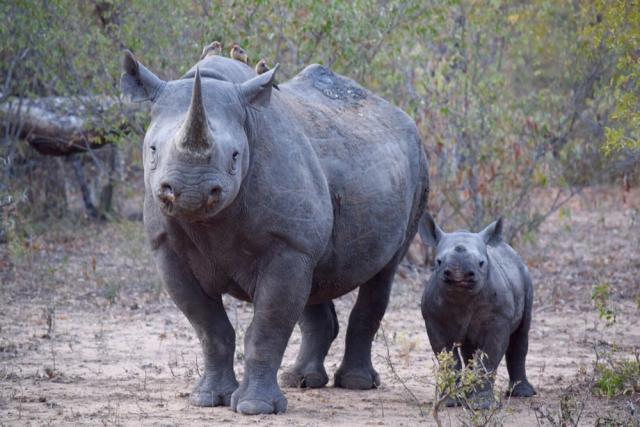
New hope for black rhinos
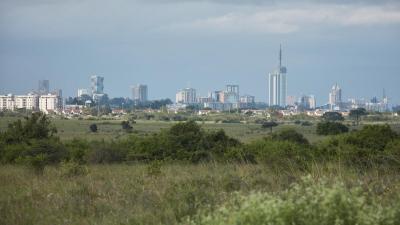
In Kenya, WWF-UK support for black rhino conservation has contributed to a population increase of more than 1,059 individuals – a remarkable recovery from fewer than 400 individuals in the 1980s. This fantastic achievement is a result of years of dedicated effort by the partners and communities WWF works with across Kenya, including Kenya Wildlife Service. This means that Kenya remains on track to achieve its long-term goal of 2,000 black rhinos by 2037.
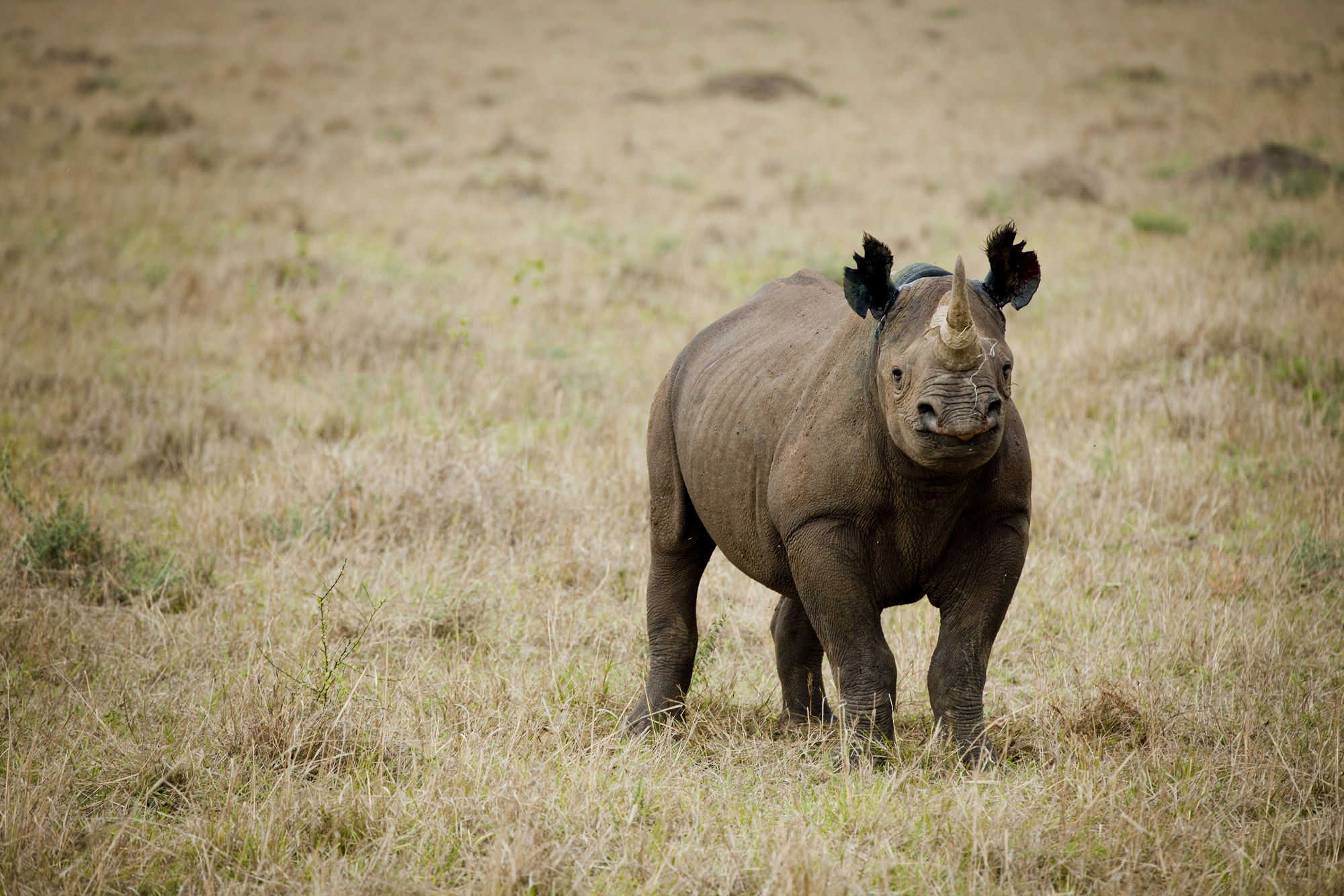
Adopt a rhino
Adopt a rhino
Your adoptions will help protect rhinos in Africa and help fund our other vital work around the world!
We also recommend

Go Wild - WWF's Club for Kids
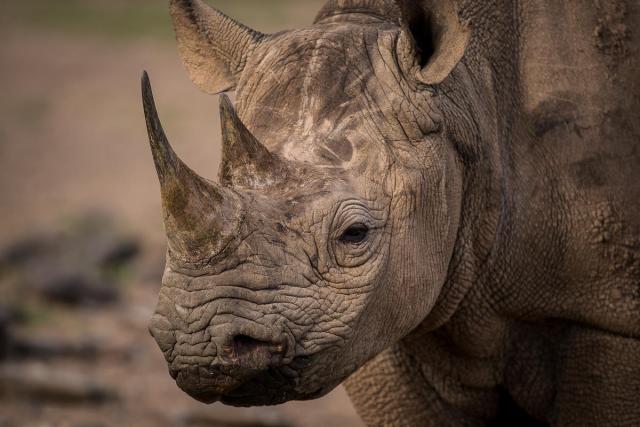
5 facts about black rhinos
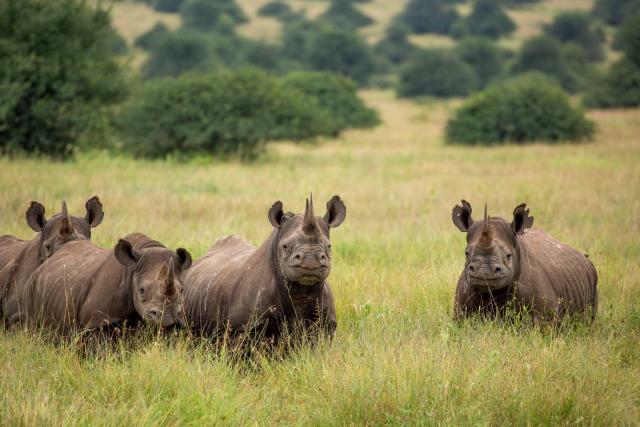
Take a rhino quiz
World Rhino Day
Sources
- International Rhino Foundation | About Rhinos https://rhinos.org/about-rhinos/rhino-species/black-rhino/. Accessed 25/10/24
- International Rhino Foundation | About Rhinos https://rhinos.org/about-rhinos/rhino-species/black-rhino/ Accessed 25/10/24 https://rhinos.org/about-rhinos/rhino-species/white-rhino/ . Accessed 25/10/24
- Emslie, R. 2020. Diceros bicornis. The IUCN Red List of Threatened Species 2020: e.T6557A152728945. https://dx.doi.org/10.2305/IUCN.UK.2020-1.RLTS.T6557A152728945.en. Downloaded on 25/10/24
- portals.iucn.org/library/sites/library/files/documents/2025-004-En.pdf
- Emslie, R. 2020. Ceratotherium simum. The IUCN Red List of Threatened Species 2020: e.T4185A45813880. https://dx.doi.org/10.2305/IUCN.UK.2020-1.RLTS.T4185A45813880.en. Downloaded on 125/10/24
- Macdonald. D (Ed) Encyclopaedia of Mammals.1995 Andromeda Oxford Limited