

Asian elephant:
Fewer than 52,000

Can be found:
13 countries across South and South-east Asia

Threats:
Habitat loss, human-elephant conflict and illegal wildlife trade
What sound do Asian elephants make?
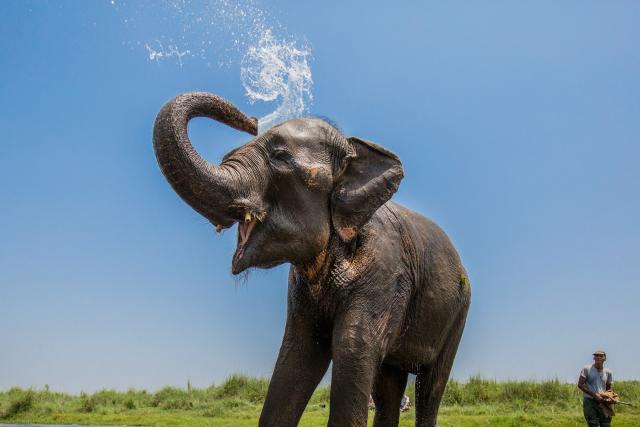
Asian elephant recorded at Lower Kinabatangan River, Sabah, Borneo
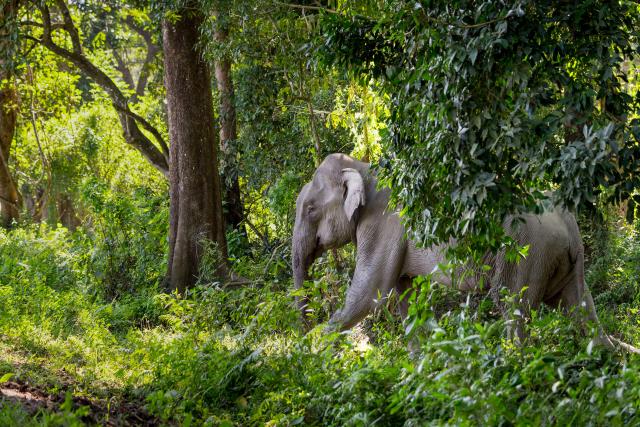
Asian Elephants
Sumatran elephant (Elephas maximus sumatranus)
Indian elephant (Elephas maximus indicus)
Sri Lankan elephant (Elephas maximus maximus)
Bornean elephant (Elephas maximus ssp. borneensis)
Asian elephants once roamed across most of Asia, now they’re restricted to just 15% of their original range, in a number of fragmented and isolated populations around south and south-east Asia. Today, there are fewer than 52,000 Asian elephants left in the wild. They are also listed as endangered species on the IUCN Red List.
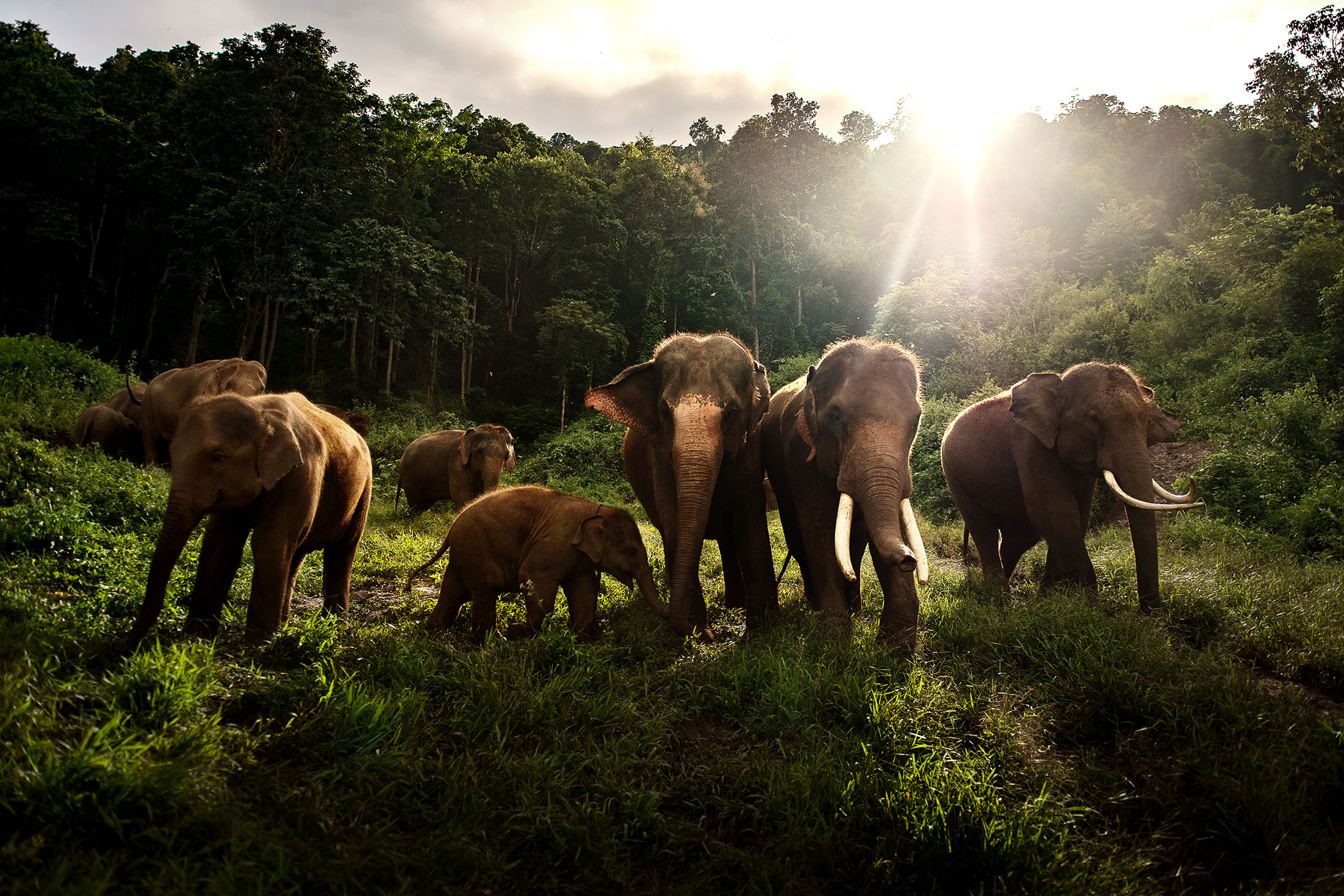
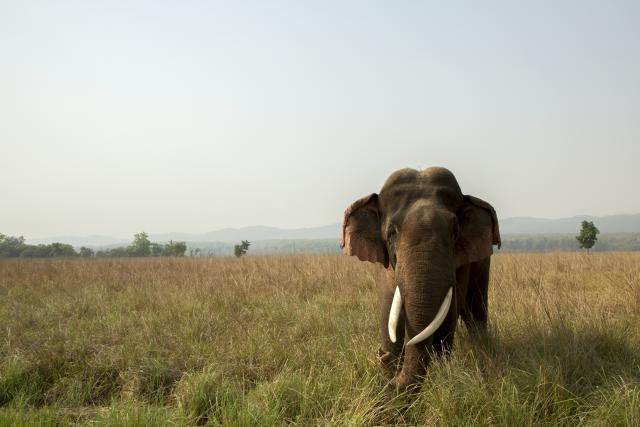
Asian elephants differ from African elephants in several ways. They are not quite as big as their African cousins, and have proportionally smaller ears. Asian elephants are generally dark grey to brown in colour, often with pink or yellow marks on their face, ears and trunk.
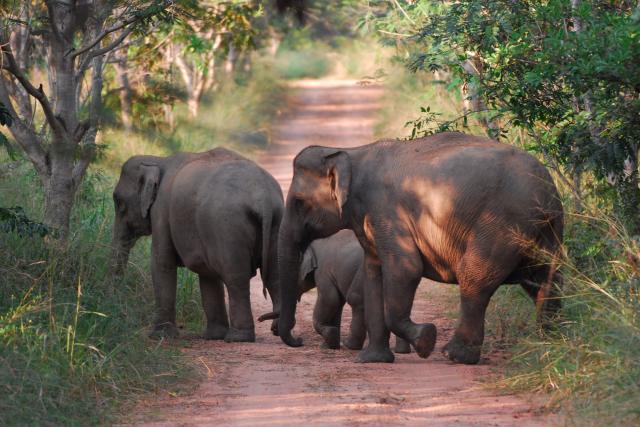
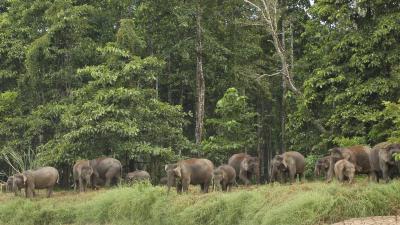
Female Asian elephants are more social than males. They live in herds with their female relatives. Males usually live alone but sometimes form small groups with other males.
Living in some of the most densely populated parts of the world has brought challenges – Asian elephant numbers have roughly halved in the last three elephant generations. Although the species is spread across 13 countries in South and Southeast Asia and southern China, only about 16–20% of its total population is found in the eight range countries of Southeast Asia and China. The remaining populations are found in Bangladesh, Bhutan, India, Nepal and Sri Lanka.
Why are they so important?
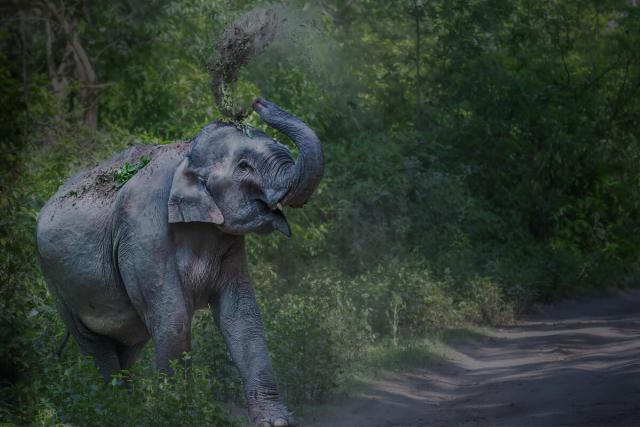
A future for Asian elephants ensures a future for other species, wild spaces and people. As a keystone species that modifies its surroundings, elephants create new habitats and resources for other animal and plant species. As megaherbivores, they move nutrients and seeds from one point to another in their poo, contributing to forest biodiversity and ecosystem benefits. As such, protecting elephants also ensures the protection of other animals that live in their habitat and the ecosystem services that flow from those natural habitats to millions of people.
In addition to their intrinsic value and the ecosystem services they provide, elephants also have a cultural value which spans thousands of years, holding a remarkable and significant place in the region's customs, traditions and religions. Conserving elephants is not only a matter of biodiversity conservation, but an act of cultural preservation as well.
Key facts about Asian elephants
What is the habitat of a Asian elephants?
Asian elephants are found in a range of habitats including grasslands, scrublands and evergreen and deciduous forests.[1]
Asian elephants prefer mostly low-lying areas where they can move around easily, and generally avoid steep slopes.[1]
Over 60% of wild Asian elephants are found in India.[1]
How many Asian elephants are left in the wild?
There are fewer than 52,000 Asian elephants in the wild.[2]
Asian elephants have declined by at least 50% since 1945.[1]
The Sumatran elephant is critically endangered with fewer than 1,400 individuals estimated.[3]
How big are Asian elephants?
Asian elephants can be up to 6.4m long, 3m tall and weigh up to 6 tonnes. This is about as tall as a basketball hoop, and as heavy as a fully loaded bus.[4]
What do Asian elephants eat and drink?
Depending on the season and their habitat, elephants eat grasses, leaves, shrubs, fruits and roots. When its particularly dry they will eat more woody parts of trees and shrubs like twigs, branches and bark.[5]
Elephants may spend 14-19 hours a day eating, up to 150kg of food.[1]They can also drink up to 225 litres of water per day.[6]
What is the IUCN status of Asian elephants?
Asian elephants are listed as endangered, which means they are at very high risk of extinction and their numbers are declining. Sumatran elephants are critically endangered,which means they are at extremely high risk and their numbers are declining.[1]
Sumatran elephant (Elephas maximus sumatranus) - critically endangered
Indian elephant (Elephas maximus indicus) - endangered
Sri Lankan elephant (Elephas maximus maximus) - endangered
Bornean elephant (Elephas maximus ssp. borneensis) - endangered
Where do Asian elephants live?
Wild Asian elephants are found in 13 countries across South and Southeast Asia, including India, Sri Lanka, Nepal, Bhutan, Bangladesh, Myanmar, Thailand, Laos, Cambodia, Vietnam, Malaysia, Indonesia (Sumatra), and China (southern Yunnan).
Explore the map below to see the IUCN (International Union for Conservation of Nature) range data for Asian elephants [7]
-
 © Aaron Gekoski / WWF-US
 -
 © Aaron Gekoski / WWF-US
 -
 © WWF / James Morgan
 -
 © WWF-UK / Shutterstock / Parthbhatt
 -
 © WWF-Malaysia / Engelbert Dausip
How we're helping
Securing elephant habitats:
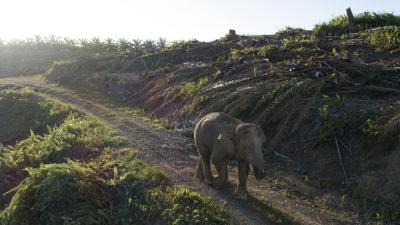
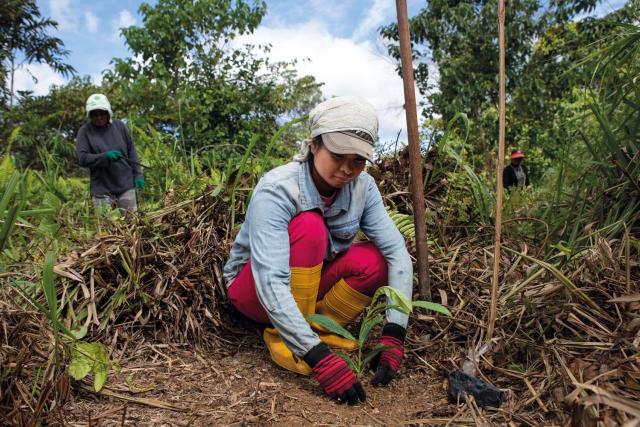
Protecting, managing, connecting and restoring priority elephant habitats. In Sabah, Malaysia (on the island of Borneo), significant lowland elephant habitat has been converted into oil palm, rubber and other large-scale plantations. WWF’s collaboration with a plantation company led to the company setting aside 1,067 ha of land for a wildlife corridor to connect two key protected areas.
Living with elephants:
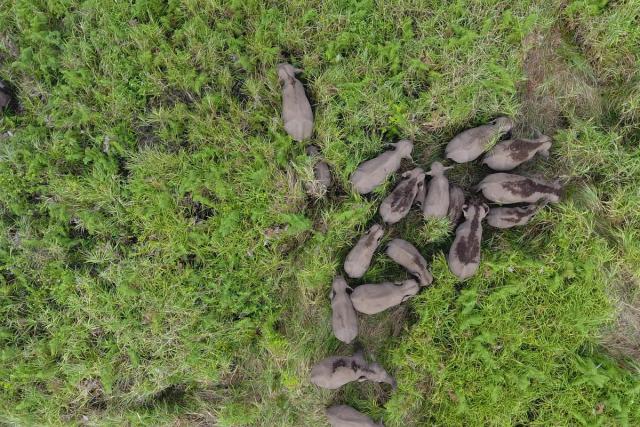
Managing human-elephant conflict in an integrated and holistic manner and promoting a sustainable level of human-elephant coexistence. In Thailand’s Kui Buri National Park, WWF has supported HEC (human-elephant conflict) management efforts since 2006. In partnership with park authorities, adjacent communities and many other stakeholders, WWF has been implementing multiple actions to address HEC. From camera traps that also serve as early detection tools when elephants are near farms to response teams that work with farmers to deter elephants from coming into farms. WWF addresses drivers like habitat loss and degradation by planting native elephant food plants, creating water holes and salt licks, removing invasive species or setting up alternative livelihoods by training adjacent community members impacted by HEC as wildlife tour guides - an integrated and broad approach that has helped significantly reduce HEC over time.
Restoring elephant populations:
Understanding elephant health and population dynamics with a transboundary focus as well as bringing them up to viable and stable levels by reducing poaching and improving wildlife Management.
When Myanmar saw a rise in elephant poaching for their skin in 2016, WWF and its partners took rapid action to put in place protection efforts for elephants on the ground and conduct public awareness in response to the poaching crisis. Through a significant public mobilisation event, WWF was able to raise awareness of the skinning crisis, with advocacy efforts leading to the local government banning the sale, trade and possession of elephant parts and products. Due to concerted protection efforts on the ground, WWF reported zero poaching of elephants in the Central Elephant Landscape in Myanmar for 18 months from 2019 until January 2023. In Southeast Asia, WWF has also supported biological research and monitoring of Asian elephant populations to enable appropriate conservation recommendations, then drafted into action plans. Ecological requirements of the species have also been studied through collaring to identify critical habitat requirements.
Adopt an elephant
Adopt an elephant
Your adoptions will help protect elephant and their habitats, and will help fund our vital work around the world. When you choose an animal adoption, you are supporting both your chosen animals as well as wider work to help bring our world back to life.
We also recommend

Go Wild - WWF's Club for Kids
Top 10 facts about elephants
Take an elephant quiz
World Elephant Day
Sources
- David Macdonald Encyclopedia of mammals
- Perera et al., 2014; Miller et al., 2019
- Third Asian Elephant Range States Meeting 2022 Final Report https://www.asesg.org/PDFfiles/2022AsERSMFinalReport.pdf
- IUCN/SSC AsESG, WCS, WWF 2020. Elephas maximus. The IUCN Red List of Threatened Species. Version 2025-1 https://www.iucnredlist.org. Downloaded on 04/09/2025
- African Elephant Specialist Group, IUCN
- Menon, V. and Tiwari, S.K. (2019), Population status of Asian elephants Elephas maximus and key threats. Int. Zoo Yb., 53: 17-30. https://doi.org/10.1111/izy.12247
- Wilson DE & Mittermeier RA eds (2009). Handbook of Mammals of the World, Vol 2 Hoofed Mammals
- Nghia et al., 2020
- Williams, C., Tiwari, S.K., Goswami, V.R., de Silva, S., Kumar, A., Baskaran, N., Yoganand, K. & Menon, V. 2020. Elephas maximus. The IUCN Red List of Threatened Species 2020: e.T7140A45818198. https://dx.doi.org/10.2305/IUCN.UK.2020-3.RLTS.T7140A45818198.en. Accessed on 23/12/24.