

Orangutan:
104,700 Bornean, 13,846 Sumatran, 800 Tapanuli remain in the wild

Can be found:
Sumatra and Borneo

Threats:
Habitat loss and fragmentation, Illegal wildlife trade, climate change
What sound do orangutans make?
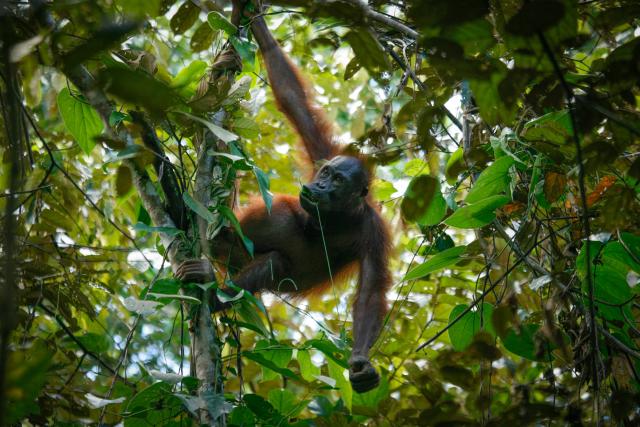
Bornean Orangutan call
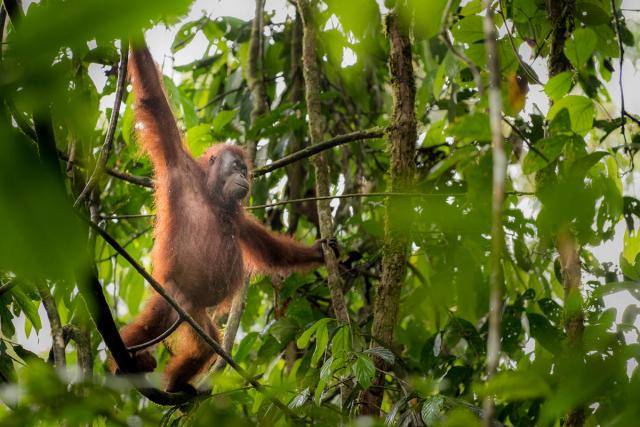
Orangutans
Bornean Orangutans (Pongo pygmaeus)
Sumatran Orangutans (Pongo Aberlii)
Tapanuli Orangutans (Pongo Tapanuliensis)
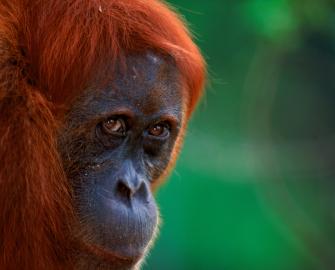
What an extraordinary creature the orangutan is. But, this ‘person of the forest’ (the literal meaning of orangutan in Malay) is now at serious risk.
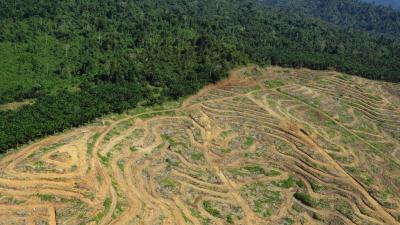
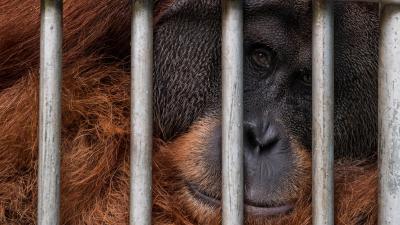
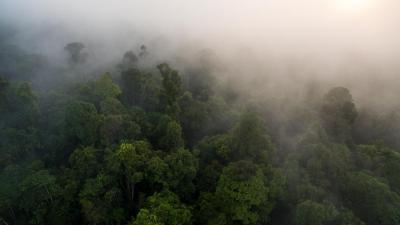
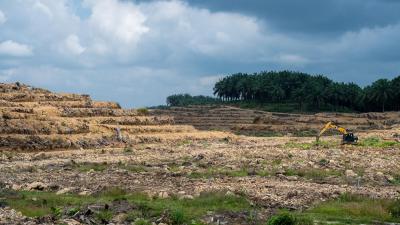
A century ago, orangutans lived in forests all across south-east Asia – from southern China to the Indonesian island of Java. Today they’re only found on two islands: Sumatra and Borneo. The primary threat to orangutans is the extensive loss of their natural habitat due to logging, agricultural expansion (particularly palm oil plantations), and infrastructure development. Deforestation fragments their habitats, isolating populations and limiting their ability to find food and mates.
It’s vitally important to protect these incredible animals – Asia’s only great apes – and their rainforest habitat before it’s too late.
Why are they so important?
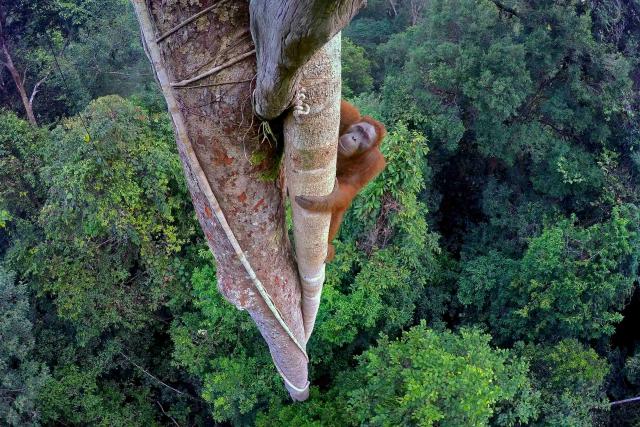
Orangutans are known as gardeners of the forest, because they help spread seeds around. You know how it works – they eat fruit from the trees, the seeds come out the other end, the forest spreads. Especially the larger seeds that don’t get spread by smaller animals.
Without that seed distribution, the rainforests of Borneo and Sumatra would be drastically different, and that would have impacts on all the people and animals that reply on those rainforests.
The people of Borneo and Sumatra depend on the orangutan’s rainforest for food, water, income and environmental protection.
Key facts about orangutans
Where do orangutans live?
Orangutans used to be found as far north as southern China, and as far south as the Indonesian island of Java. [1] Orangutans are now only found in the wild on the islands of Borneo and Sumatra. [2]
How many orangutans are left in the wild?
It's estimated that there is a total of around 119,500 orangutans remaining.
The total estimated population of Bornean orangutans is 104,700 individuals. [3] It's estimated that over 100,000 Bornean orangutans were lost between 1999 and 2015. [4]
There are around 13,846 Sumatran orangutans left in the wild. [5] Sumatran orangutans could decline by over 80% by 2060 compared to 1985 numbers. [6]
The Tapanuli orangutan has the smallest population with less than 800 individuals. [7]
How big is an orangutan?
Male orangutans are nearly a metre tall and weigh 60-85kg. This makes them the same weight as your average healthy human at the bottom end of the scale. Females are slightly shorter and half the weigh. Orangutans have an arm span of about 2.2 metres from fingertip to fingertip. [8]
What do orangutans eat?
Orangutans mainly eat fruit, but also eat young leaves, flowers, insects and tree bark. [2]
What is the IUCN status of orangutans?
There are about 104,700 Bornean orangutans in the wild and they are classed as critically endangered. [9]
There are fewer than 14,000 Sumatran orangutans left in the wild and they are classed as critically endangered. [10]
With less than 800 individuals the Tapanuli orangutan is critically endangered.[11]
Where do Orangutans live?
Explore the map below to see the IUCN (International Union for Conservation of Nature) range data for Orangutans. [12]
-
 © WWF-UK
 -
 © Neil Ever Osborne / WWF-US
 -
 © Neil Ever Osborne / WWF-US
 -
 © Chris J Ratcliffe / WWF-UK
How we're helping orangutans
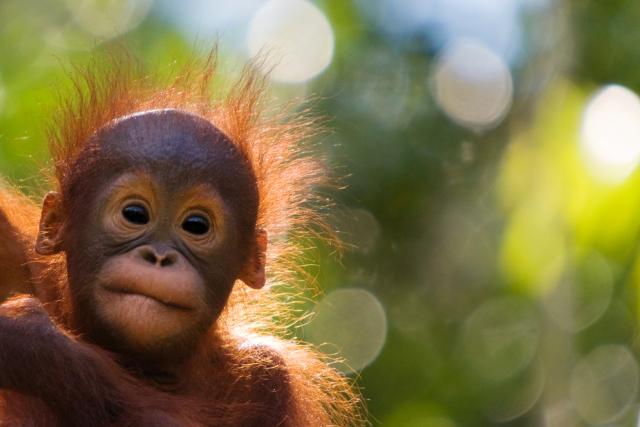
Urgent action was needed to protect the estimated 300 – 400 orangutans that live in the Bukit Piton Forest Reserve. In 2007, in collaboration with the Sabah Forestry department and local partners, we set about restoring this important area.
Since then, some 345,000 seedlings have been planted to help the forest start to recover. The seedlings planted were a mix of fast-growing trees as well as fruit trees like figs to support the orangutans’ diet. But the mark of a true success of this decade long restoration effort is when wildlife begin to make use of replanted trees.
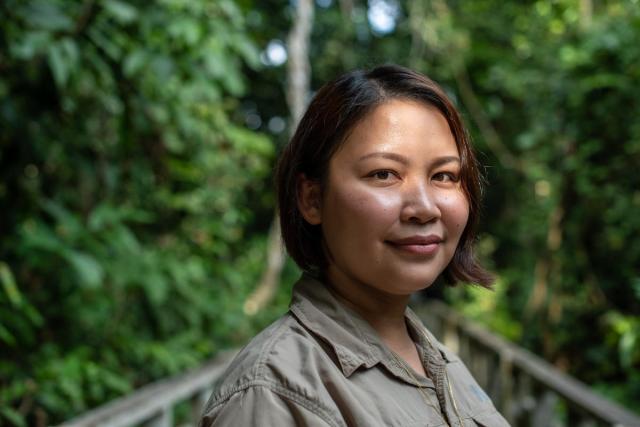
Donna Simon, Field Biologist
"I spent my childhood growing up in an oil palm estate in Sabah. The only thing that I saw outside in the morning and where I spent my time playing with my friends was the oil palm plantation. As I grow up I started to look at nature differently and excited to uncover what we have in our rainforest. I changed from a person who didn't know anything about nature to someone who enjoys nature and is now working to conserve one of our closest living relatives - the orangutan."
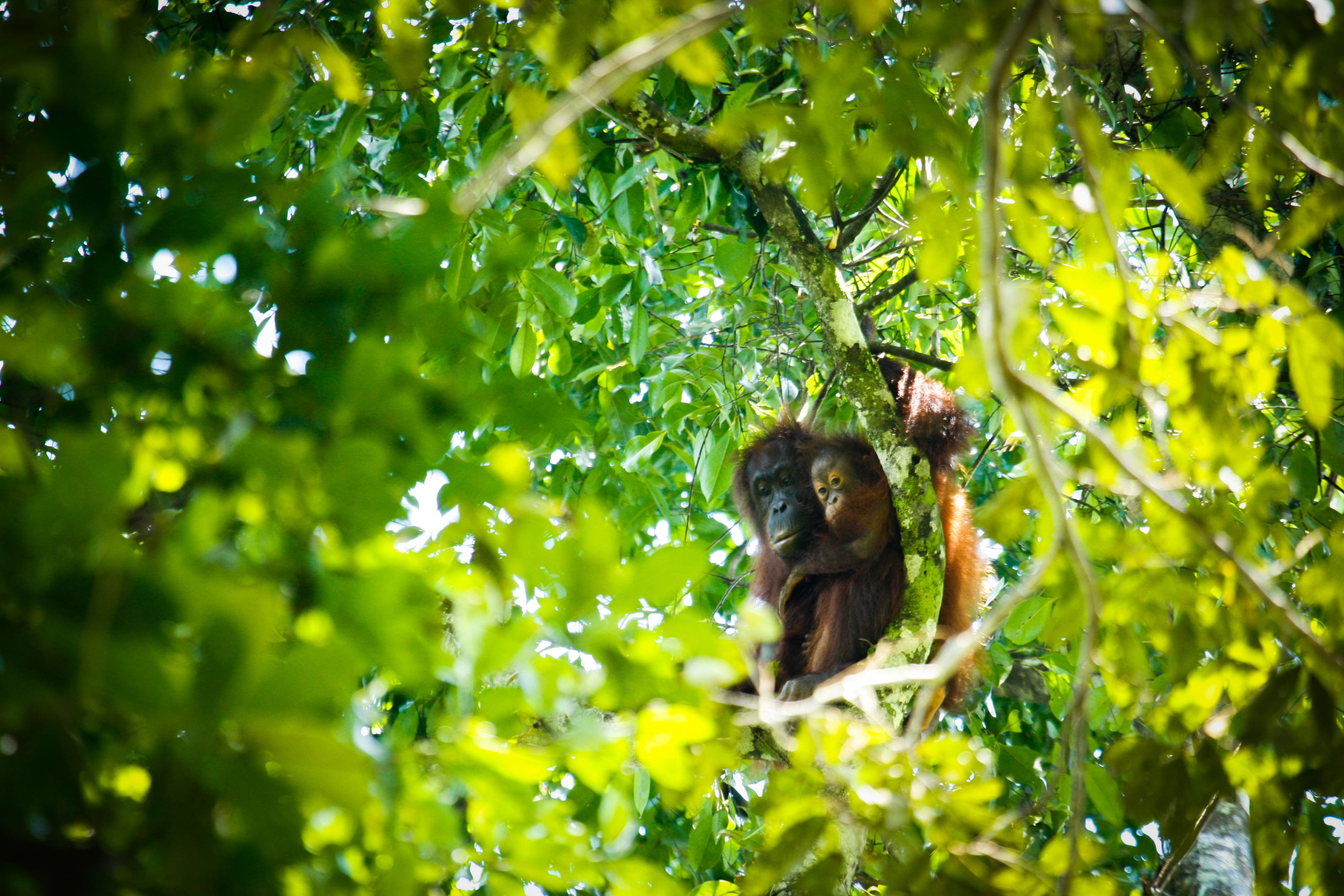
Adopt an orangutan
Adopt an orangutan
Your adoptions will help protect orangutan habitats and help fund our other vital work around the world. When you choose an animal adoption, you are supporting both your chosen animals as well as wider work to help bring our world back to life.
We also recommend
10 Facts about orangutans
Take an orangutans quiz
World orangutan day – 19 August

Go Wild – WWF’s Club for Kids
Sources
- Bornean range map: © Meijaard, E., Ni’Matullah, S, Dennis, R.A., Ancrenaz, M., Sherman, J. and Wich, S.A. 2023. Spatial data for P. pygmaeus Red Listing. Borneo Futures, Brunei Darussalam 2023. Pongo pygmaeus. The IUCN Red List of Threatened Species. Version 2025-2. Sumatran Orangutan range map: © Wich, S.A., Ni’Matullah, S, Sherman, J.,and Meijaard, E. 2023. Spatial data for P. abelii Red Listing. Borneo Futures, Brunei Darussalam 2023. Pongo abelii. The IUCN Red List of Threatened Species. Version 2025-2. Tapanuli Orangutan range map: © Wich, S.A., Ni’Matullah, S, Sherman, J.,and Meijaard, E. 2023. Spatial data for P. tapanuliensis Red Listing. Borneo Futures, Brunei Darussalam 2023. Pongo tapanuliensis. The IUCN Red List of Threatened Species. Version 2025-2Downloaded on 05/08/2025
- Global demand for natural resources eliminated more than 100,000 Bornean orangutans (2018) Current Biology 28, 1-9 March 5, 2018 Elsevier.
- The IUCN Red List of Threatened Species 2024: e.T121097935A259045437. Singleton, I., Wich, S.A., Nowak, M., Usher, G. & Utami-Atmoko, S.S. 2024. Pongo abelii (amended version of 2023 assessment).
- IUCN red list Tapanuli orangutans, https://www.iucnredlist.org/species/120588639/259042400
- Singleton, I., Wich , S.A., Nowak, M., Usher, G. & Utami-Atmoko, S.S. 2024. Pongo abelii (amended version of 2023 assessment). The IUCN Red List of Threatened Species 2024: e.T121097935A259045437.
- The IUCN Red List of Threatened Species 2024: e.T17975A259043172. Ancrenaz, M., Gumal, M., Marshall, A.J., Meijaard, E., Wich , S.A. & Husson, S. 2024. Pongo pygmaeus (amended version of 2023 assessment).
- Wildlife Atlas of Sabah: maps and conservation. 2022. Ed. G. Davies. Kota Kinabalu: WWF-Malaysia
- IUCN Red list, Bornean orangutans, https://www.iucnredlist.org/species/17975/259043172
- Handbook of The Mammals of the World: Primates. Wilson, D.E. and Mittermeier, R.A. (2009)
- IUCN Red list, Sumatran orangutans, https://www.iucnredlist.org/species/121097935/259045437
- The IUCN Red List of Threatened Species 2024: e.T120588639A259042400. Nowak, M.G., Rianti, P., Wich , S.A., Meijaard, E. & Fredriksson, G. 2024. Pongo tapanuliensis (amended version of 2023 assessment).
- Orangutans and the Economics of sustainable forest management in Sumatra. UNEP/GRASP/PanEco/YEL/ICRAF/GRID-Arendal. Witch et al. (e.ds) 2011.