Sound of UK Seas
About UK Seas and why they are so important
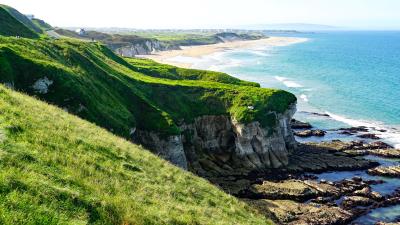
From sheltered sea lochs to wild open waters, from seaweed forests to deep-water coral – the UK’s coasts and seas truly are amazing.
We have a great variety of exciting sealife on our own doorstep – from dolphins, whales, sharks and seals to puffins, seahorses, and rare pink sea fans.
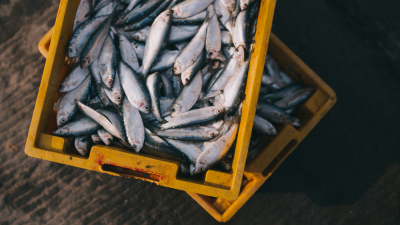
And of course our seas and coasts are vital for people and livelihoods too – not just our essential fishing industry but tourism, shipping and the growing renewable energy sector.
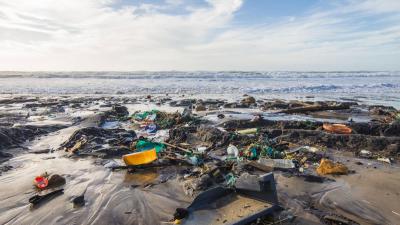
That’s why we’re working hard to tackle the threats facing our seas – like the growing demand for resources such as fish, increased shipping and pollution, and climate change.
Commonly asked questions about UK seas
What seas surround the UK?
There are several seas that surround the UK, they extend from the Shetland Islands in the far north, down along both the Atlantic and North Sea coasts, encompassing the Irish Sea and parts of the English Channel, and connecting to wider waters of the Northeast Atlantic.
Why UK seas are important to the economy?
It's estimated that maritime activities in the UK generate £47 billion each year.[1] Scotland's seas generate around £5.1 billion per year (excluding oil and gas extraction).[2] Losing coastal ecosystems and fisheries would cost the UK £15 billion per year by 2050. [3]
What fish and marine life lives in UK seas?
The UK's marine environment supports a huge variety of wildlife including around 330 different types of fish, 29 species of cetacean and around 100 types of seabird, wader and wildfowl. UK seas are home to commercially important fish such as cod, plaice and haddock and shellfish including mussels, oysters and scallops. [4]
How long is the UK coastline?
The UK’s coastline is roughly 20,000 miles long. Its many islands, inlets, and intricate shorelines make it difficult to measure precisely, as the total length changes depending on how closely you follow every curve and feature.[5]
Why are UK seagrass meadows important?
UK seagrass meadows are among the most valuable habitats in our seas, supporting biodiversity, climate, and coastal communities. They provide nursery grounds for a wide range of fish, shellfish, and invertebrates. At the same time, seagrass stabilises sediments, improves water quality, and reduces coastal erosion, protecting shorelines and the people who live along them.[6]
How do ocean currents affect the UK climate?
Ocean currents play a major role in the UK’s climate, as part of a wider system known as the Atlantic Meridional Overturning Circulation (AMOC). Warm waters from the equator are carried across the Atlantic by currents like the Gulf Stream and North Atlantic Drift, releasing heat into the atmosphere influencing rainfall and weather patterns. This is a major driver in the UK’s typically mild and wet climate.[7]
How does climate change impact UK seas?
Climate change is already reshaping UK seas, with rising temperatures causing many species to shift northwards. Some species, particularly fish and sharks that migrate long distances, may adapt or even expand their range, but others that aren't able to move could lose large areas of suitable habitat. Protecting connected habitats and adapting how we manage the seas will be critical to help marine life survive these changes.[8]
What wildlife lives in UK Seas?
Not only do our seas have around 330 different types of fish, we have lots of other spectacular marine wildlife, from deepwater coral to the mighty basking shark.
-
 © Wild Wonders of Europe
Basking sharks
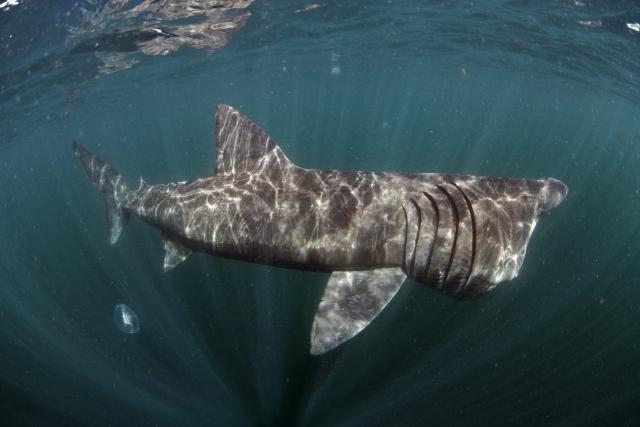
MoreClose Sharks live in most ocean habitats. They can be found in beautiful, tropical coral reefs, to the deep sea, and even under the Arctic sea ice. We get sharks around the UK as well - from basking sharks to blue sharks. The basking shark is Britain’s largest fish (and the second largest in the world). It can grow up to 11 metres long and weigh up to 7 tonnes - about the size and weight of a double-decker bus. This gentle giant arrives in British waters during our summers, and feeds on zooplankton - tiny animals and their larvae - so is of no threat to humans. They are slow swimmers, which is where they get their name from, as they swim at an average of 2.5mph, basking in the sun.
-
 © Frédéric BASSEMAYOUSSE / WWF-Mediterranean
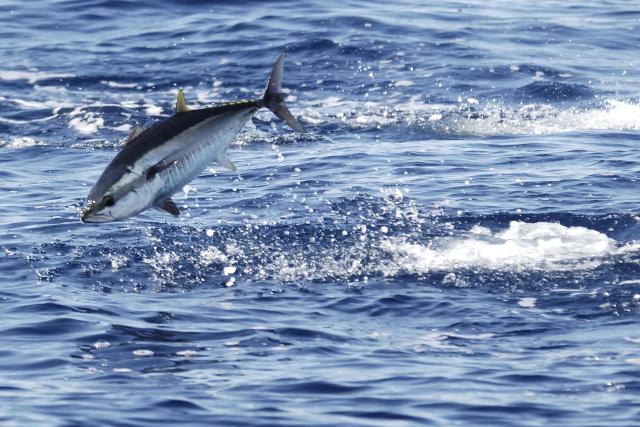
Bluefin tuna
MoreClose Tuna are some of the ocean’s largest and wide-ranging fish, built for speed and endurance. Among them, the Atlantic bluefin tuna stands out as one of the most remarkable. These fish can grow over 4 metres long and weigh more than 600 kilograms, and are capable of crossing entire oceans.
For many years, bluefin tuna disappeared from UK waters due to historical overfishing. But in recent years, they have begun to return. Improved management have helped create the conditions for their comeback, and sightings off the UK coast are becoming more frequent. Their return is a powerful reminder that, with the right protections, marine life can recover.
-
 © Wild Wonders of Europe / Pal Hermansen / WWF
Sandeels
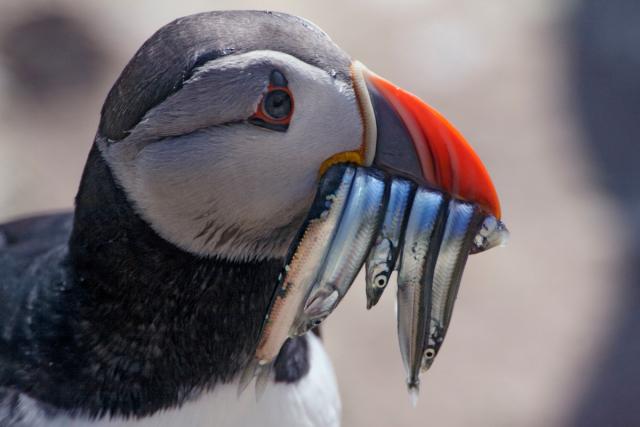
MoreClose Sandeels may be small, but they play an outsized role in the health of UK seas. These slender, silvery fish spend much of their time buried in sandy seabeds, emerging in huge shoals to feed on plankton.
They are a vital link in the marine food web. Many of the UK’s most iconic species, including seabirds like puffins and kittiwakes, as well as seals and larger fish, depend on sandeels as a primary food source. When sandeel populations decline, the effects can ripple across entire ecosystems.
-
 © Chris Martin Bahr / WWF
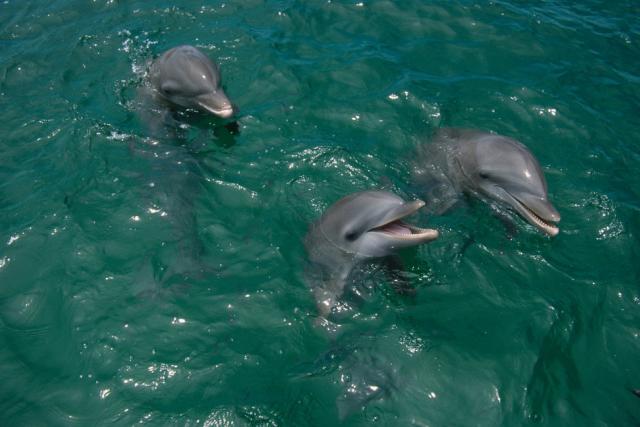
Dolphins
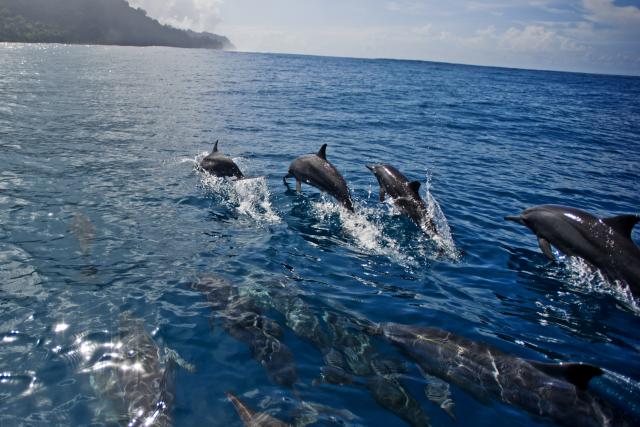
MoreClose Dolphins are among the most familiar and loved animals in UK waters. Species such as the Common dolphin and Bottlenose dolphin can be seen along our coasts, often travelling in groups and riding the waves created by boats. Highly intelligent and social, dolphins use sound to communicate and navigate, forming strong bonds within their pods. They feed on fish and squid, and can travel large distances in search of prey.
-
 © Philippe Guillaume
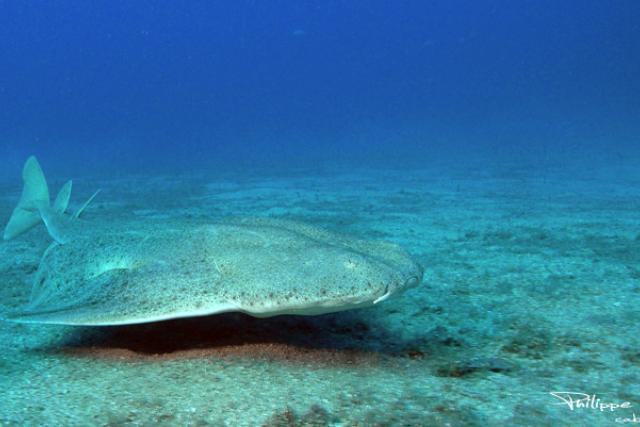
Angel sharks
MoreClose The Angel Shark is one of the rarest sharks in the world and is critically endangered. Rather than cruising through open water like some sharks, it lies flat on the seabed, using its wide, wing-like fins and sandy colouring to blend in and ambush passing fish.
-
 © Alex Mustard / naturepl.com
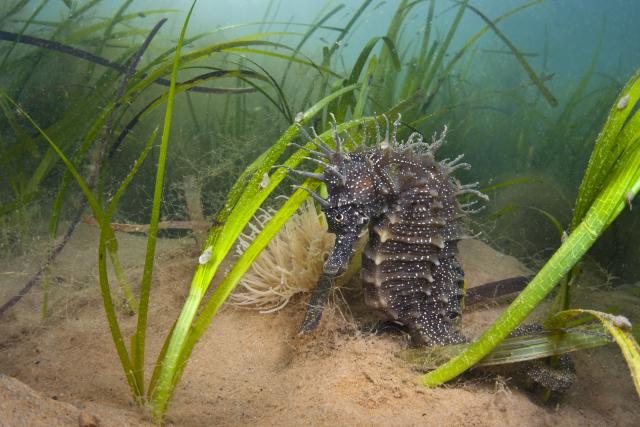
Seahorse
MoreClose Two species of seahorse can be found in UK waters: the short-snouted and the long-snouted seahorse. These small, distinctive fish swim upright and use their curled tails to cling to seagrass and other underwater plants. They are best known for their unusual breeding behaviour, where the male carries and gives birth to the young.
/
-
 © Danielle Smith
 -
 © Nguyen Linh / Unsplash
 -
How we're helping UK seas
Protecting UK seas means more than just reducing our impact. It requires actively restoring ecosystems, transforming how we use marine resources, and working in partnership with industry, communities, and governments to deliver change. WWF-UK is working across these areas to help drive this transition, focusing on practical solutions that can deliver real impact in our seas.
-
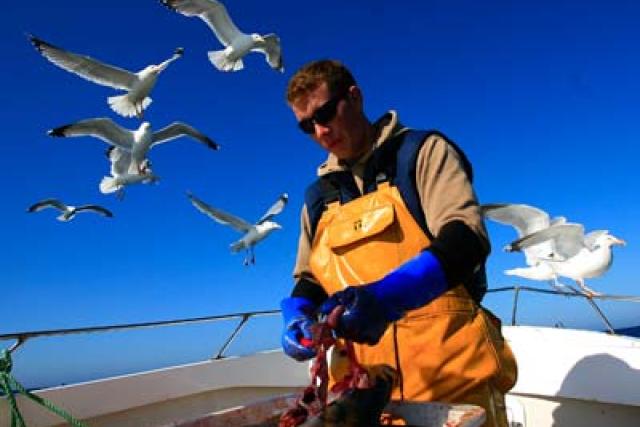
Working on seafood
MoreClose Seafood provides around 17% of the world’s animal protein, making it a vital part of global food systems. However, unsustainable fishing and poorly managed aquaculture can damage marine ecosystems and the communities that depend on them.
WWF-UK works with major UK retailers, suppliers, and industry partners to improve seafood sourcing practices. This includes supporting stronger sustainability standards, reducing environmental impacts, and helping shift towards seafood that is produced in a way that is good for people, nature, and the climate.
-
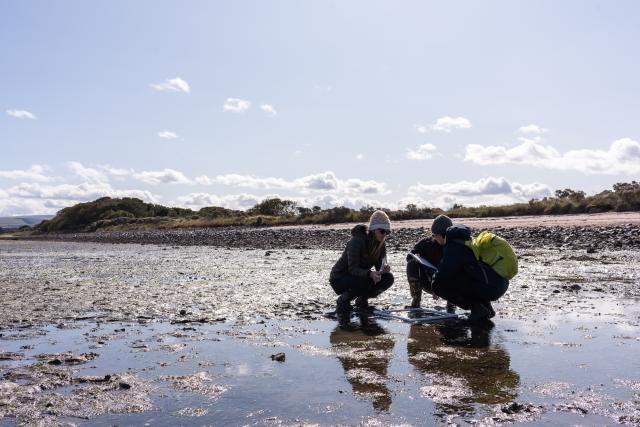 © Jamie McDermaid
Restoration Forth
MoreClose Restoration Forth is a major marine restoration project focused on the Firth of Forth in Scotland. Working with a wide range of partners, WWF-UK is helping to restore a range of natural habitats and reintroduce European flat oysters to an area where they were once abundant.
These habitats are incredibly important, providing nursery grounds for fish, filtering water, and creating a complex ecosystem that support a wide range of species. By restoring them, the project is helping to bring life back to the Firth of Forth and demonstrate what recovery can look like at scale.
-
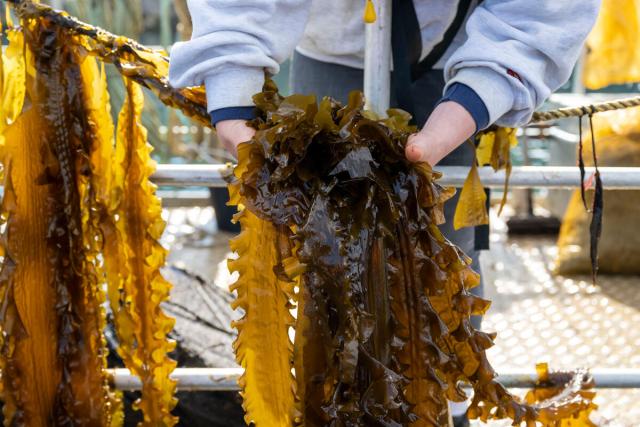 © Matt Horwood / WWF-UK
Restorative aquaculture
MoreClose Aquaculture is one of the fastest-growing food sectors in the world, but it must be developed carefully to avoid environmental harm. WWF-UK is supporting the development of restorative aquaculture, which are approaches that actively benefit the environment as well as produce food and a range of other potential products.
This includes supporting the development of sustainable seaweed farming, which has the potential to improve water quality, provide habitat for marine life. WWF-UK is helping to build the evidence base for these benefits while working with industry and regulators to ensure this sector grows in a way that is sustainable and well managed.
-
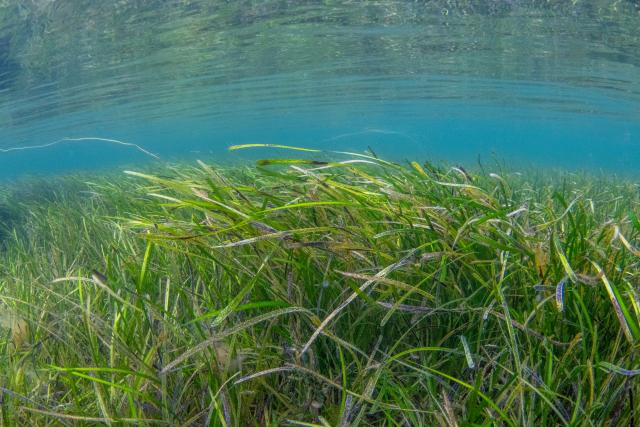 © Raymond Besant
Blue forests
MoreClose Blue forests - such as seagrass meadows and saltmarshes - are some of the most effective natural solutions we have to climate change. They store carbon, protect coastlines, and provide habitat for a wide range of species.
WWF-UK is working to restore and protect these habitats, both in the UK and globally. This includes supporting restoration projects, developing materials for schools and young people to better understand and interact with these important habitats, and helping to develop frameworks that enable long-term protection and investment. By rebuilding these ecosystems, we can support biodiversity, strengthen coastal resilience, and tackle climate change at the same time.
/
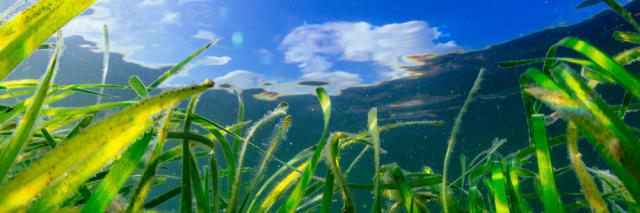
Take action for our world
Explore More
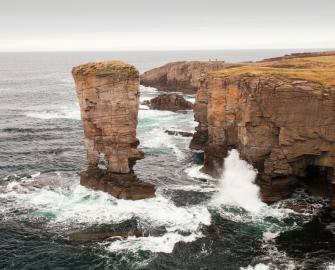
10 species you might not know live around UK seas
The UK SEAS project
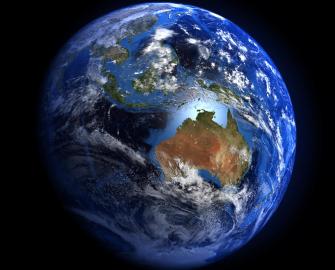
Top 10 facts about Oceans

Go Wild – WWF’s Club for Kids
Sources
- Scotland’s Marine Assessment 2020 (SMA2020) https://marine.gov.scot/sma/
- RPA (2020): The value of restored UK seas, Final Report for WWF, July 2020, Norfolk
- DeFRA. Marine Strategy Part One: UK updated assessment and Good Environmental Status October 2019 http://www.gov.uk/government/publications
- British Geological Survey, Six changing coastlines and how climate change could affect them, https://www.bgs.ac.uk/news/six-changing-coastlines-and-how-climate-change-could-affect-them/
- Met Office, What is the Atlantic Meridional Overturning Circulation?, https://weather.metoffice.gov.uk/learn-about/weather/oceans/amoc
- Johnson, J.A., et al. 2020. Global Futures: modelling the global economic impacts of environmental change to support policy-making. Technical Report as seen in RPA (2020): The value of restored UK seas, Final Report for WWF, July 2020, Norfolk
- Cefas, climate change reshaping map of UK marine life, says new research, https://www.cefas.co.uk/news-and-resources/news/climate-change-reshaping-map-of-uk-marine-life-says-new-research/
- Cullen-Unsworth, L.C., Jones, B.L., Lilley, R. and Unsworth, R.K., 2018. Secret gardens under the sea: What are seagrass meadows and why are they important?. Frontiers for Young Minds, 6(2).