
Earth Hour
Switch off for our world and connect with nature on Saturday 20 March 2027 at 8.30pm.
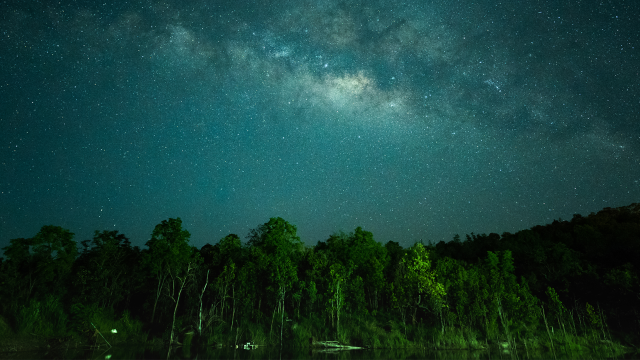
Earth hour countdown

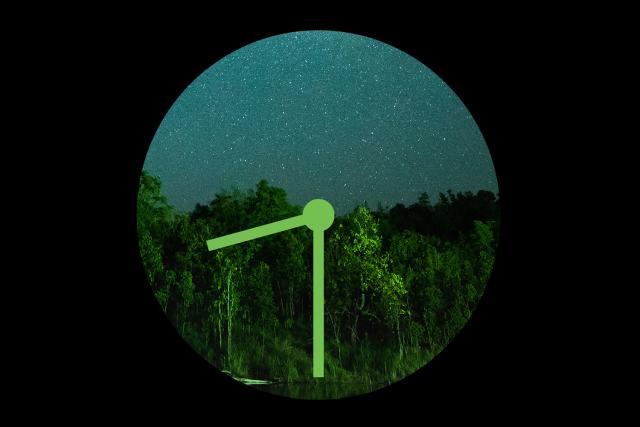
What is Earth Hour and why is it so important?
Nature and climate go hand in hand. Together, they form our life‑support system - giving us clean air, fresh water, the food we eat and so much more. Yet both are under threat. Earth Hour is a global moment for us to come together, switch off and show support for our world.
Every March, millions of people around the world join Earth Hour to show they care about the future of our planet. From iconic landmarks like Big Ben and the Sydney Opera House, to other iconic landmarks in cities across the globe, lights go out in a powerful display of global solidarity for our natural world.
This year, we’ll come together for the 20th Earth Hour, a milestone moment since the very first switch off in 2007.
Since it began, Earth Hour has always been more than just an hour. It’s a chance to connect with what matters most - nature and each other.
Earth Hour on the night activities
Earth Hour isn’t just about turning off the lights – it's also a great time to mentally “switch off” and take a moment to relax and connect with nature. Whether on your own or with loved ones, we’ve got plenty of activities to help you celebrate Earth Hour with us!
-
 © Shutterstock
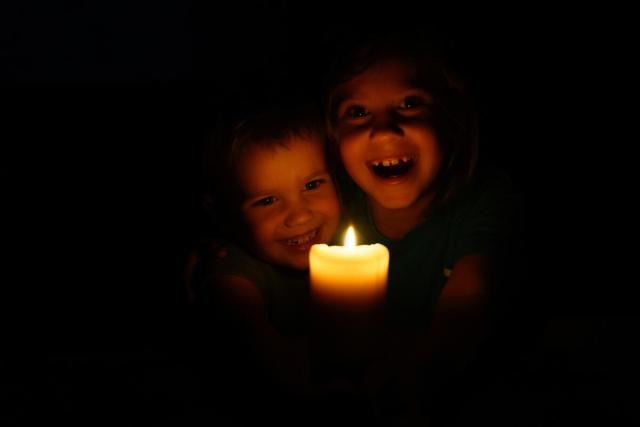
Switch off your lights
MoreClose This is where Earth Hour all began. Switch off your lights to show your support for the natural world. Take an hour to go dark – use the time to unwind alone or with loved ones. Want to make it even more meaningful? Go the extra step and truly ‘switch off’ by stepping away from your screens and putting your phone on ‘Do Not Disturb’.
-
 © Reetta Pasanen / WWF
Prepare a meal by candlelight
MoreClose Embrace the charm and ambience of preparing a meal without using electricity. Gather your ingredients and whip up a delicious meal in the flickering glow of candlelight. This is a perfect time to set a slower pace and bond with loved ones
-
 © Huw Cordey / naturepl.com / WWF
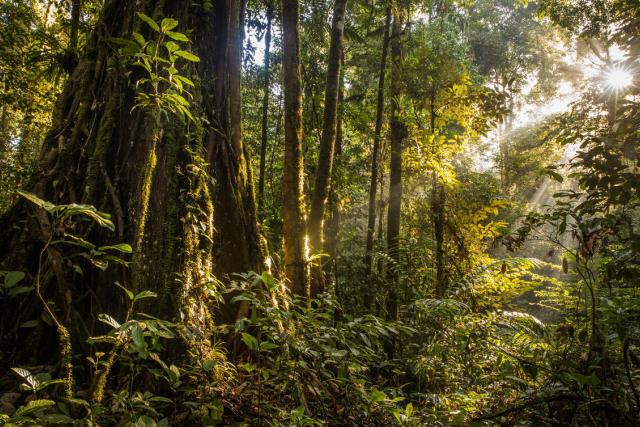
Switch off to the sounds of nature
MoreClose Get the ultimate chill-out experience during the hour by immersing yourself in the sounds of some incredible nature - because Earth hour is also an opportunity to reconnect with yourself as well as nature. Listen along while you journal, cook, meditate or practice a yoga session.
-

Tales by twilight
MoreClose Gather your family or friends and share nature-inspired stories by candlelight. Whether that’s highlights from your favourite books or personal stories of memories past spent with nature. Storytelling is a great way to have fun and connect with each other and remember time spent with our precious natural world.
-
 © WWF-UK
Listen to our Spotify playlist
MoreClose Listen to our Earth Hour playlists created in association with Music Declares Emergency. There's something for everyone to enjoy on the night. Artists include: The Maccabees, Guy Garvey (Elbow), Hot Wax, Goat Girl, Dougie Poyner and more.
-
 © naturepl.com / Tony Wu / WWF
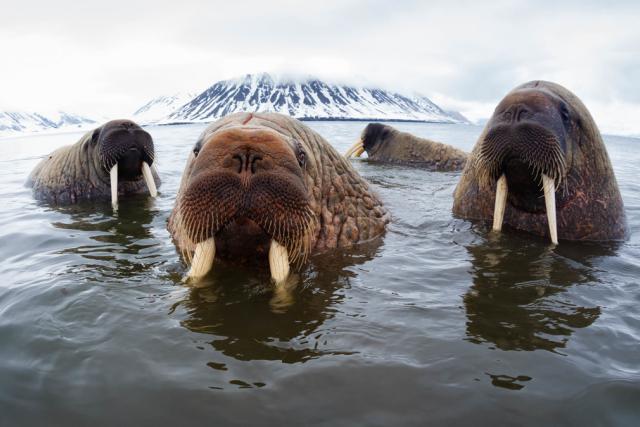
Become a walrus detective
MoreClose Help us from home by searching satellite images and spot walrus from space. You’ll contribute to vital conservation research and help us learn more about this incredible species. How many walrus can you spot in the hour?
-
 © Rachel Palmer / WWF / RSPB / National Trust
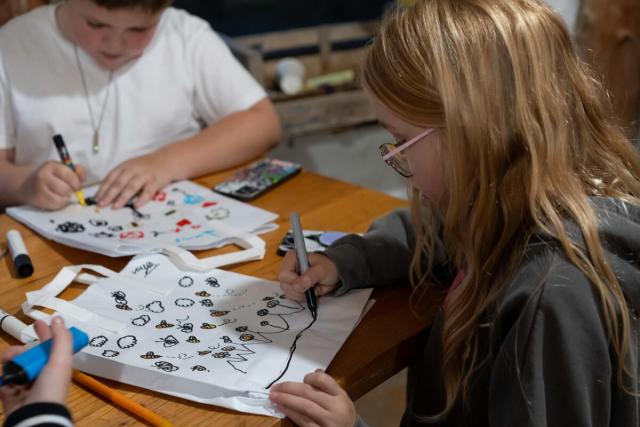
Craft the hour away
MoreClose Choose a natural object from your home, or bring something in from outside ready for Earth Hour. Get inspired, choose your tools and let your imagination take over. You could:
- Paint a picture of your favourite houseplant
- Sketch seashells, pinecones, flowers or fruits
- Sculpt forms inspired by nature’s shapes with clay
-
 © Brent Stirton / Getty Images / WWF-UK
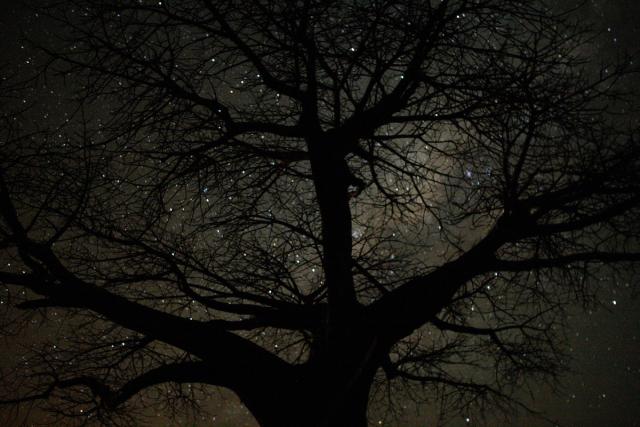
Stargaze
MoreClose We may get lucky and have a clear sky for Earth Hour. If we do, take a moment to switch off and look up at the stars. See them sparkle in the night from your balcony, window or garden – maybe aspiring astronomers can spot something special in the patterns.
-
 © Bill IVY / Ivy Images / WWF-Canada
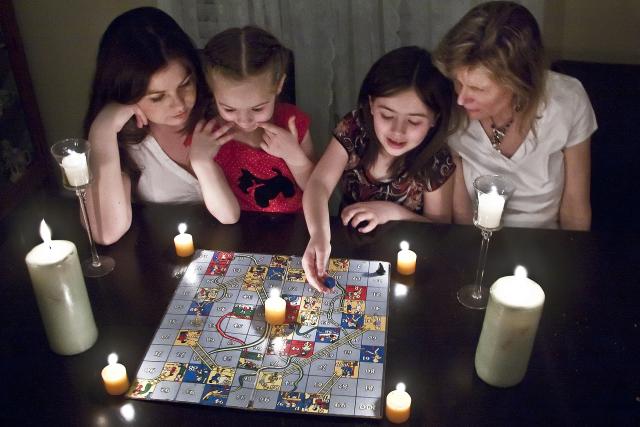
A candlelit games night
MoreClose Turn off the screens and gather round for a fun-filled evening of board games by candlelight. Whether you're diving into a classic round of Monopoly or strategising in Settlers of Catan, the soft glow of candles adds a magical touch, turning your game night into a memorable experience for everyone.
/
Take part in Earth hour your own way
We want as many people as possible to join WWF’s Earth Hour. Below, we have ideas on ways you can spend your hour wherever and whenever works for you. Find inspiration on how you can make Earth Hour work for you:
-
 © Richard Edwards / WWF-UK
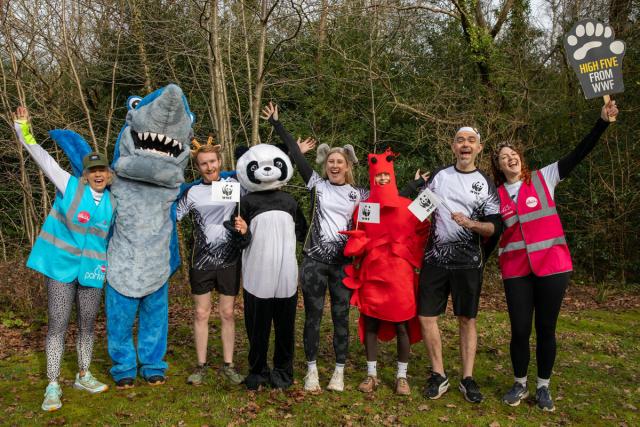
Parkrun the morning of Earth hour
MoreClose WWF took over parkruns across the country, with tens of thousands of parkrunners turning up wearing their best wildlife-inspired costumes and outfits, donating to support our work and connecting with nature before Earth Hour officially began.
-
 © Paul Rogers / WWF-UK
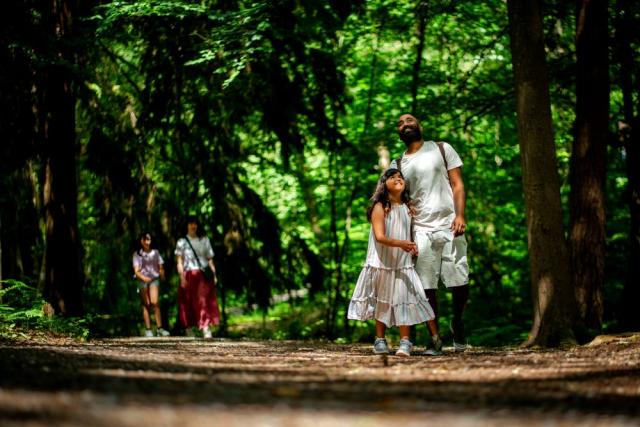
Feel Good Forest Trails
MoreClose We teamed up with Forestry England to help you, and your family, get outside and discover the sights, sounds and scents of the forest. Each forest trail is packed with forest-themed activities that spark curiosity and encourage learning.
Find a trail near you and plan your trip to mark Earth Hour.
-
 © Pauliina Heinänen / WWF
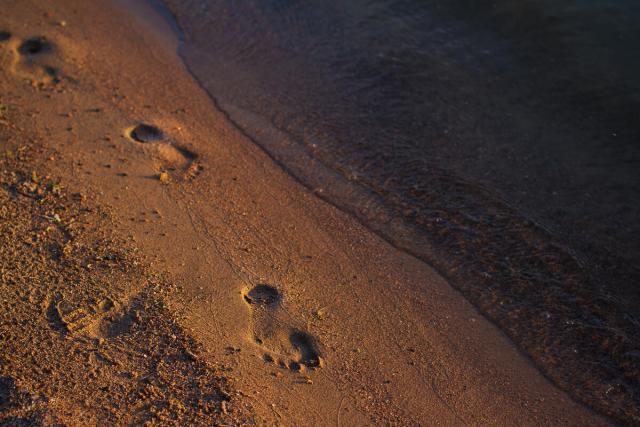
Green changes all year round
MoreClose There are things we can all think about doing to help the planet a little bit more. You could make a swap to a greener energy company or even work out your environmental footprint. If you have a pension through your employer, make a plan to ask them whether it’s a pension scheme that invests in a sustainable future. If it’s not, consider asking them to change it, once you’ve researched your options.
-
 © Nathan O'Brien / WWF-UK
At school and beyond
MoreClose Happy By Nature is our brand-new schools programme, created especially for primary-aged children. We are helping schools embed nature into everyday learning and play. Have your students join us on a joyful journey this Earth Hour.
-
 © WWF-UK
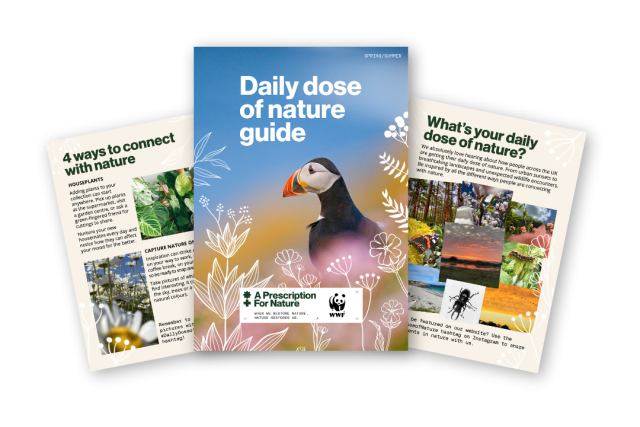
Get your free nature wellbeing pack
MoreClose Connecting with nature is brilliant for our mental wellbeing. It can reduce stress and anxiety, lift our mood and help our minds rest. If you want to discover more ways to connect with nature beyond Earth Hour, download our free nature guide to start your daily dose of nature journey.
/
The power of an hour in nature
You may feel like an hour couldn’t possibly change the world. But nature proves that miraculous things can happen in just an hour.
-
 © WWF-Australia / Christine Hof
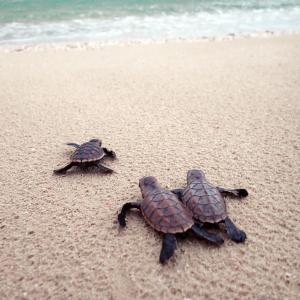
Turtle Hatchlings: their first 100+ metres
They begin life no bigger than a child’s hand. Yet in that first hour they make it past predators on pure instinct, launching straight into an ocean marathon. They can travel a few metres to over 100 metres of beach in this first hour. Often following the reflections of the moon and starlight on the water to reach the ocean. They then likely keep swimming without pause for hours in search of shelter under matts of algae. Many cover several kilometres before their first hour is even over, powered only by instinct and leftover egg yolk.
-
 © Martin Dohrn / WWF-UK
One Bee: A tiny powerhouse
The UK is currently home to 24 species of bumblebee. They’re well-known for their ‘bumbling’ flight. But don’t be fooled. A single bumblebee can visit and pollinate flowers in one minute - think about what this busy bee can do in an hour! Without pollinators like bumblebees, many of our plants wouldn’t create the seeds needed to reproduce. Or produce the fruits and vegetables we love to eat. The impact of a single hour of one tiny bumblebee’s life ripples outward, through entire ecosystems and even to our plates.
-
 © Richard Barrett / WWF-UK
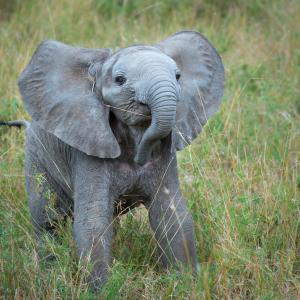
Elephant Calves: from wobble to walk
Elephant herds are almost always on the move. They roam vast distances in search of food and water with African elephants needing to eat up to 150kg of food a day! To stay safe, new born elephants are remarkably quick to stand up after birth. They are on their feet within just 20 minutes of being born, and within one hour – they can walk. After just a couple of days, they will be able to keep up with the herd. Primates, like orangutans, can take several months, and humans around one year to achieve this feat.
-
 © Martin Harvey
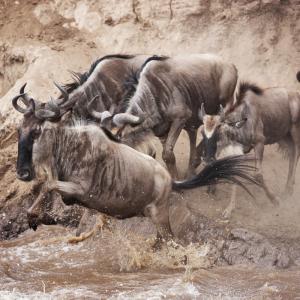
Wildebeest: thundering through the Mara
The migration of around 1.2 million wildebeest from the Serengeti in Tanzania to the Maasai Mara in Kenya, is the largest overland migration on Earth. It is one of the world’s most remarkable wildlife spectacles, as the animals are drawn to greener pastures following seasonal rain. This vast stampede will cover roughly 800 to 1,000 km each year on a round trip, at a top speed of 50 miles per hour. At its peak, the ‘Great Migration’ may see thousands of wildebeest cross the Mara River in a single hour.
-
 © Richard Barrett / WWF-UK
Giant Pandas: the power to munch
Giant pandas are pretty unique among bears. Not just for their iconic black and white coat, but also for their very specialised diet, around 99% of which is bamboo. So, to get all the nutrients they need, giant pandas spend 10-16 hours a day feeding, eating around 12 to 38 kg of bamboo roots, stems, shoots, and leaves. That’s up to 3.8kg of bamboo in an hour!
-
 © Jurgen Freund / WWF
Coral: a spectacular mass spawning
Once a year, following a full moon, entire hard coral reef colonies release millions of colourful eggs and sperm called gametes, into the ocean. Multiple species spawn within an hour of each other, so it’s a spectacular event. Eggs can be red, blue, lavender, pink, yellow, and more! This synchronised approach is vital, as most coral species’ gametes are only able to successfully fertilise within the first few hours following release into the water.
-
 © naturepl.com / David Tipling / WWF
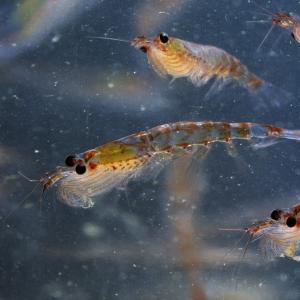
Antarctic Krill: capturing carbon
Antarctic krill's faecal pellets and shredded exoskeletons sinks to the ocean floor, traping huge amounts of carbon from the atmosphere. These bioluminescent climate superheroes can store at least 20 million metric tons of carbon in the deep ocean every year. If we were to average this out across the year, that equates to 2,283 tonnes an hour.
-
 © naturepl.com / Tony Wu
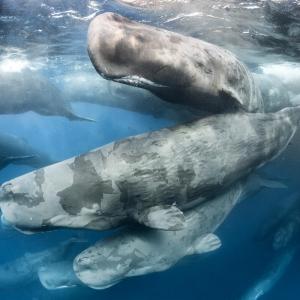
Sperm Whales: the hour of extreme endurance
Sperm whales are the largest of the toothed whales, and one of the deepest diving. They can reach depths between 1,000 to 2,000 metres in a single hour. Light only penetrates a limited distance underwater, so whales use echolocation to find their way around and hunt in the dark depths. After long, deep dives, individuals come to the surface to breathe for several minutes, before initiating their next dive. Whales dive to depths more than 10x the height of the Elizabeth Tower (home to Big Ben), which stands at 96m tall and back again in an hour! The pressure at this depth is immense – the whales are withstanding 100 to 200x the pressure we experience at sea level.
/
Useful Resources
-
Employee engagement toolkit
-
 © Peter Chadwick / WWF
Earth Day 22 April
-
 © iStock
Subscribe to our newsletter
/
Show your support
If you would like to support WWF's Earth Hour and use our official WWF Earth Hour Supporter logo, please contact earthhour@wwf.org.uk