
Pillar: Caring
Earth Hour
WWF’s Earth Hour is the perfect time to switch off for our world and connect with nature.
About Earth Hour
This Earth Hour, switch off for our world.
Earth Hour is more than just an hour. It’s about people coming together globally to show support for our world and connect with what matters most – nature and each other. For Earth Hour 2026, we will invite you to use this hour to switch off for our world, whichever way works best for you. Find out more here.
Join millions of people across the world for Earth Hour 2026 on Saturday 28 March 2026 at 8:30 PM
Wild Worlds
Action Challenge
25+ minutes / Outside
Zoom into any patch of un-mown grass, an unkempt window box, or a quiet corner of the playground, and you’ll find a ‘wild world’ of wildlife going about its business. In this Earth Hour-inspired bioblitz, pupils will take their time to spend up to an hour discovering wildlife on their doorstep. They’ll work carefully to spot and record as many living things as they can during this time, creating evidence through recordings, drawings, leaf rubbings, or simple journal-style notes.
Learning outcome: Pupils will practise close observation and identification of local plants and minibeasts, while building care and respect for nearby habitats by noticing what wildlife needs to thrive.
Instructions
- First watch the Tiny Wonders video with your class in the lead up to Earth Hour, to get pupils inspired by slowing down and observing nature.
- Next, choose a small “wild world” to study (e.g., a strip of grass, a planter, a hedge or fence line). Remind pupils: look closely, move gently, and leave everything as you found it.
- Give pupils the ‘Wild Worlds journal worksheet’ and set a timer for 15–20 minutes (or up to an hour). Their challenge is to find and record as many different living things as they can in that time.
- Pupils can record ‘evidence’ without touching anything, (e.g., quick sketches of bugs, leaf/bark rubbings, tally marks for repeated sightings, a labelled picture of what they notice).
- Bring the class back together to share. Prompts: What did you notice? What surprised you? How can your chosen wild world remain a good place for wildlife? What can you and your class do to look after these wild worlds?
- Collate evidence into a simple digital field journal (e.g. one slide or page per group) to celebrate your class discoveries for Earth Hour, for example a PPT or PDF.
- Share a photo of your class's journals or stories on our Earth Hour digital gallery and you could win some awesome prizes! Scroll down this page for the entry form.
Adaptations
- To make it easier, provide a short spotting checklist (e.g., “something with wings”, “something crawling”) so pupils can succeed even if they can’t name species or you can use the SEEK App to help identify the creatures?
- To develop it, assign roles within groups (e.g., spotter, sketcher, habitat detective) and ask pupils to record not just what they saw, but where they found it (under leaves, in cracks, on petals).
Extensions
- Repeat or extend the challenge for a full 60 minutes (either at school, or as a home challenge with families) – pupils can split the hour into smaller bursts if needed.
- After your count, take one small caring action to improve the habitat (e.g., make a bird feeder from recycled materials, or create a bug hotel).
- Host a mini ‘Wild Worlds’ display (in class or a corridor) and invite families to make a small donation to support WWF’s work protecting nature.
- Try our mini-beast word-search.
Happy By Nature By Night
Creative Challenge
15+ minutes / Inside and Outside
Earth Hour asks people around the world to switch off non-essential lights for one hour (typically 8:30–9:30pm at the end of March). That’s a powerful moment for climate – and it also gives us a glimpse into the world of nocturnal wildlife. In this creative challenge, pupils imagine (or observe) the nature they see or might see at night from a garden, balcony, or window – then bring it to life through a night-scene drawing or a short story.
Learning outcome: Pupils will build empathy for nocturnal animals by thinking about how wildlife lives after dark, and explore simple ways humans can care for nature at night by reducing disturbance and noticing the world more quietly.
HBN FAQ Slice
Instructions
- Introduce Earth Hour (by watching the video) as a ‘lights off’ moment and explain that there’s lot of nighttime nature activity.
- Ask pupils to choose a ‘night view’ to imagine or observe at home e.g., through a window, in a garden. Encourage quiet listening as well as looking if observing. Provide this webpage to parents, guardians or carers so they can get involved at home.
- Pupils pick one nocturnal visitor (real or imagined) and create either: a night-scene picture (with the animal hidden or moving through it), or a short story about the animal’s night journey (where it goes, what it needs, what dangers it avoids).
- Use these example nighttime wildlife images to help pupils with nighttime wildlife such as foxes, badgers, hedgehogs and bats.
- Add one ‘caring detail’, a simple caption or sentence showing how we can help (e.g., ‘I keep my distance’, ‘I leave wild corners’, ‘I switch off lights to give animals space’).
- Pupils can then display their work in school and do a silent ‘gallery walk’ in class (or share at home) to spot different night animals and see other’s caring ideas.
- Share a photo or description of your class's work on our Earth Hour digital gallery and you could win some awesome prizes! Scroll down this page for the entry form.
- For parents, guardians and carers: View the example images of nighttime wildlife at home with your young person, reading the instructions above carefully. Pupils can create a drawing, painting, story etc. that’s either using their imagination or from what they can see in the evening. Use the above prompts for ideas of what to consider and where you could observe the nighttime creatures.
Adaptations
- You can provide sentence starters if pupils need help getting started (e.g., ‘Tonight I saw…’, ‘It was looking for…’, ‘It felt safe when…’).
- Ask pupils to include sensory detail (sound, smell, temperature) and a ‘problem and solution’ (e.g., the animal is dazzled by bright light, so it finds a darker route).
Extensions
- Encourage families to switch off non-essential lights and ‘give an hour for Earth Hour by choosing their night scene together. Find out more about Earth Hour 2026 here.
- Create a class ‘Happy By Nature By Night’ showcase – a page or display of night stories/artwork that can be collated and celebrated as part of the Earth Hour moment.
- Run a ‘night gallery’ (in school or shared digitally) and invite families to donate to WWF. Pupils can explain that Earth Hour is about showing we care for the planet and its wildlife.
- Pupils can explore UK Nocturnal wildlife by visiting our GoWild pages.
Your Earth Hour Stories


Browse activities
-
Pillar: Caring
 © © David Lawson / WWF-UK
Earth Hour 2026
-
Pillar: Communicating
 © Shutterstock
Turtle tales from around the world
-
Pillar: Exploring
 © Shutterstock
Deep sea discoveries
-
Pillar: Caring
 © naturepl.com / Alex Mustard / WWF
Champions for the ocean
-
Pillar: Reflecting
 © Owen Davey
Curiosity beneath the waves
-
Pillar: Exploring
 © ShutterStock
Discover hidden wonders
-
Pillar: Reflecting
 © Joseph Gray / WWF-UK
Reflections in nature
-
Pillar: Caring
 © Global Warming Images / WWF
Nature through their eyes
-
Pillar: Communicating
 © Ola Jennersten / WWF-Sweden
Beauty of bird song
-
Pillar: Exploring
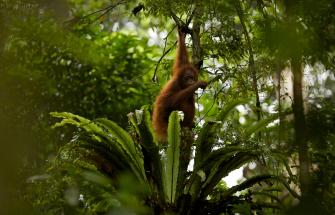 © naturepl.com / Tim Laman / WWF
Explore the forest of Borneo
-
Pillar: Reflecting
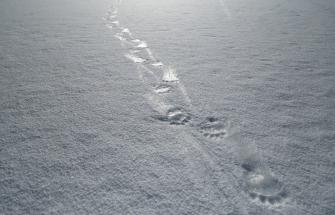 © WWF / Clive Tesar
Polar Perspectives
-
Pillar: Reflecting
 © Forestry England
Forest reflections with poetry
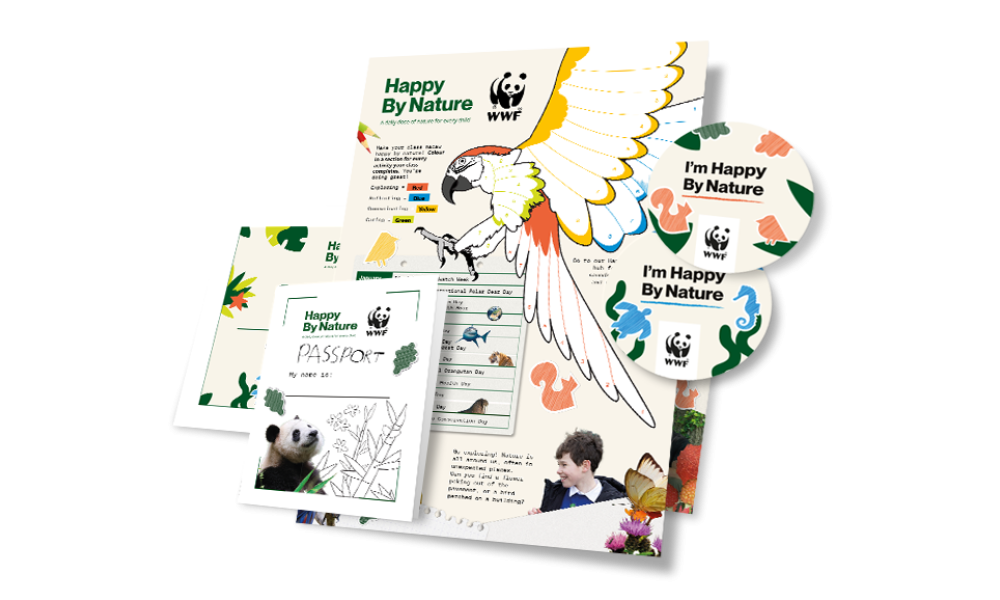
Get your FREE classroom pack
Get your FREE classroom pack
Bring nature into your classroom with a free pack of engaging primary resources to support learning and track progress. Includes a vibrant poster, pupil passports, stickers, and panda pawprint stamps.